World Artifacts › Atlas › Mali
Djenné Terracotta
The kneeling terracotta figure.
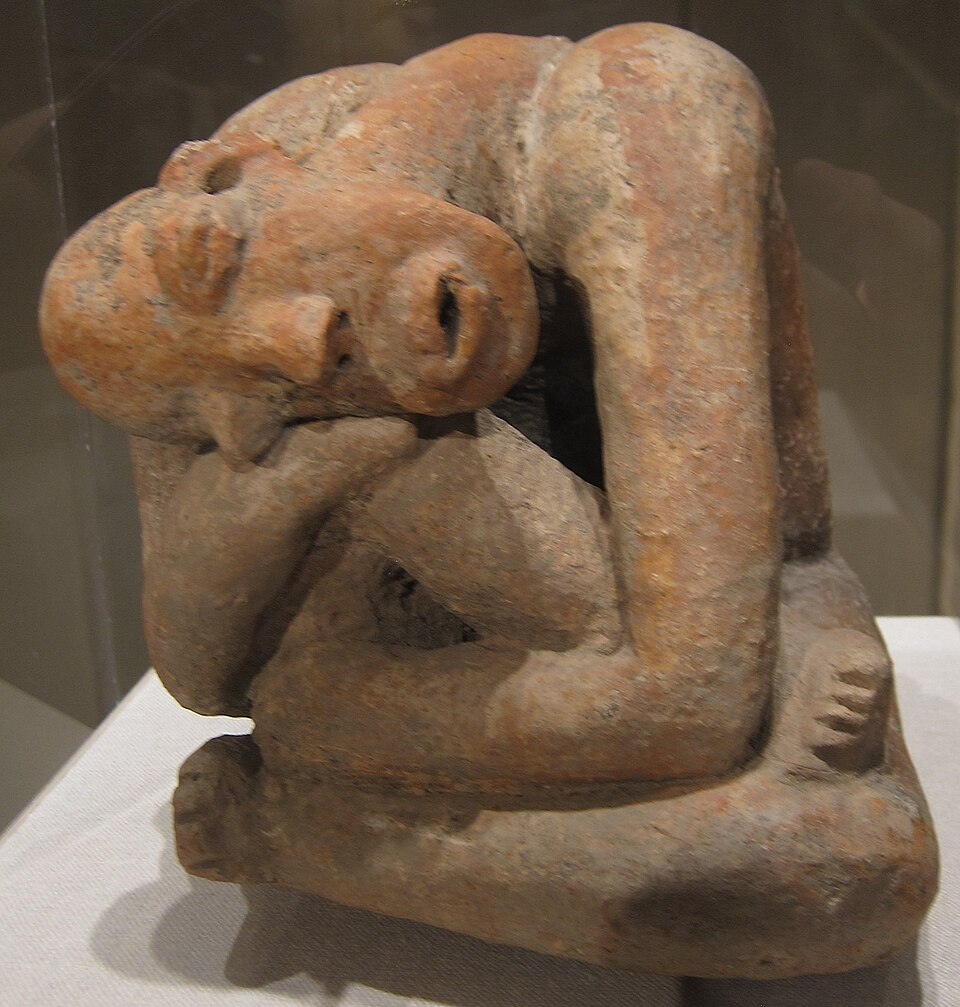
Djenné-Djeno (also Jenne-Jeno; ) is a UNESCO World Heritage Site located in the Niger River Valley in the country of Mali. Literally translated to "ancient Djenné", it is the original site of Djenné and is considered to be among the oldest urbanized centers and best-known archaeological sites in West Africa.
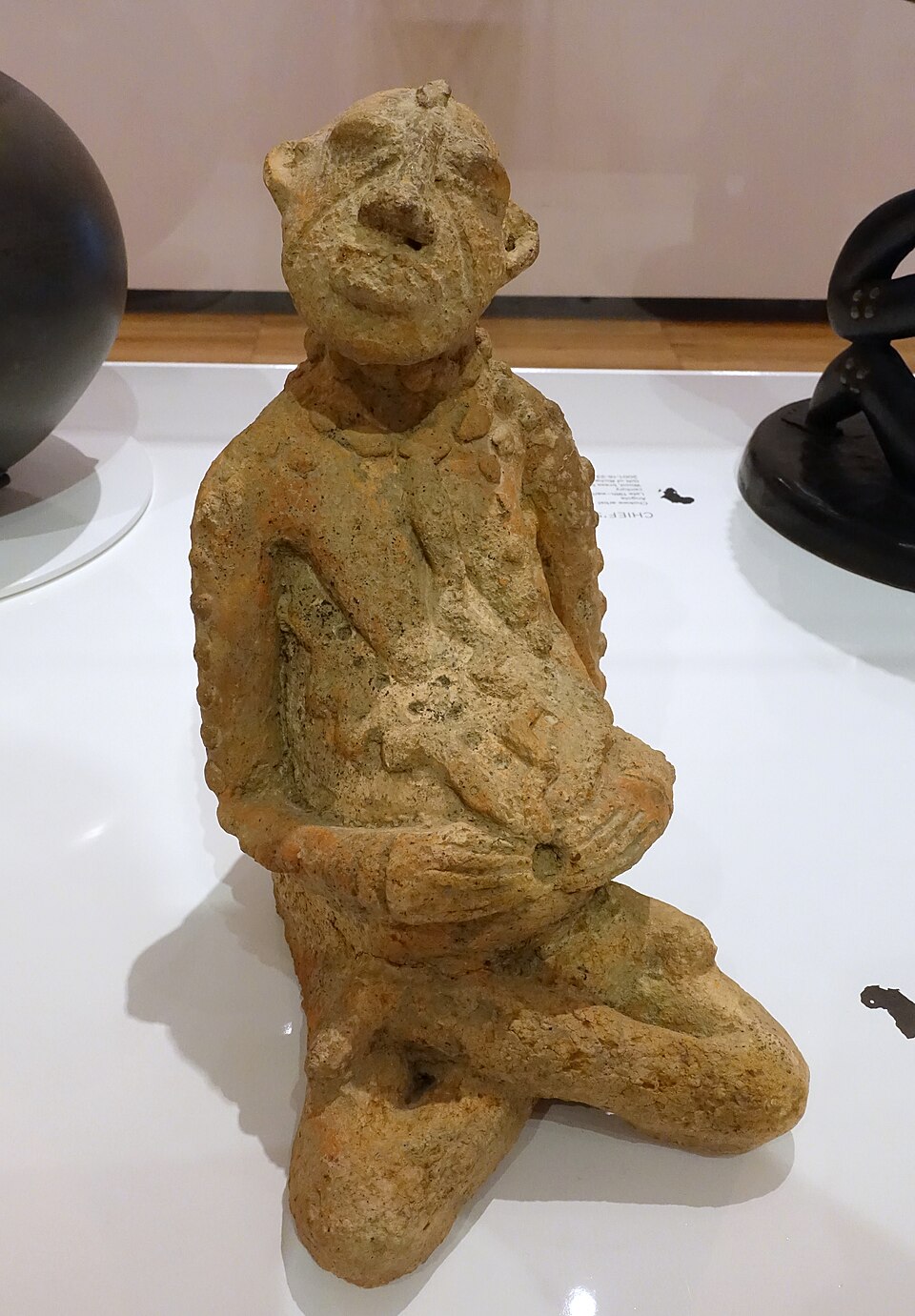
This archaeological site is located about three kilometres (two miles) from the modern town, and is believed to have been involved in long distance trade and the domestication of African rice. The site is an occupation mound up to six meters high that covered 33 hectares (82 acres) in area when first mapped in 1977. Based on archaeological excavations mainly by Roderick and Susan McIntosh, the site is known to have been occupied from 250 BC to 1400 AD. Previously, scholars did not believe that advanced trade networks and complex societies developed in West Africa until traders started coming from the north. However, sites such as Djenné-Djeno disprove this, as these traditions in West Africa flourished long before.
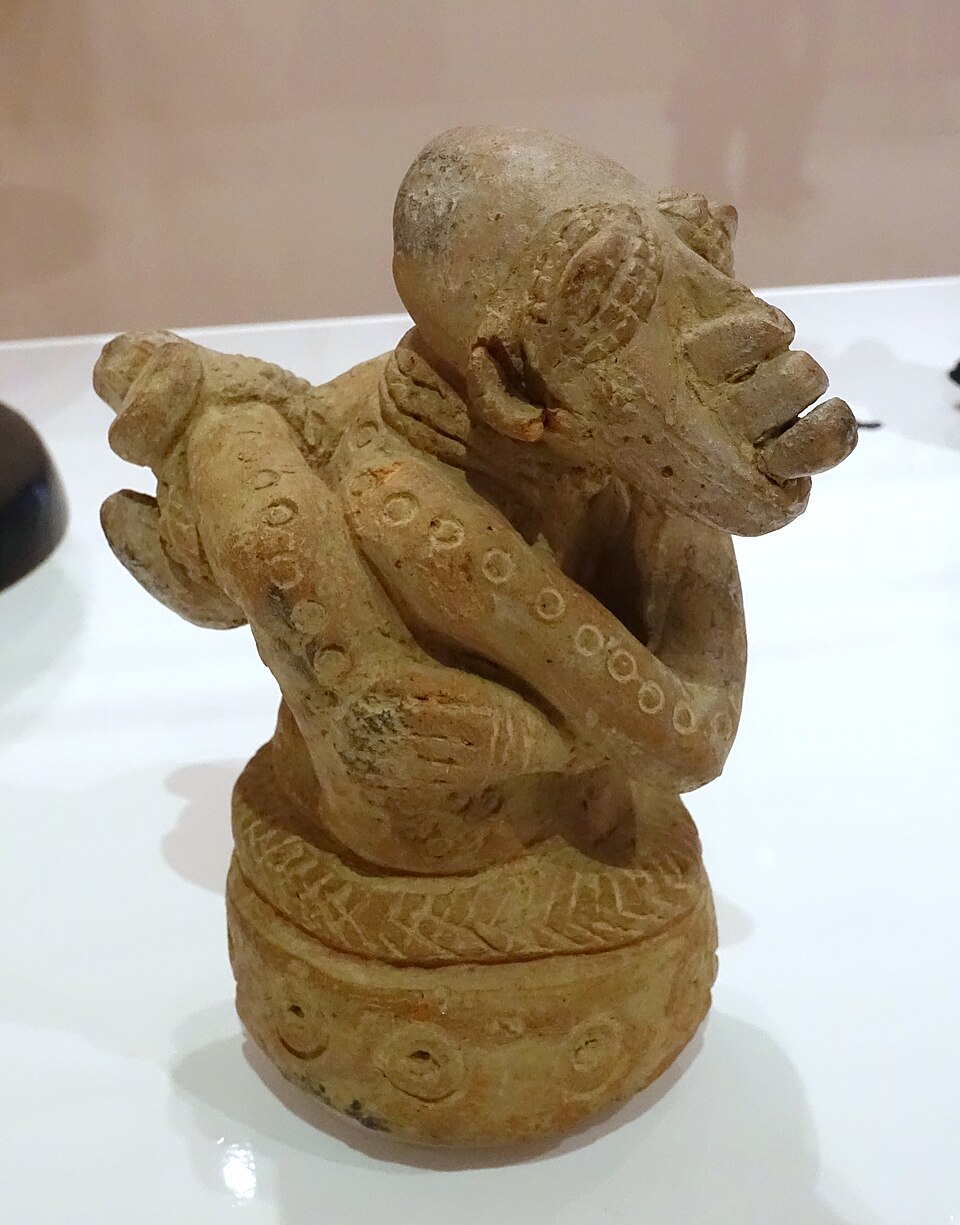
More recently, scholars have concluded that the egalitarian civilization of Djenné-Djeno was likely established by the Mande progenitors of the Bozo people. Their habitation of the site spanned the period from 3rd century BCE to 14th century CE.
Further reading
- The peoples of the Middle Niger · Roderick J. McIntosh (1998)Covers the peoples, antiquities and social life of the Middle Niger, the region where Djenné terracottas come from.Find a copy: AbeBooks · Amazon · WorldCat
- ANCIENT MIDDLE NIGER: URBANISM AND THE SELF-ORGANIZING LANDSCAPE · RODERICK J. MCINTOSH (2005)Examines ancient urbanism and excavations in the Middle Niger, the landscape of Jenné-jeno.Find a copy: AbeBooks · Amazon · WorldCat
Djenné Terracotta is one of the 3D puzzles in World Artifacts: turn a cloud of broken pieces until it lines up. For iPhone, iPad, Apple Vision Pro and Android.

