World Artifacts › Atlas › Mali
Mansa Musa
The golden king.
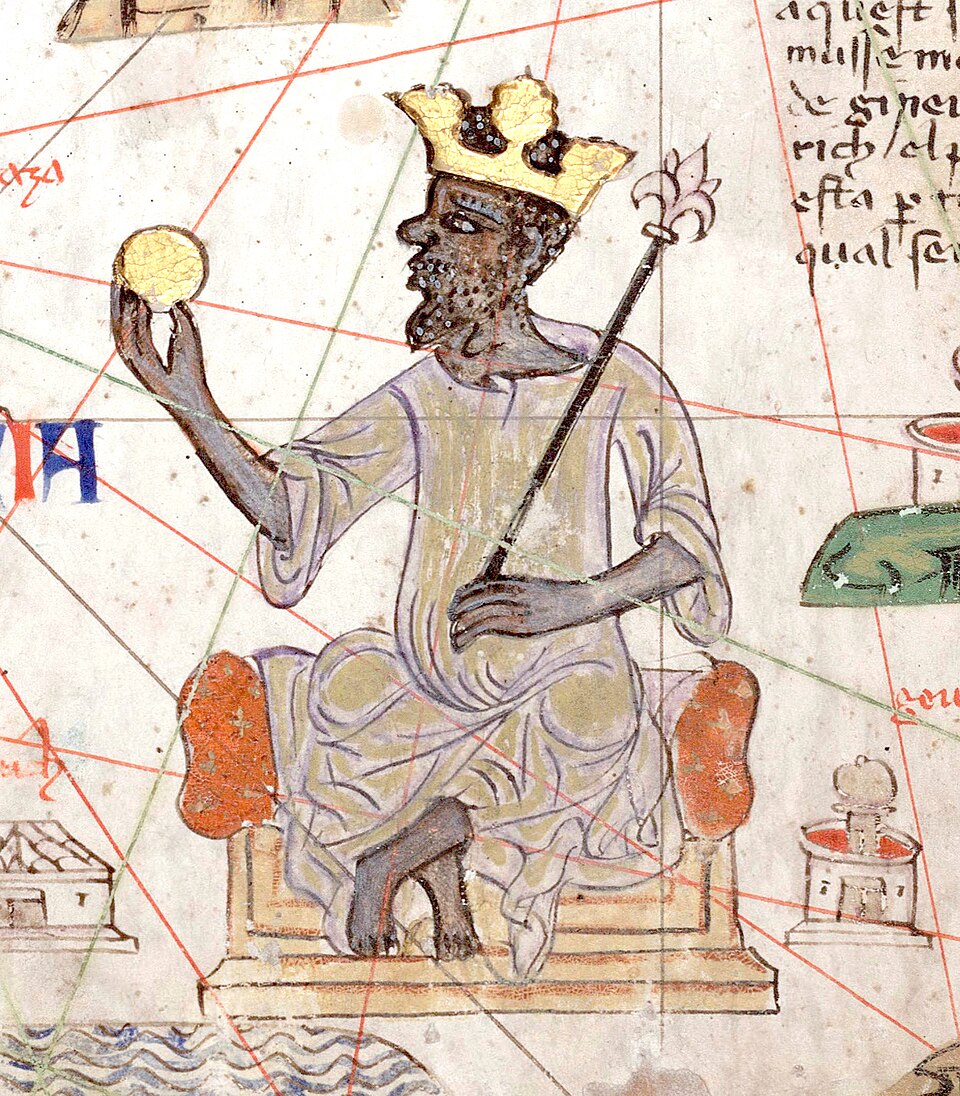
Mansa Musa (c. 1280 - c. 1337) was the ninth Mansa of the Mali Empire, which reached its territorial peak during his reign. Musa's reign is often regarded as the zenith of Mali's power and prestige, although he features less in Mandinka oral traditions than his predecessors.
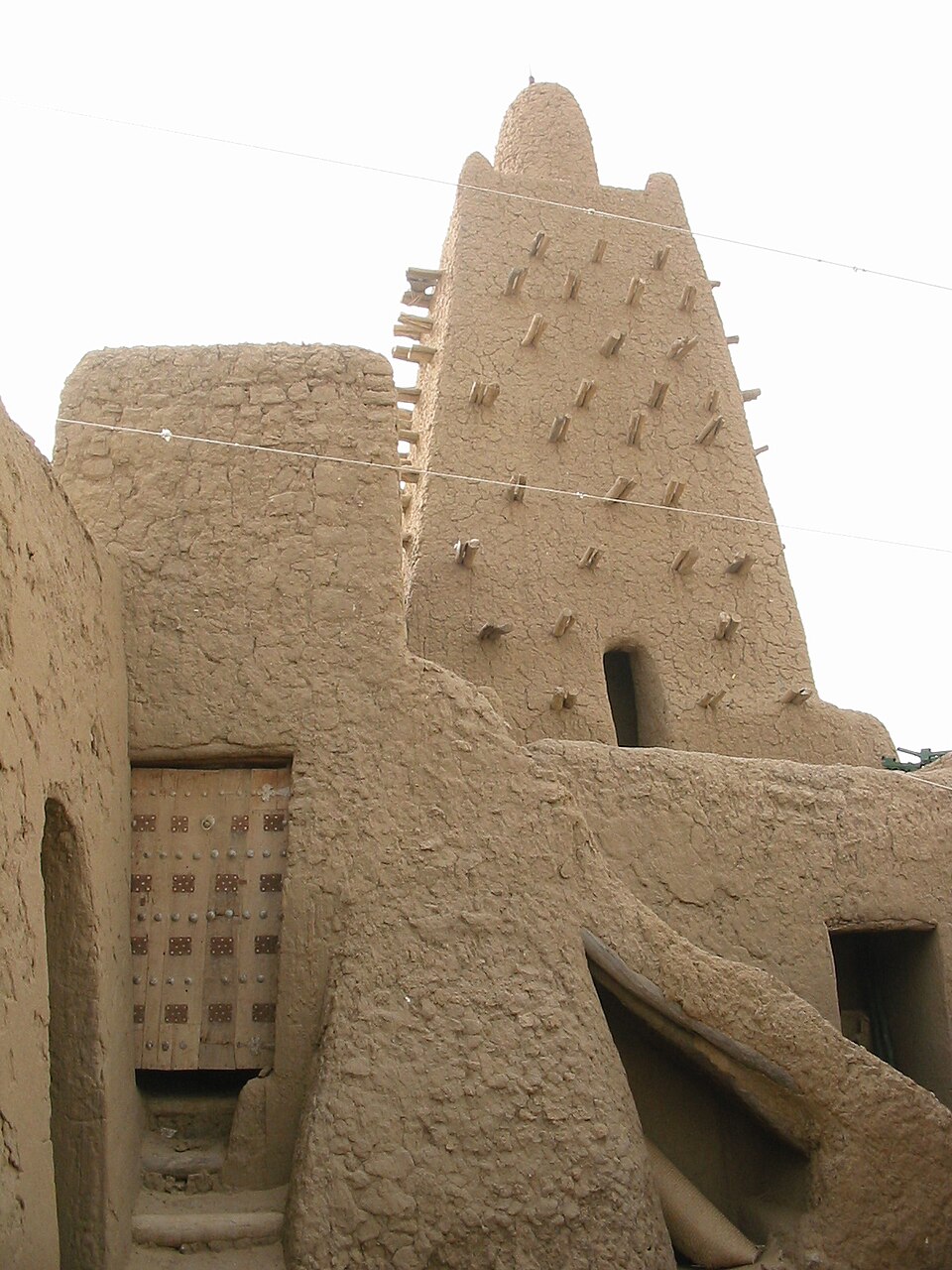
Musa was exceptionally wealthy, to an extent that contemporaries described him as inconceivably rich; Time magazine reported: "There's really no way to put an accurate number on his wealth." They cite Ferrum College history professor Richard Smith, who said Mali was likely the largest gold producer in the world at the time, but "contemporary sources describe the king's riches in terms that are impossible for the time."
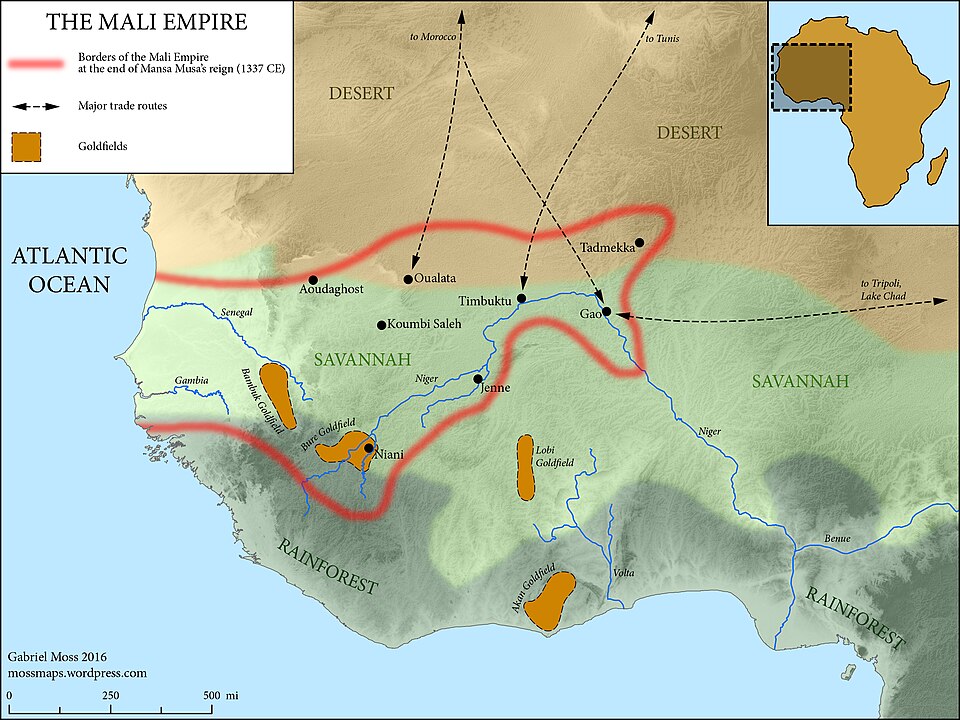
It is known from local manuscripts and travellers' accounts that Mansa Musa's wealth came principally from the Mali Empire's control and taxing of the trade in salt from northern regions and especially from gold panned and mined in Bambuk and Bure to the south. Over a very long period Mali had amassed a large reserve of gold. Mali is also believed to have been involved in the trade in many goods such as ivory, slaves, spices, silks, and ceramics. However, presently little is known about the extent or mechanics of these trades. It is estimated that two thirds of the gold circulating in the Medieval Mediterranean came from West Africa and this accounts for almost half of the Old World's gold supply.
Further reading
Mansa Musa is one of the 3D puzzles in World Artifacts: turn a cloud of broken pieces until it lines up. For iPhone, iPad, Apple Vision Pro and Android.

