World Artifacts › Atlas › Mongolia
Velociraptor Skeleton
The fossil skeleton.
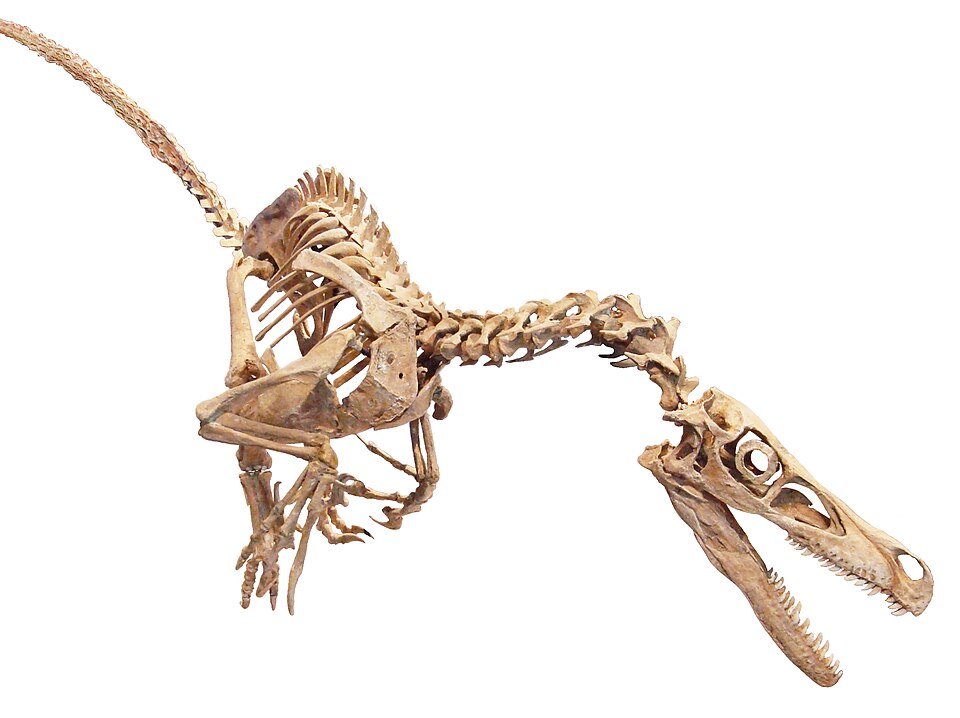
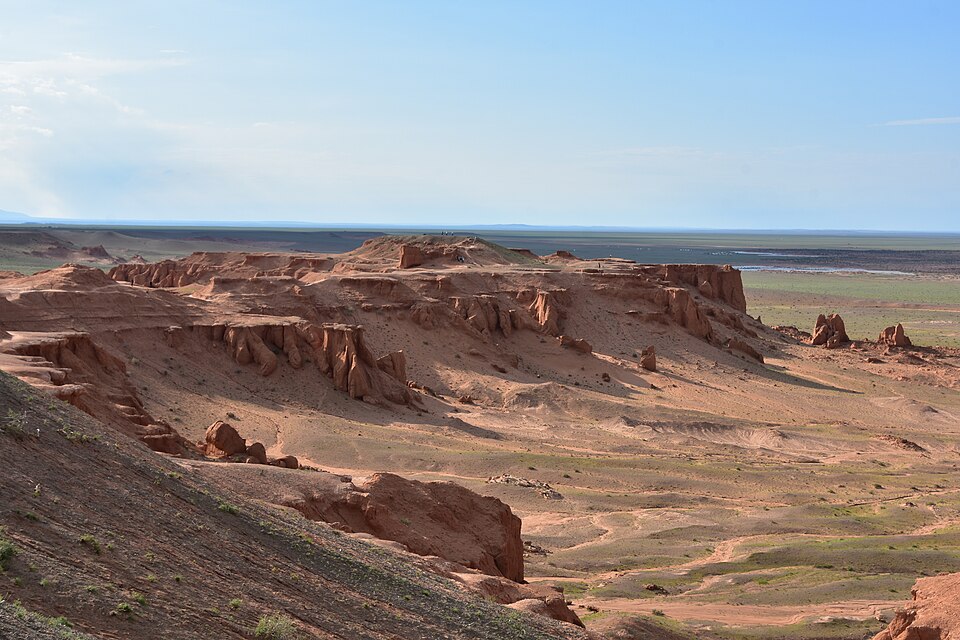
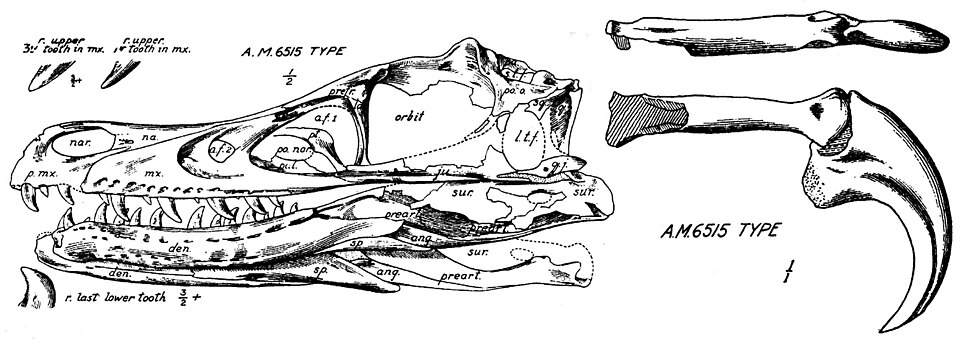
Velociraptor (; lit. 'swift thief') is a genus of small dromaeosaurid dinosaurs that lived in Asia during the Late Cretaceous epoch, about 75 million to 71 million years ago (Mya). Two species are currently recognized, although others have been assigned in the past. The type species is V. mongoliensis, named and described in 1924. Fossils of this species have been discovered in the Djadochta Formation, Mongolia. A second species, V. osmolskae, was named in 2008 for skull material from the Bayan Mandahu Formation, China. A possible record is known from the Nemegt Formation.
Smaller than other dromaeosaurids like Deinonychus and Achillobator, Velociraptor was about 1.5-2.07 m (4.9-6.8 ft) long with a body mass of around 14.1-19.7 kg (31-43 lb). It nevertheless shared many of the same anatomical features. It was a bipedal, feathered carnivore with a long tail and an enlarged sickle-shaped claw on each hindfoot, which is thought to have been used to tackle and restrain prey. Velociraptor can be distinguished from other dromaeosaurids by its long and low skull, with an upturned snout.
Further reading
- Unearthing the dragon · Mark Norell (2005)An account of paleontological excavations and dinosaur fossils, including fossil feathers and evolution.Find a copy: AbeBooks · Amazon · WorldCat
- The new conquest of Central Asia · Roy Chapman Andrews (1932)Roy Chapman Andrews's account of the Central Asiatic Expeditions, covering travel, natural history and paleontology.Find a copy: AbeBooks · Amazon · WorldCat
Velociraptor Skeleton is one of the 3D puzzles in World Artifacts: turn a cloud of broken pieces until it lines up. For iPhone, iPad, Apple Vision Pro and Android.

