World Artifacts › Atlas › Mauritania
Tidinit
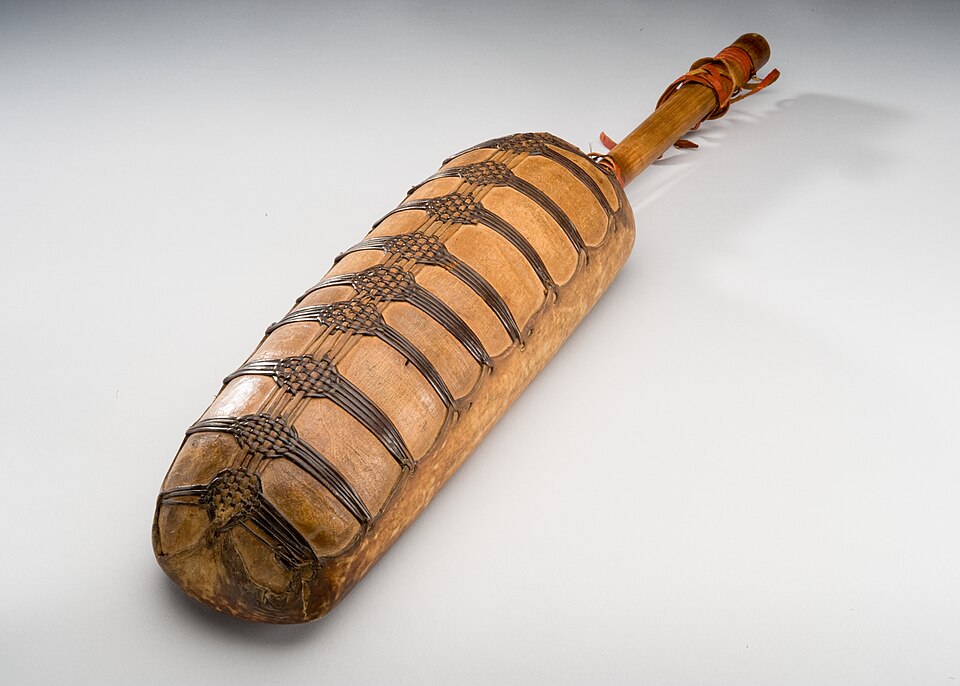
The four-string lute.
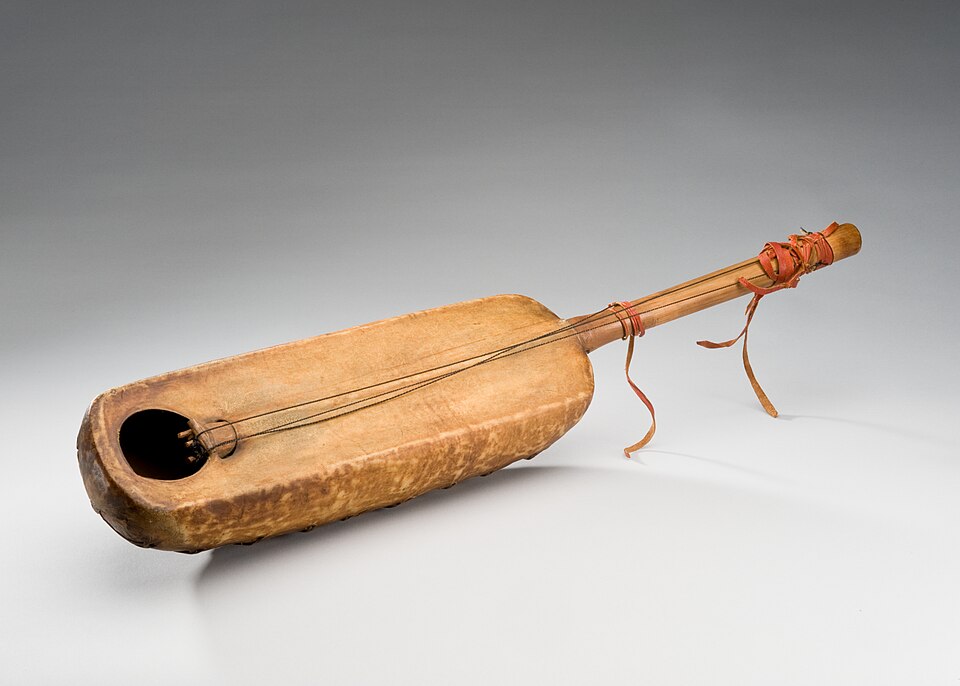
Xalam (in Serer, khalam in Wolof, and Molo in Dagbani and Zarma) is a traditional lute from West Africa with 1 to 5 strings. The xalam is commonly played in Mali, Gambia, Senegal, Niger, Northern Nigeria, Northern Ghana, Burkina Faso, Mauritania, and Western Sahara. The xalam and its variants are known by various names in other languages, including bappe, diassare, hoddu (Pulaar), koliko (Gurunsi), kologo (Frafra), komsa, kontigi, gurmi, garaya (Hausa), koni, konting (Mandinka), molo (Songhay/Zarma), ndere, ngoni (Bambara), and tidinit (Hassaniyya and Berber).
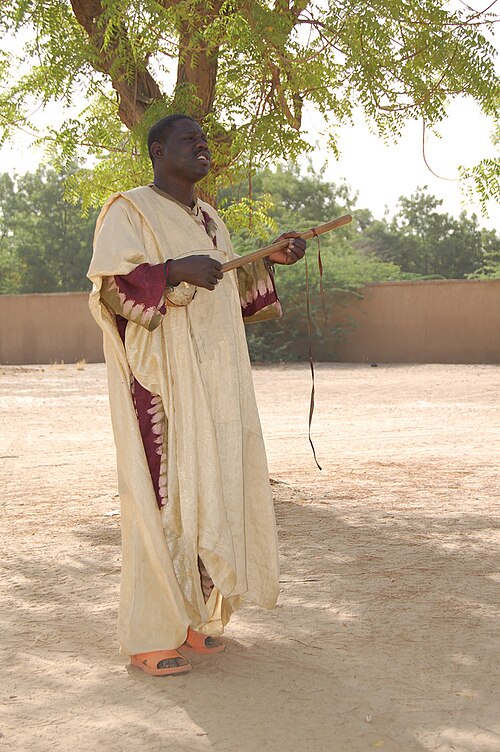
In Wolof, a person who plays the xalam is called a xalamkat (a word composed of the verbal form of xalam, meaning "to play the xalam", and the agentive suffix -kat, thus meaning "one who xalams").
In Mande, this is ngonifola or konting fola.
In Hausa, this is mai gurmi or mai kontigi.
Further reading
- The music of Africa · J. H. Kwabena Nketia (1974)A history and survey of African music, covering the continent's musical traditions.Find a copy: AbeBooks · Amazon · WorldCat
- Griots and Griottes · Thomas A. Hale (1998)Covers griots, West African praise-singers and oral historians, and their performance and storytelling traditions.Find a copy: AbeBooks · Amazon · WorldCat
Tidinit is one of the 3D puzzles in World Artifacts: turn a cloud of broken pieces until it lines up. For iPhone, iPad, Apple Vision Pro and Android.

