World Artifacts › Atlas › Mexico
Alebrije
Alebrijes were invented in the 1930s by a papier-mâché maker in Mexico City who saw them in a fever dream and heard the word being shouted. The painted wooden ones from Oaxaca are a later development by carvers who saw his work.
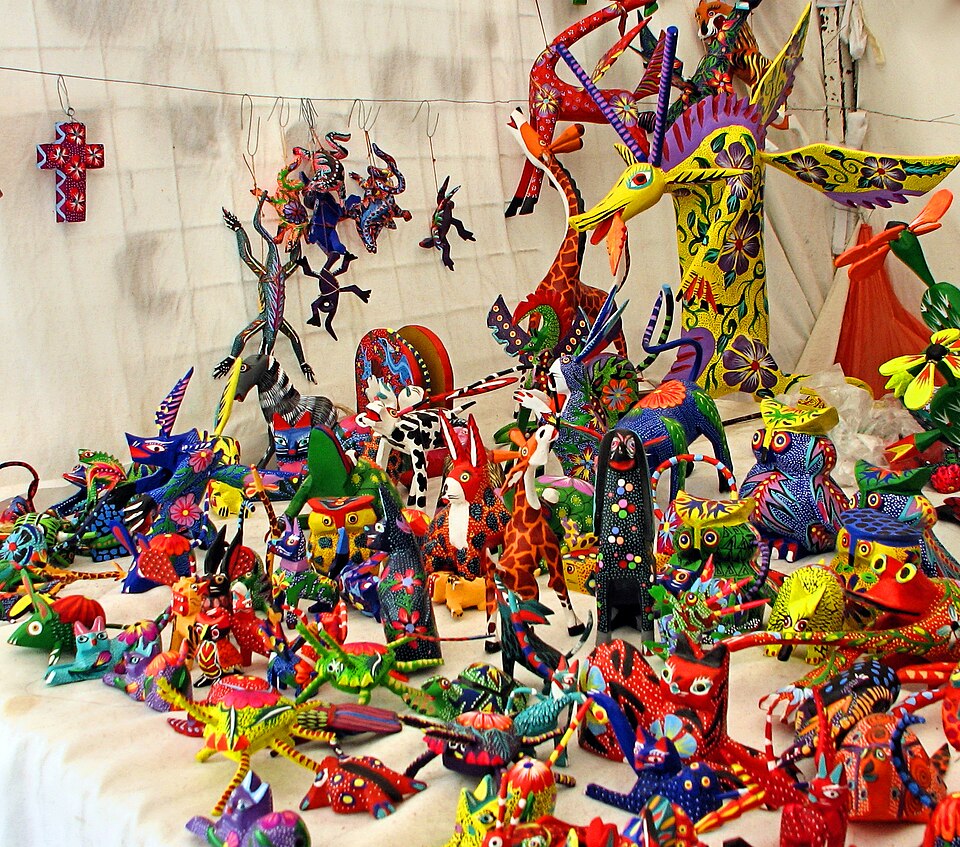
Alebrijes (Spanish pronunciation: [aleˈβɾixes]) are brightly colored Mexican folk art sculptures of fantastical (fantasy/mythical) creatures, traditionally made from papier-mâché or wood. The art form originated in Mexico City in 1936, when Pedro Linares López, a papier-mâché artist, began creating surreal, dreamlike creatures after experiencing vivid hallucinations during an illness. His designs, which combined elements of various animals, became widely recognized as alebrijes and were later adopted by artisans in Oaxaca, who began carving them from copal wood, a local softwood.
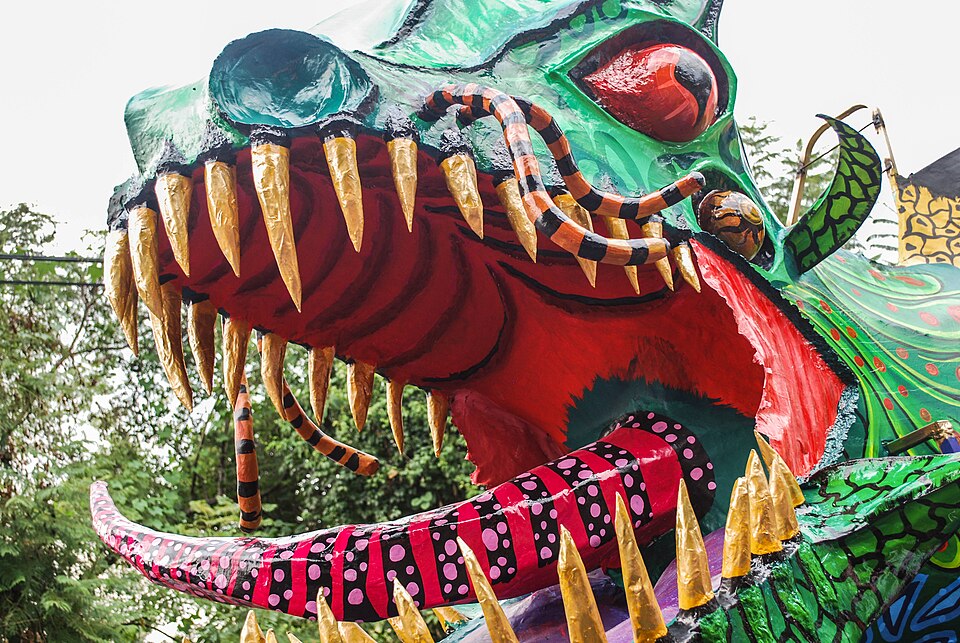
Alebrijes are now a significant part of Mexican folk art, blending the tradition of cartonería with modern artistic expression. They are often associated with Día de Muertos (Day of the Dead), though they are not traditionally part of the holiday's customs. Today, alebrijes are crafted in various regions of Mexico and have gained international recognition, appearing in exhibitions, festivals, and even contemporary media.
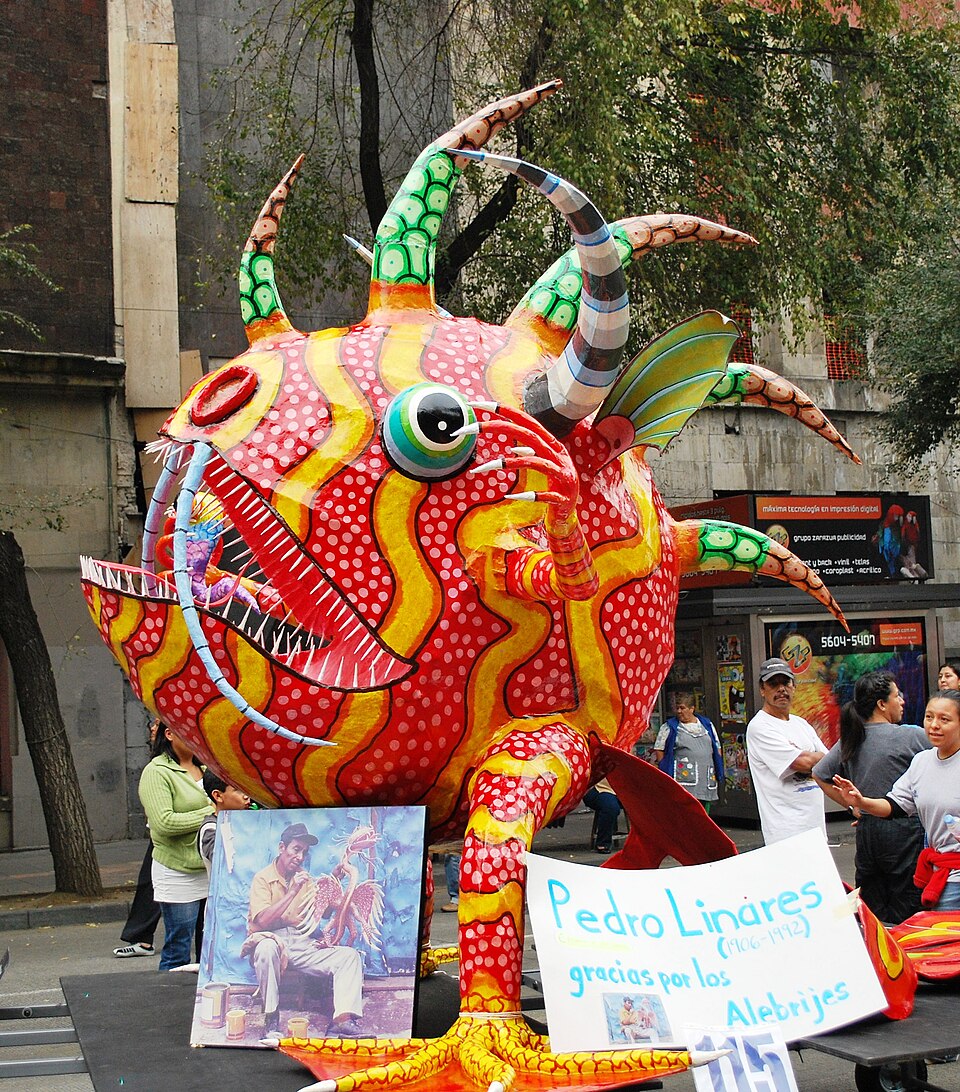
Further reading
- Oaxacan woodcarving · Shepard Barbash (1993)Covers Oaxacan woodcarving, its themes and motifs, as Mexican folk art.Find a copy: AbeBooks · Amazon · WorldCat
- Mexican Cartonería · Leigh Ann Thelmadatter (2020)A book on Mexican cartonería, the papier-mâché craft.Find a copy: AbeBooks · Amazon · WorldCat
Alebrije is one of the 3D puzzles in World Artifacts: turn a cloud of broken pieces until it lines up. For iPhone, iPad, Apple Vision Pro and Android.

