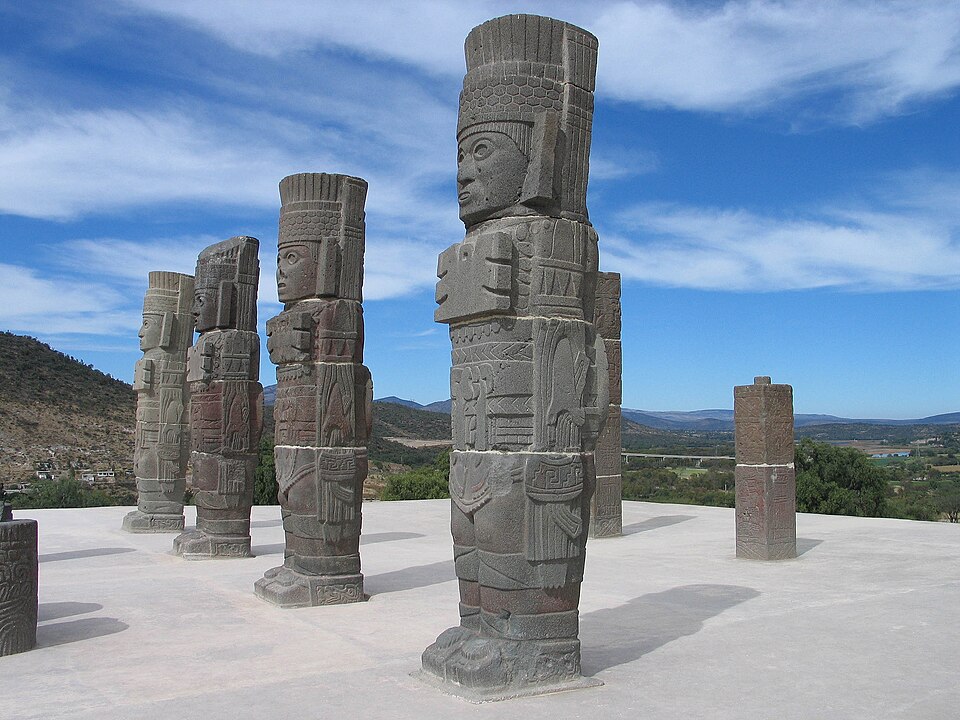
The four stone warriors at Tula stood on top of a pyramid holding up a roof that has gone. They are over four metres tall, built in sections, and carry spear-throwers and incense bags rather than swords.
Columns in the form of Toltec warriors in TulaUser:Luidger · CC BY-SA 3.0 · Source
The Atlantean figures are four anthropomorphic statues belonging to the Toltec culture in pre-Columbian Mesoamerica. These figures are "massive statues of Toltec warriors". They take their post-Columbian name from the European tradition of similar Atlas or Atalante figures in classical architecture.
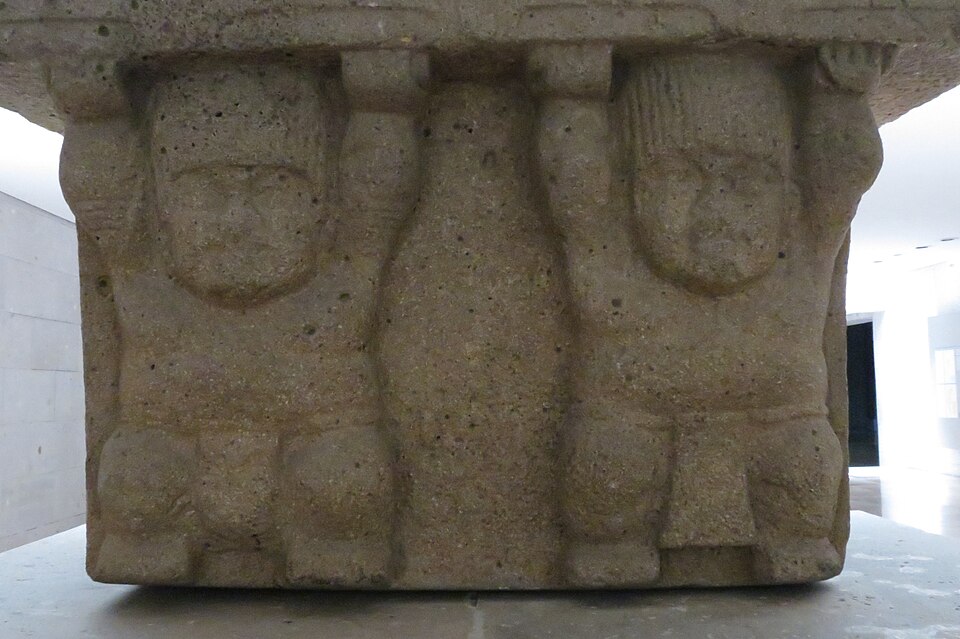
This sculpture, created by the Olmecs, is located in the Museum of Anthropology of Xalapa, Veracruz. The sculpture represents the first use of atlantes in Mesoamerica. However, it differs from the Atlantean figures in Tula because it is not in-the-round, and is instead a relief on a table.Mag2017 · CC BY-SA 4.0 · Source
Though the most famous Atlantean figures reside in Tula, the Olmecs were the first to use Atlantean figures on a relief discovered in Potrero Nuevo. Mayan sculptors also created "Atlantean" figures in Chichen Itza. Furthermore, the Aztecs also created warrior statues strongly inspired by these Atlantean figures in Tula.
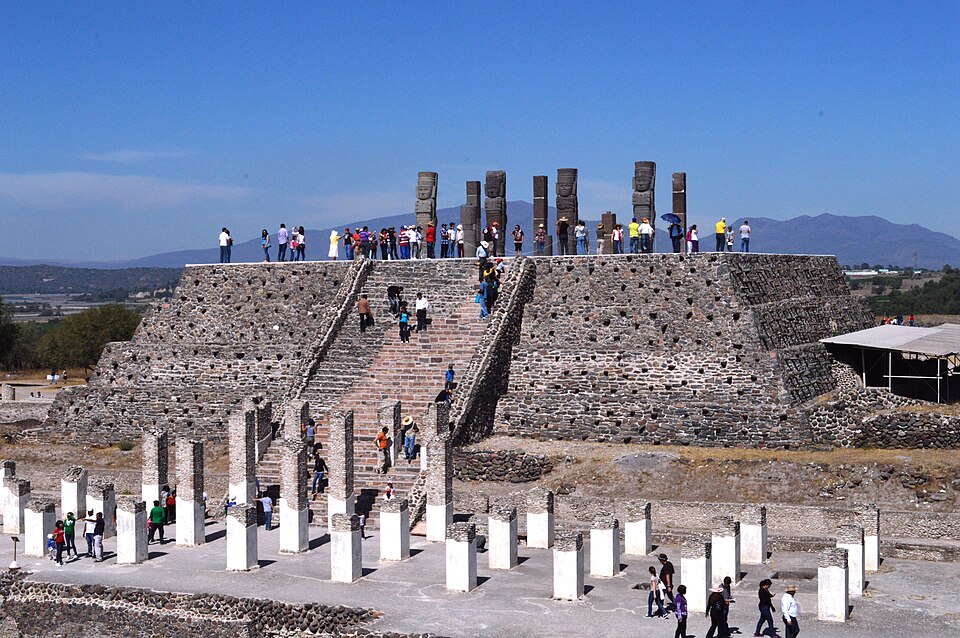
The four monumental Atlantean figures in Tula were located on top of Pyramid B. Originally, they provided the support for a structure on top of the pyramid.AlejandroLinaresGarcia · CC BY-SA 3.0 · Source
Further reading
Tula · Richard A. Diehl (1983)A study of Tula, the Toltec site, covering its history, antiquities and archaeological excavations.Find a copy: AbeBooks · Amazon · WorldCat
The Toltecs · Nigel Davies (1987)A book on the Toltecs, the people tied to Tula.Find a copy: AbeBooks · Amazon · WorldCat
Atlantean Figures (Tula) is one of the 3D puzzles in World Artifacts: turn a cloud of broken pieces until it lines up. For iPhone, iPad, Apple Vision Pro and Android.