World Artifacts › Atlas › Mexico
Axolotl
The axolotl never grows up: it keeps its gills and stays aquatic for life, and it can regrow limbs, jaws, spinal cord and parts of its brain. There are hundreds of thousands in laboratories and probably fewer than a hundred left in the wild, in the canals south of Mexico City.
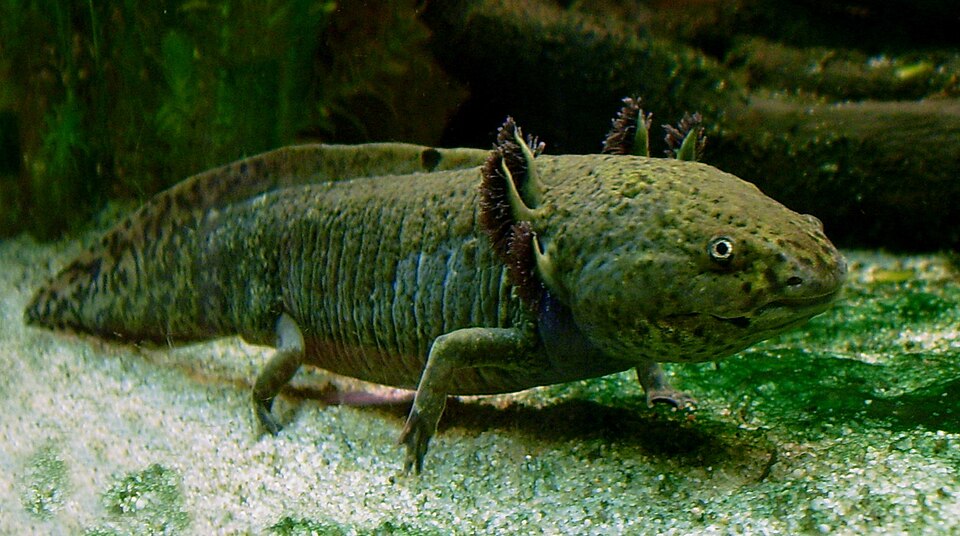
The axolotl ( ; from Classical Nahuatl: āxōlōtl [aːˈʃoːloːtɬ] ; Ambystoma mexicanum) is a species of mole salamander. It is neotenic, reaching sexual maturity without undergoing metamorphosis, and the adults remain fully aquatic with obvious external gills. Axolotls may be difficult to distinguish from the larval stage of other neotenic adult mole salamanders, in particular the tiger salamander, or other species such as mudpuppies.
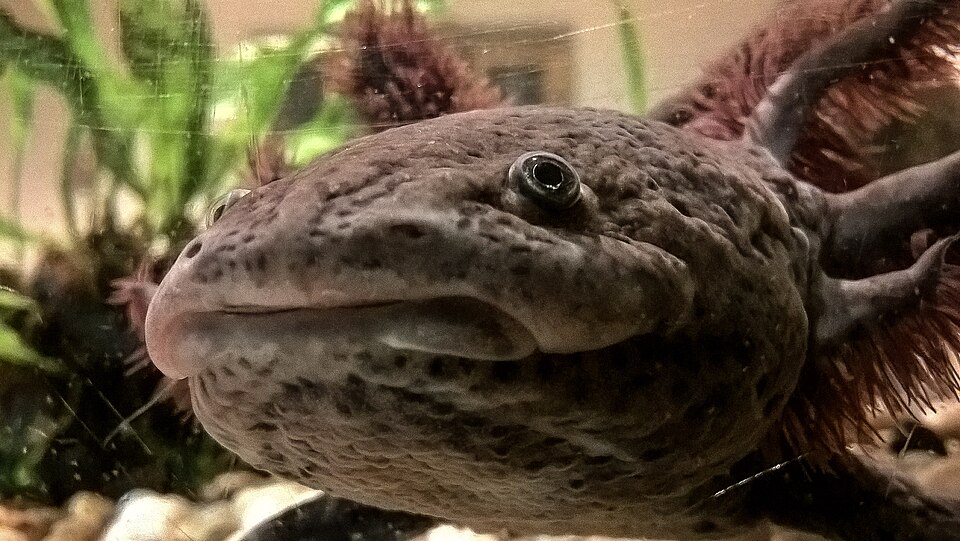
Axolotls originally inhabited a system of interconnected wetlands and lakes in the highlands of Mexico. They were known to inhabit the smaller lakes of Xochimilco and Chalco and are presumed to have inhabited the larger lakes of Texcoco and Zumpango. The desiccation of these lakes, initiated by the Aztecs and accelerated during the 20th century, has led to the destruction of much of the axolotl's natural habitat, an area now largely occupied by Mexico City. Wild axolotls have been driven to near extinction by the introduction of invasive species such as tilapia and carp; with a decreasing population of around 50 to 1,000 adult individuals, the species has been assessed as critically endangered by the International Union for Conservation of Nature (IUCN) and is listed under Appendix II of the Convention on International Trade in Endangered Species (CITES).
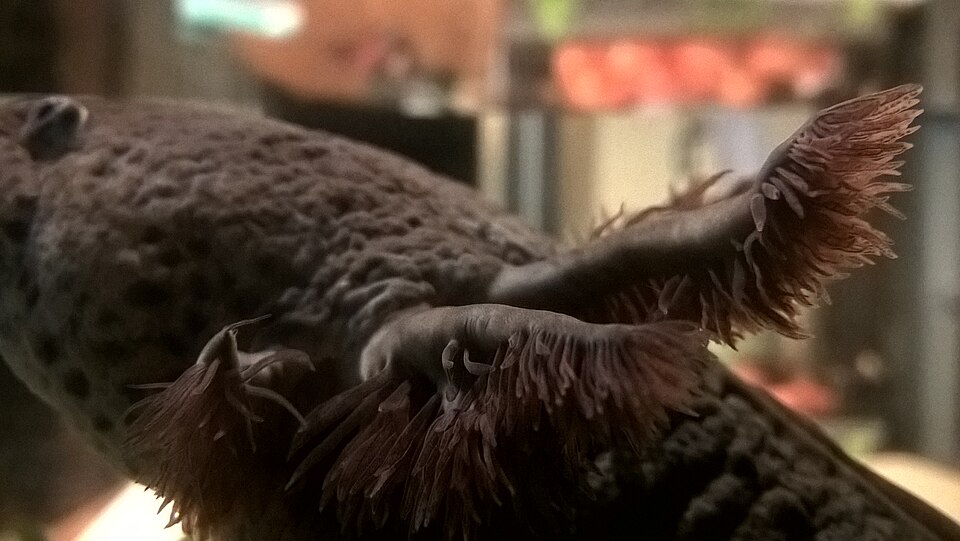
Axolotl is one of the 3D puzzles in World Artifacts: turn a cloud of broken pieces until it lines up. For iPhone, iPad, Apple Vision Pro and Android.

