World Artifacts › Atlas › Mexico
Aztec Sun Stone
The sun stone is not a working calendar; it is a carved disc showing the cosmos and the ages of the world, probably a sacrificial altar. It was buried after the conquest and dug up by accident in 1790 during work on the main square.
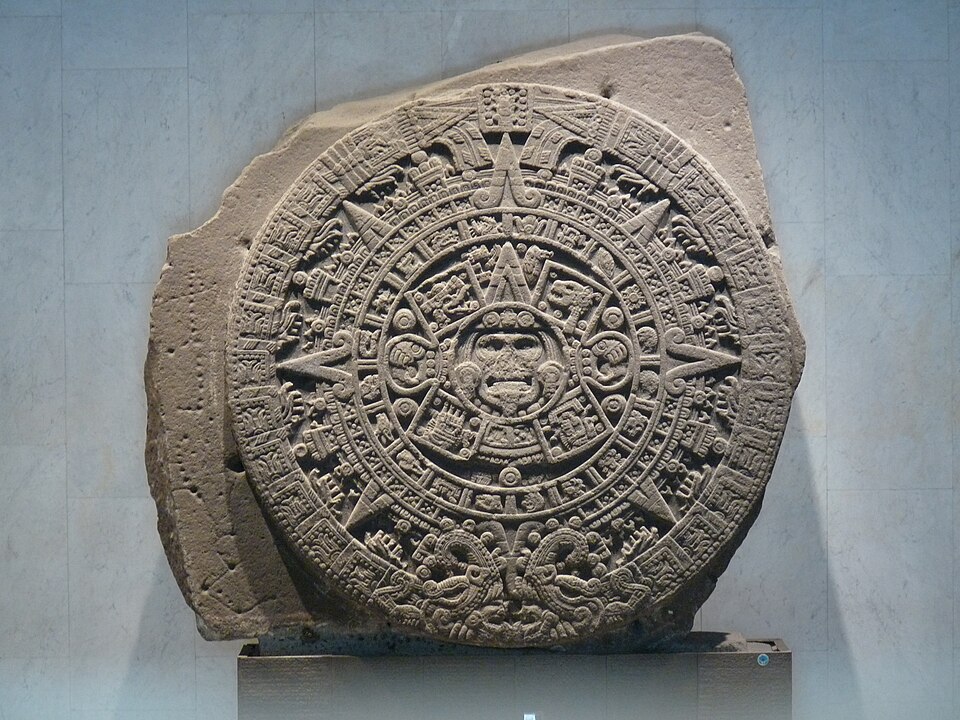
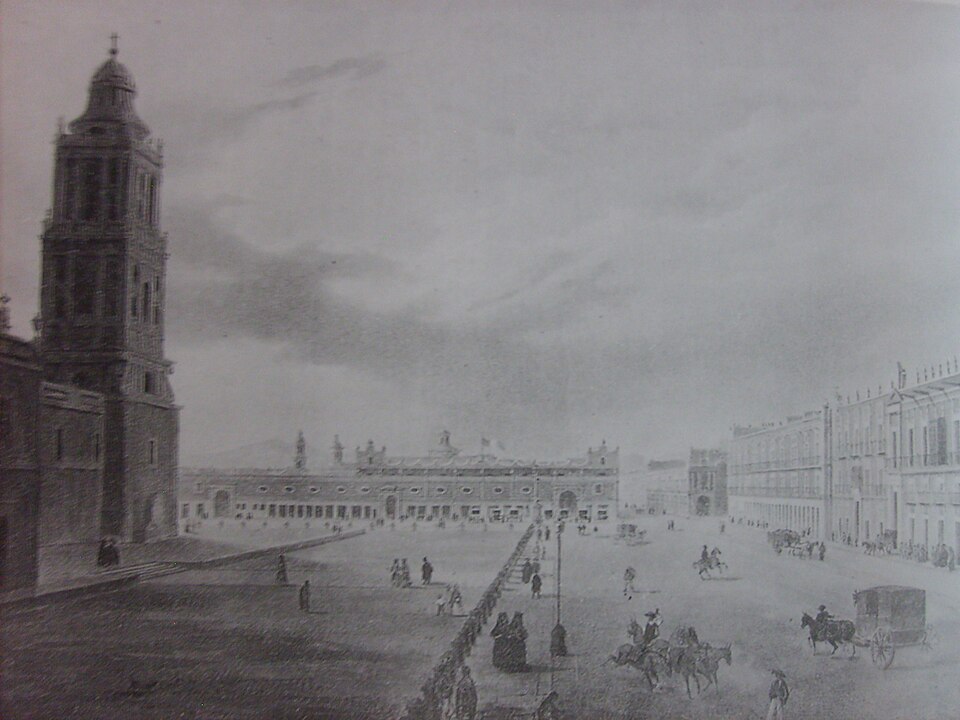
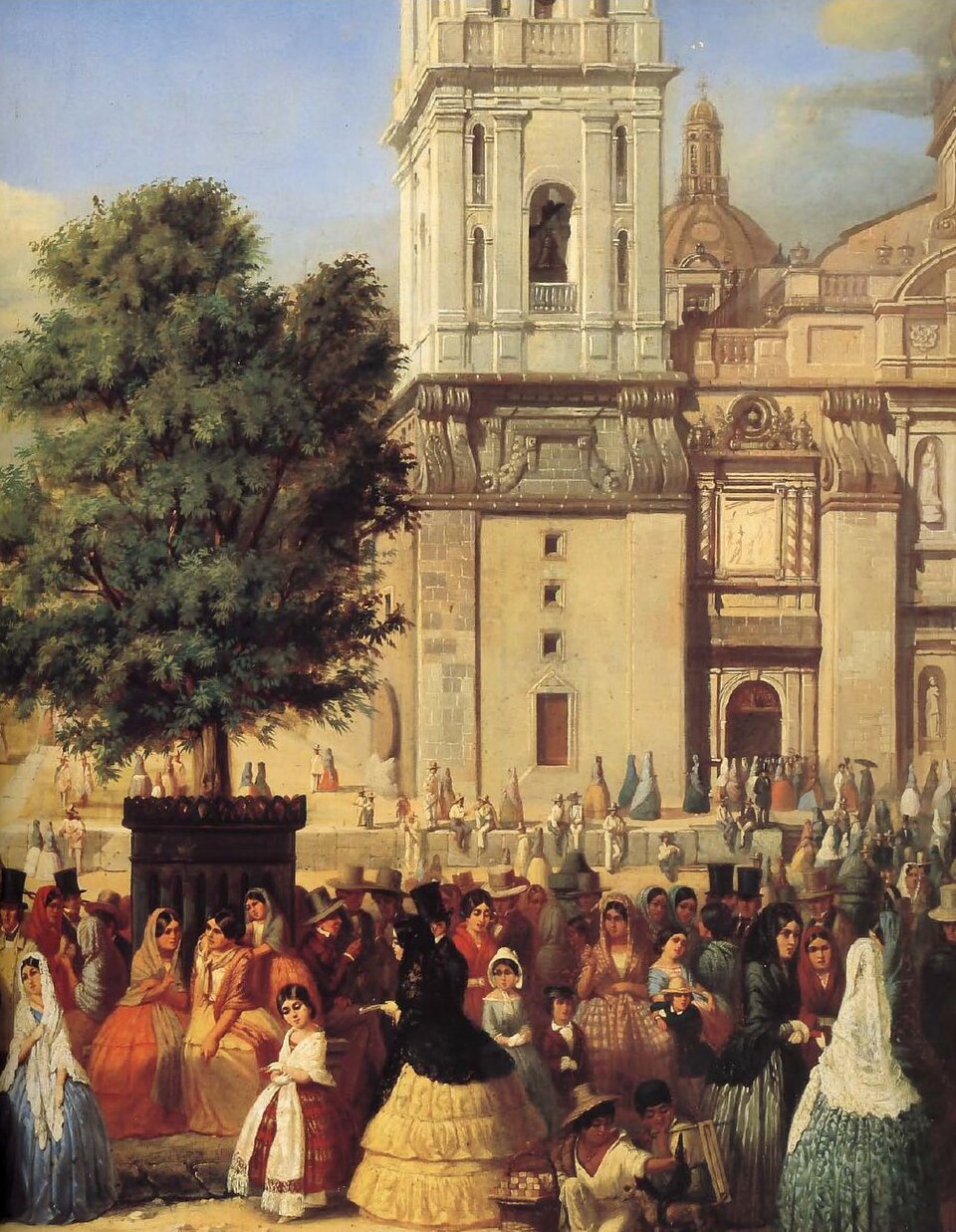
The Aztec sun stone (Spanish: Piedra del Sol) is a late post-classic Mexica sculpture housed in the National Anthropology Museum in Mexico City, and is perhaps the most famous work of Mexica sculpture. It measures 3.6 metres (12 ft) in diameter and 98 centimetres (39 in) thick, and weighs 24,590 kg (54,210 lb). Shortly after the Spanish conquest, the monolithic sculpture was buried in the Zócalo, the main square of Mexico City. It was rediscovered on 17 December 1790 during repairs on the Mexico City Cathedral. Following its rediscovery, the sun stone was mounted on an exterior wall of the cathedral, where it remained until 1885. Early scholars initially thought that the stone was carved in the 1470s, though modern research suggests that it was carved some time between 1502 and 1521.
Further reading
- The Aztec Calendar Stone · Khristaan Villela (2010)A book on the Aztec Calendar Stone, covering its inscriptions, sculpture and cosmology.Find a copy: AbeBooks · Amazon · WorldCat
- The Aztec calendar and other solar monuments · Eduardo Matos Moctezuma (2004)Covers the Aztec calendar and other solar monuments, with their mythology, religion and sculpture.Find a copy: AbeBooks · Amazon · WorldCat
Aztec Sun Stone is one of the 3D puzzles in World Artifacts: turn a cloud of broken pieces until it lines up. For iPhone, iPad, Apple Vision Pro and Android.

