World Artifacts › Atlas › Mexico
Chacmool
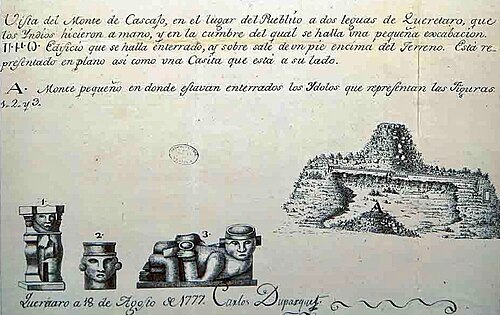
The reclining figure with a bowl on its stomach appears from central Mexico to Yucatán, and the bowl held offerings, in some cases hearts. The name is not ancient: a nineteenth-century explorer made it up when he dug the first one out.
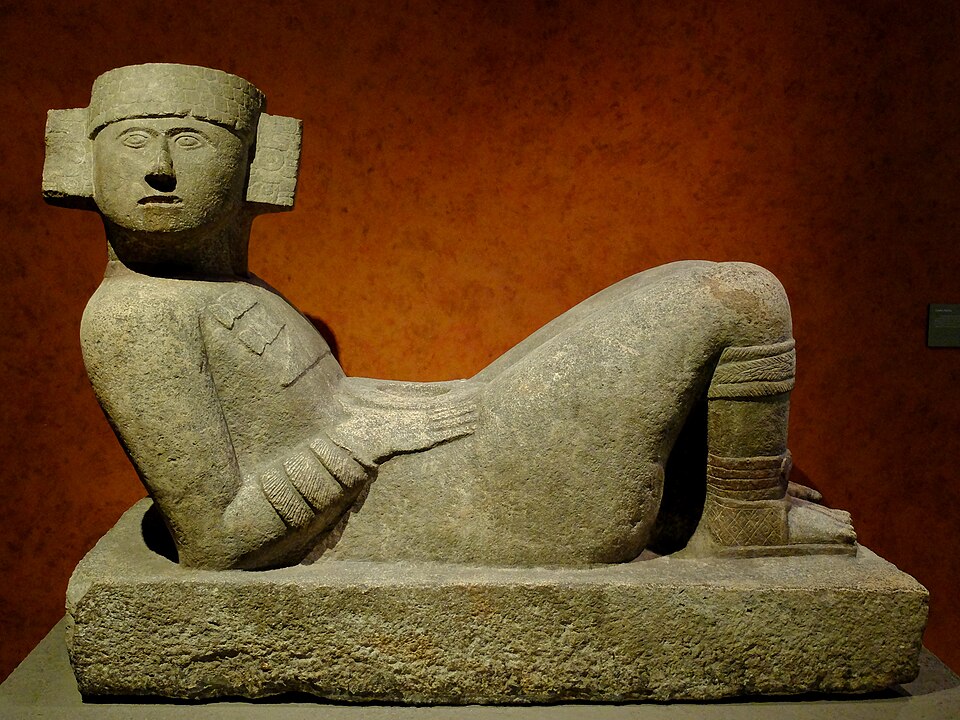
A chacmool (also spelled chac-mool or Chac Mool) is a form of pre-Columbian Mesoamerican sculpture depicting a reclining figure with its head facing 90 degrees from the front, supporting itself on its elbows and supporting a bowl or a disk upon its stomach. These figures possibly symbolised slain warriors carrying offerings to the gods; the bowl upon the chest was used to hold sacrificial offerings, including pulque, tamales, tortillas, tobacco, turkeys, feathers, and incense. In Aztec examples, the receptacle is a cuauhxicalli (a stone bowl to receive sacrificed human hearts). Chacmools were often associated with sacrificial stones or thrones. The chacmool form of sculpture first appeared around the 9th century AD in the Valley of Mexico and the northern Yucatán Peninsula.
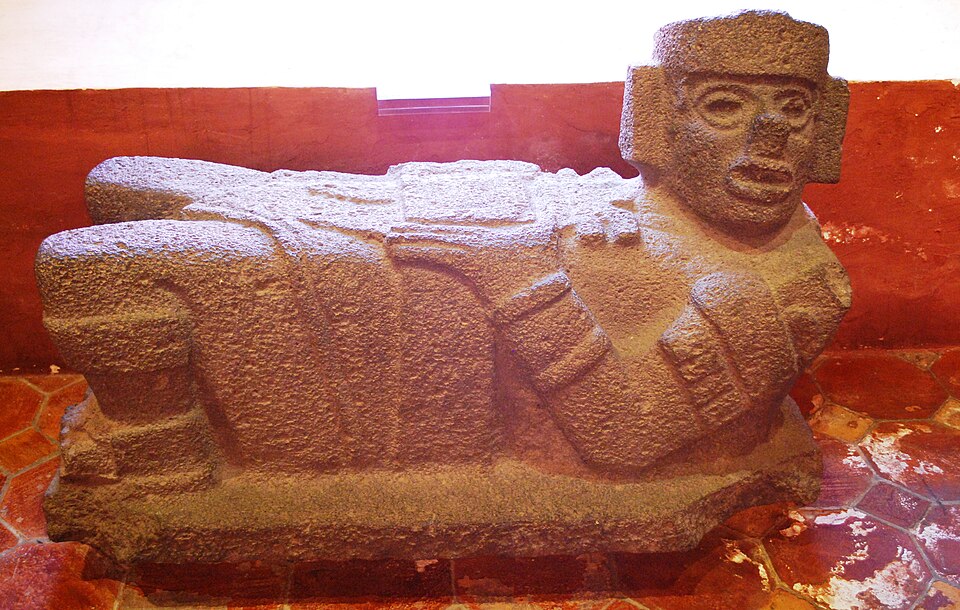
Aztec chacmools bore water imagery and were associated with Tlaloc, the rain god. Their symbolism placed them on the frontier between the physical and supernatural realms, as intermediaries with the gods.
Further reading
Chacmool is one of the 3D puzzles in World Artifacts: turn a cloud of broken pieces until it lines up. For iPhone, iPad, Apple Vision Pro and Android.

