World Artifacts › Atlas › Malaysia
Durian
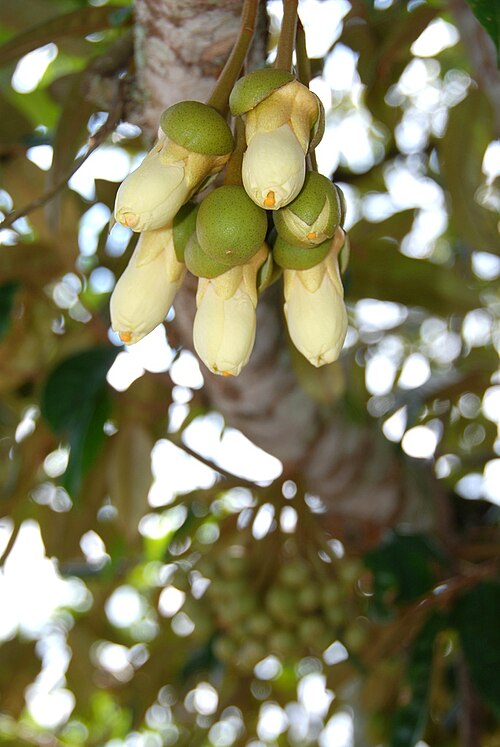
Durian trees can be fifty metres tall and the fruit is not picked but caught, or collected after it drops, which is why plantations net the ground. Malaysian growers let it fall on the argument that the flavour is not finished until it does.
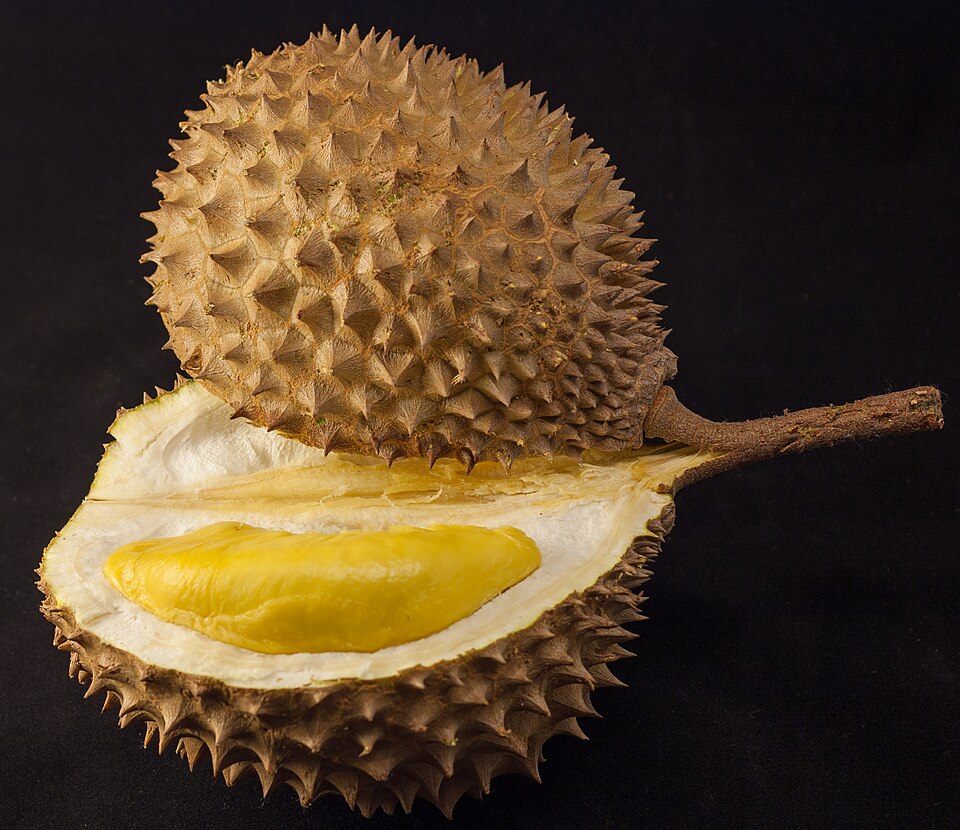
The durian ( ) is the edible fruit of trees in the genus Durio, most often applying to those of Durio zibethinus, the only species available on the international market. Other species are sold in their local regions.
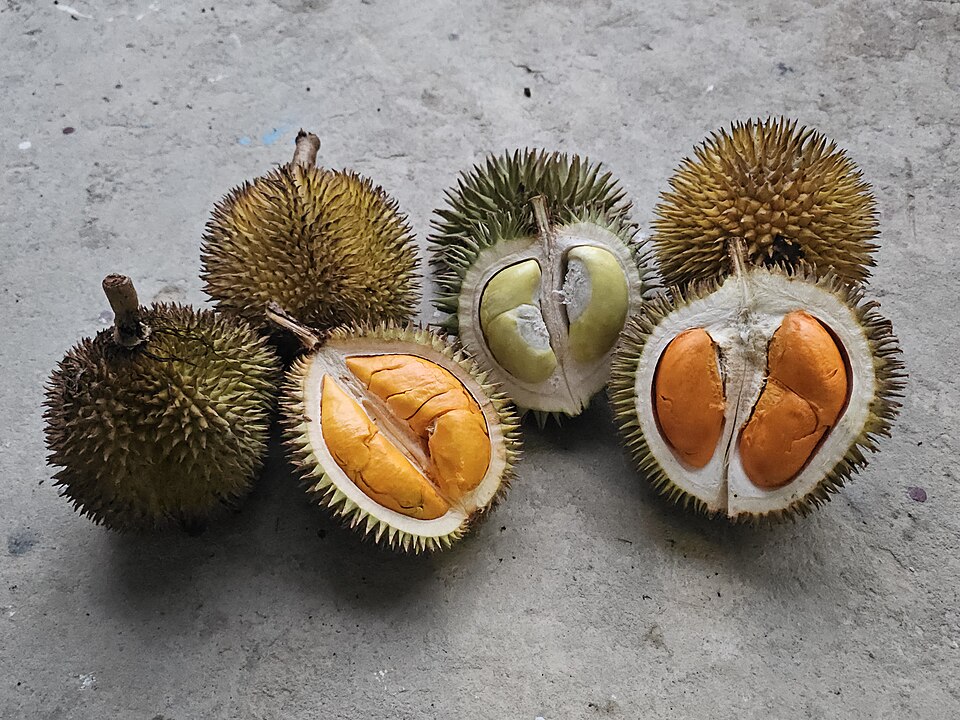
Known in some regions as the "king of fruits", the durian is distinctive for its large size, strong odour, and thorn-covered rind. The fruit can grow as large as 30 cm (12 in) long and 15 cm (6 in) in diameter, and it typically weighs 1 to 3 kg (2 to 7 lb). Its shape ranges from oblong to round, the colour of its husk from green to brown, and its flesh from pale yellow to red, depending on the species. The flavour of the flesh is complex with savoury notes. The texture is creamy and pudding-like.
Some people regard the durian as having a pleasantly sweet fragrance, whereas many others find the aroma overpowering and unpleasant. The persistence of its strong odour, which may linger for several days, has led some hotels and public transportation services in Southeast Asia, such as in Singapore and Bangkok, to ban the fruit. The flesh can be consumed at various stages of ripeness, and it is used to flavour a wide variety of sweet desserts and savoury dishes in Southeast Asian cuisines. The seeds can be eaten when cooked.
Further reading
Durian is one of the 3D puzzles in World Artifacts: turn a cloud of broken pieces until it lines up. For iPhone, iPad, Apple Vision Pro and Android.

