World Artifacts › Atlas › Namibia
Hoba Meteorite
The great iron meteorite.
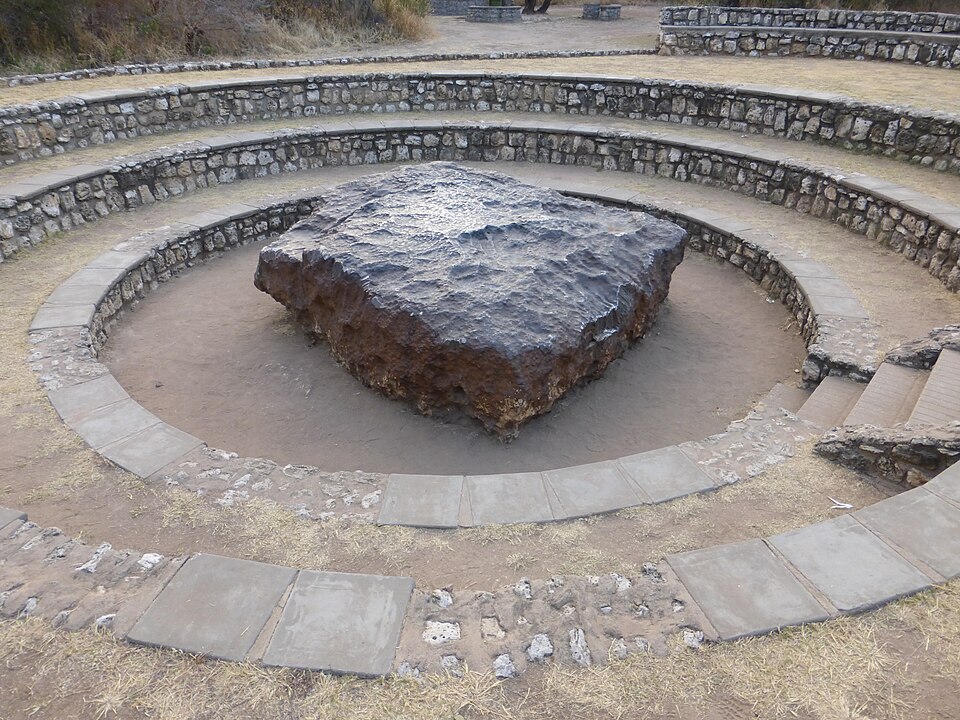
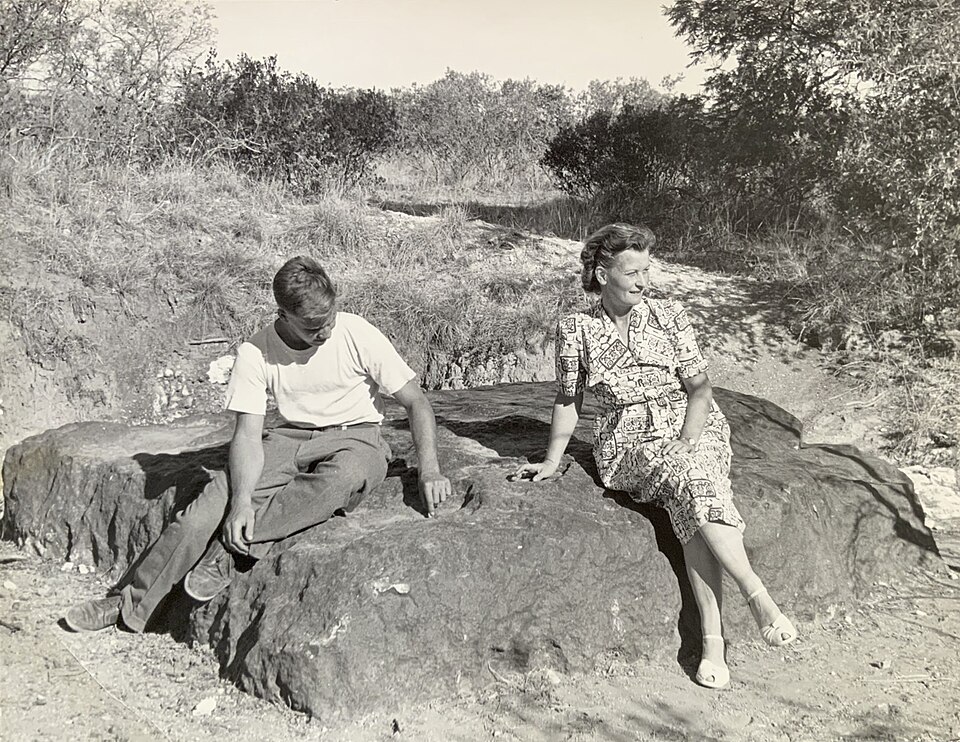
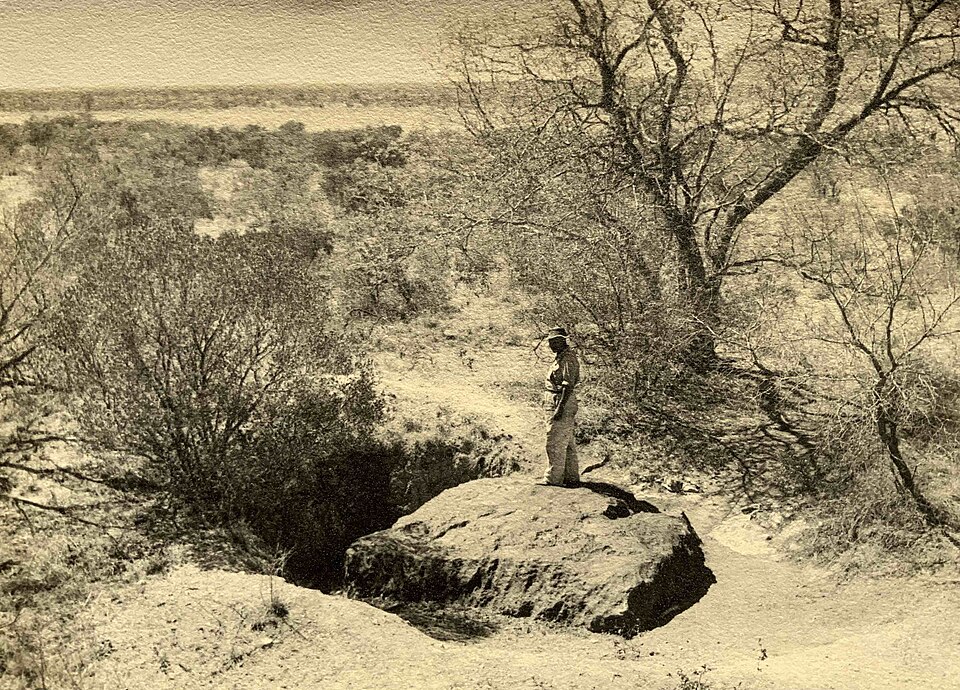
The Hoba ( HOH-bə) meteorite is named after the farm Hoba West, where it lies, not far from Grootfontein, in the Otjozondjupa Region of Namibia. It has been uncovered, but because of its large mass, has never been moved from where it fell. The main mass (some parts have apparently been chopped off) is estimated at more than 60 tonnes. It is the largest known intact meteorite (as a single piece) and about twice as massive as the largest fragment of either the Cape York meteorite's 31-tonne Ahnighito kept in the American Museum of Natural History or the Campo del Cielo's 31-tonne Gancedo. It is also the most massive naturally occurring piece of iron (specifically ferronickel) known on Earth's surface. The name Hoba comes from a Khoekhoegowab word meaning 'gift'. Following its donation to the government in 1987, a visitor centre was constructed with a circular stone access and seating area.
Further reading
Hoba Meteorite is one of the 3D puzzles in World Artifacts: turn a cloud of broken pieces until it lines up. For iPhone, iPad, Apple Vision Pro and Android.

