World Artifacts › Atlas › Nigeria
Nok Terracotta
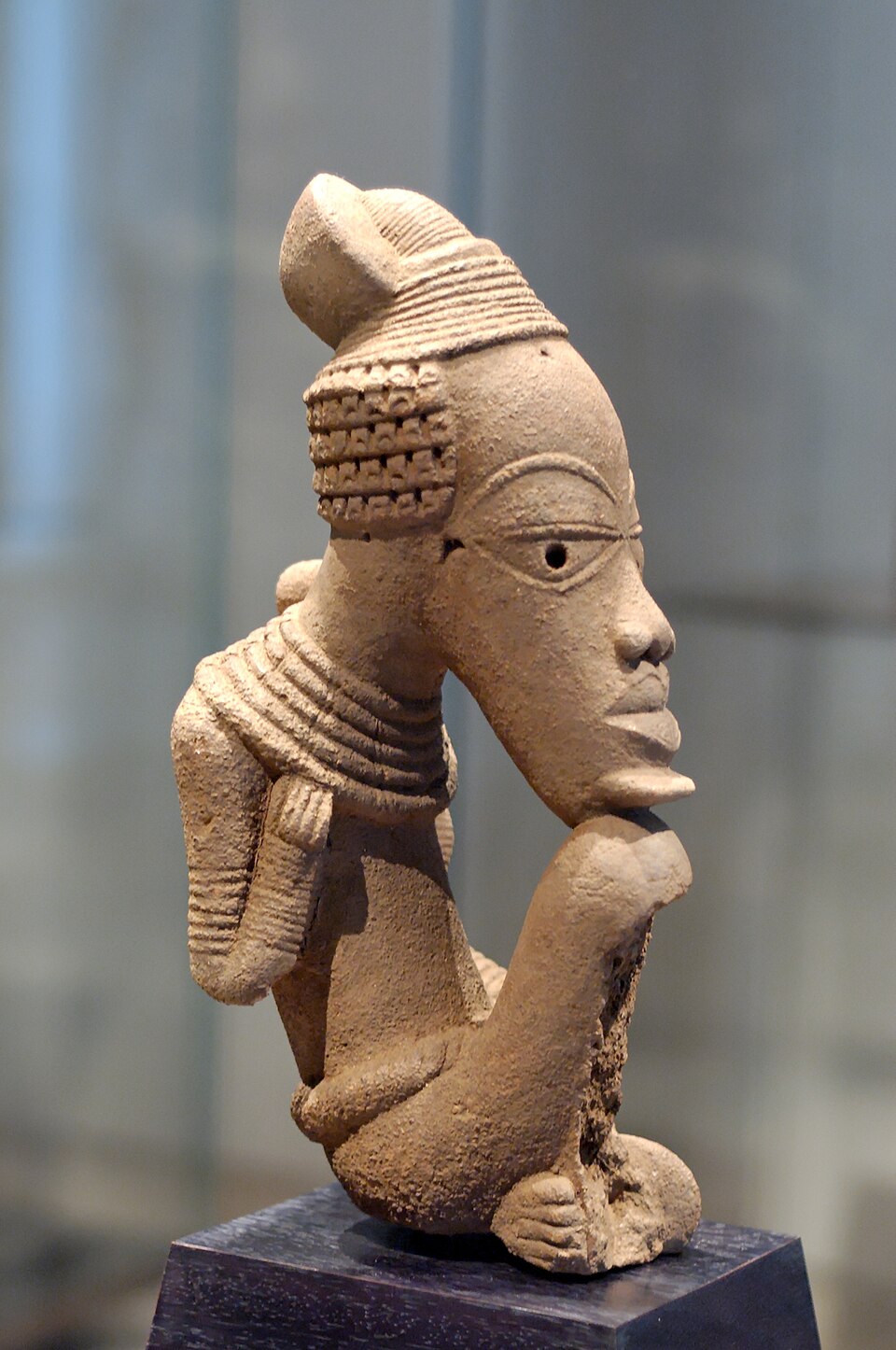
The terracotta head with pierced eyes.
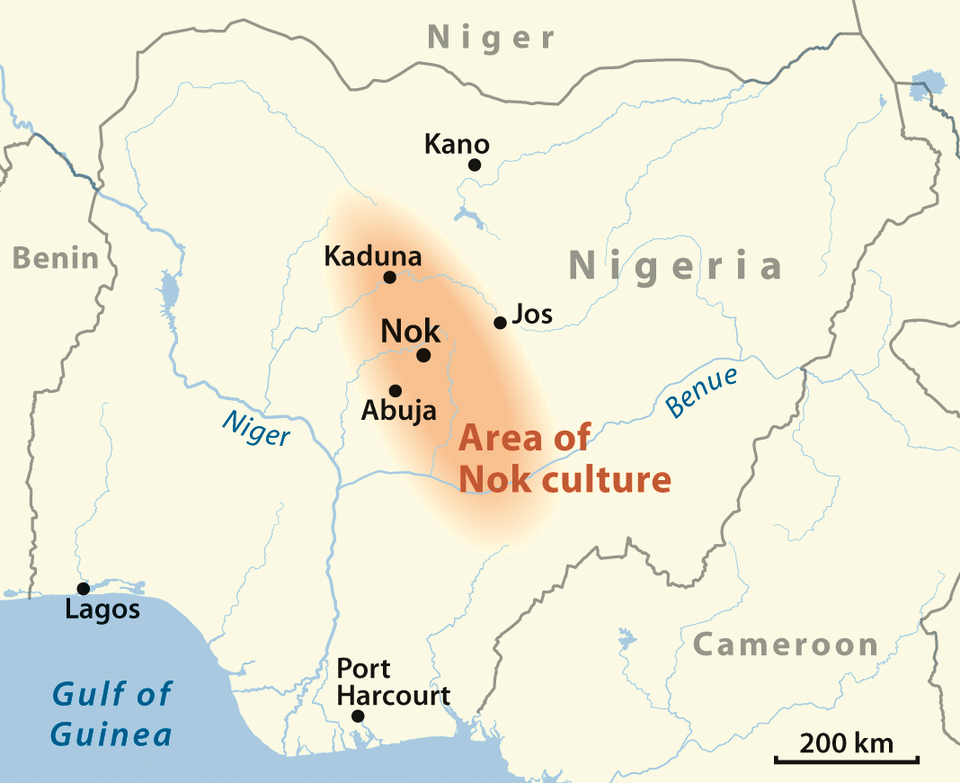
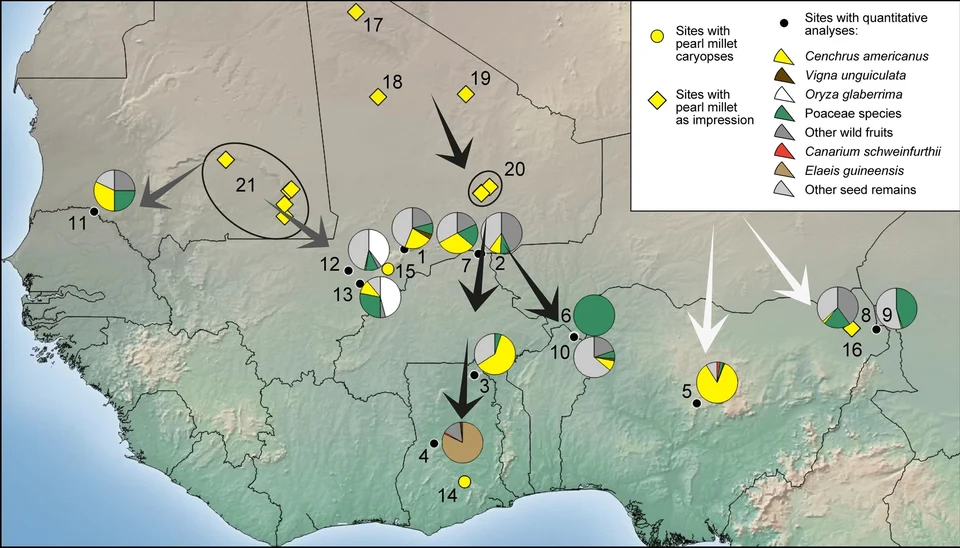
The Nok culture is a population whose material remains are named after the Ham village of Nok in southern Kaduna State of Nigeria, where their terracotta sculptures were first discovered in 1928. The Nok people and the Gajiganna people may have migrated from the Central Sahara, along with pearl millet and pottery, and diverged prior to arriving in the northern region of modern-day Nigeria. This may have led to their respective settlements in the regions of Gajiganna and Nok. Nok people may have also migrated from the West African Sahel to the region of Nok. Nok culture may have emerged in 1500 BCE and continued to persist until 1 BCE.
Further reading
Nok Terracotta is one of the 3D puzzles in World Artifacts: turn a cloud of broken pieces until it lines up. For iPhone, iPad, Apple Vision Pro and Android.

