World Artifacts › Atlas › Nigeria
Oil Palm
The palm with red fruit.
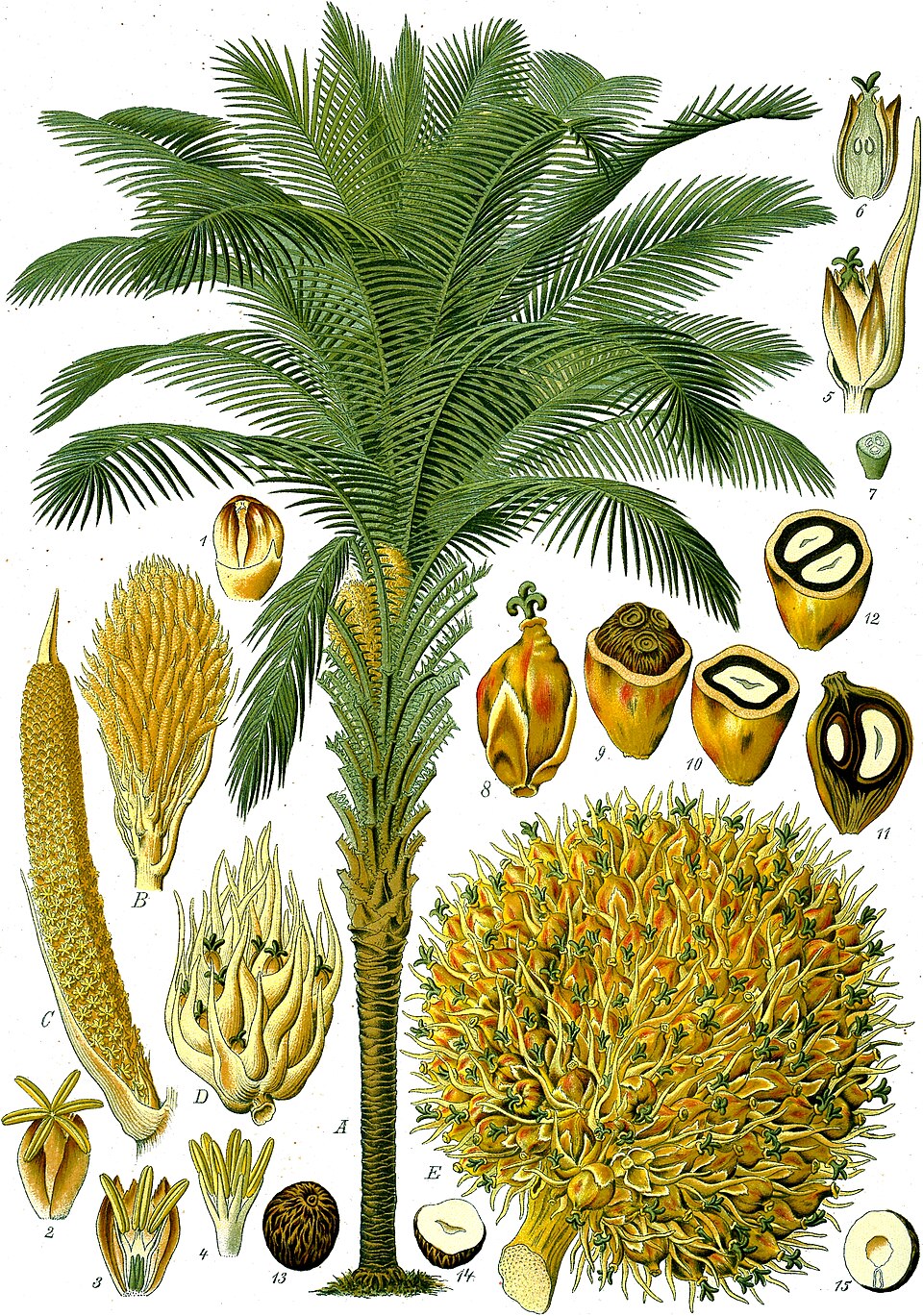
Elaeis guineensis is a species of palm commonly called oil palm but also sometimes African oil palm or macaw-fat. The first Western person to describe it and bring back seeds was the French naturalist Michel Adanson.
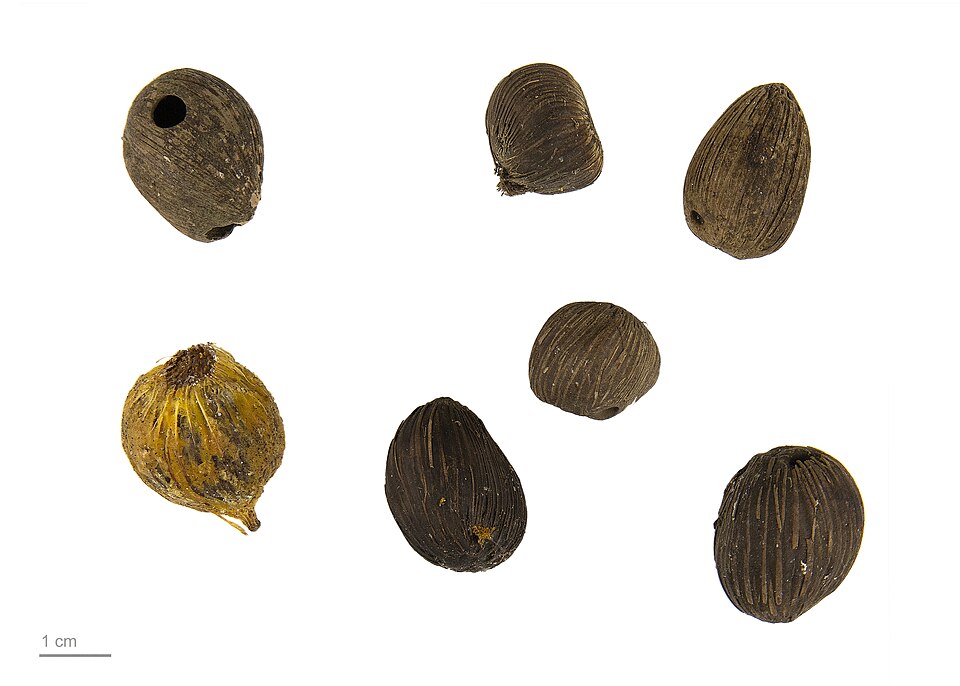
It is native to west and southwest Africa, specifically the area between Angola and The Gambia; the species name, guineensis, refers to the name for the area called Guinea, and not the modern country Guinea now bearing that name. The species is also now naturalised in Madagascar, Sri Lanka, Malaysia, Indonesia, Central America, Cambodia, the West Indies, and several islands in the Indian and Pacific Oceans. The closely related American oil palm E. oleifera and a more distantly related palm, Attalea maripa, are also used to produce palm oil.
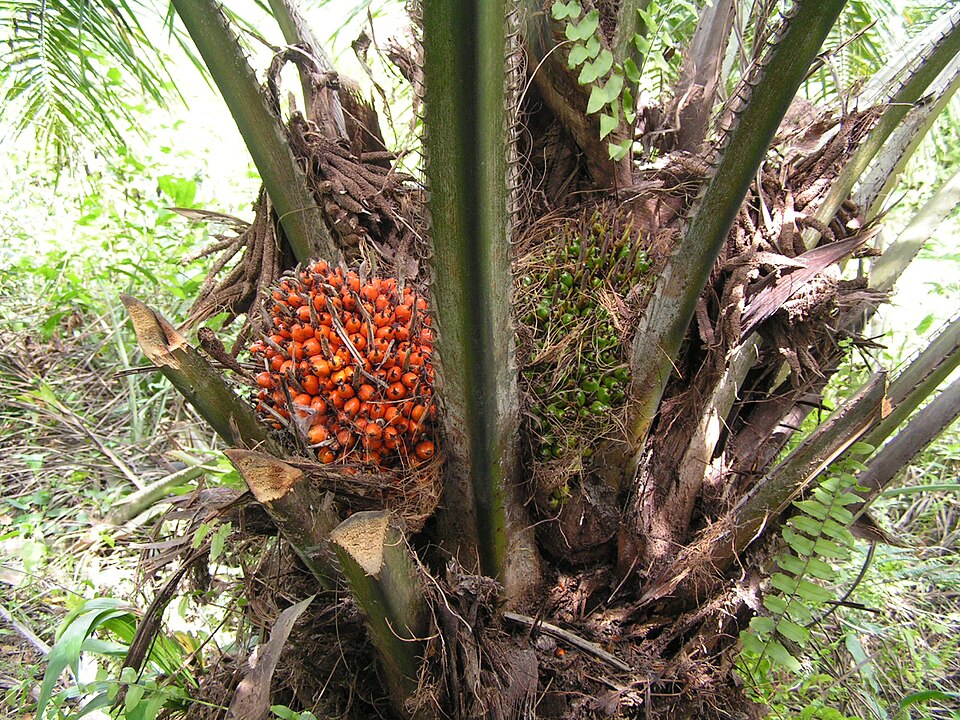
E. guineensis was domesticated in West Africa along the south-facing Atlantic coast. There is insufficient documentation and as of 2019 insufficient research to make any guesses as to when this occurred. Human use of oil palms may date as far back as 5,000 years in Egypt; in the late 1800s, archaeologists discovered palm oil in a tomb at Abydos, Egypt, dating back to 3000 BCE (but this information needs further investigation, due to recent reviews. The oil found in Abydos may be just date oil or even animal fats).
It is the principal source of palm oil. Oil palms can produce much more oil per unit of land area than most other oil-producing plants (about nine times more than soy and 4.5 times more than rapeseed).
Further reading
- Commerce and Economic Change in West Africa · Martin Lynn (1997)Covers the history of the palm oil trade and commerce in West Africa.Find a copy: AbeBooks · Amazon · WorldCat
- The oil palm · R. H. V. Corley (2003)A research-oriented book on the oil palm and its yields as an oil crop.Find a copy: AbeBooks · Amazon · WorldCat
Oil Palm is one of the 3D puzzles in World Artifacts: turn a cloud of broken pieces until it lines up. For iPhone, iPad, Apple Vision Pro and Android.

