World Artifacts › Atlas › Netherlands
Canal House
Amsterdam taxed houses on their width, which is why they are so narrow and so deep. The beam and hook at the top is for hoisting furniture, and the fronts lean forward on purpose so the load clears the windows on the way up.
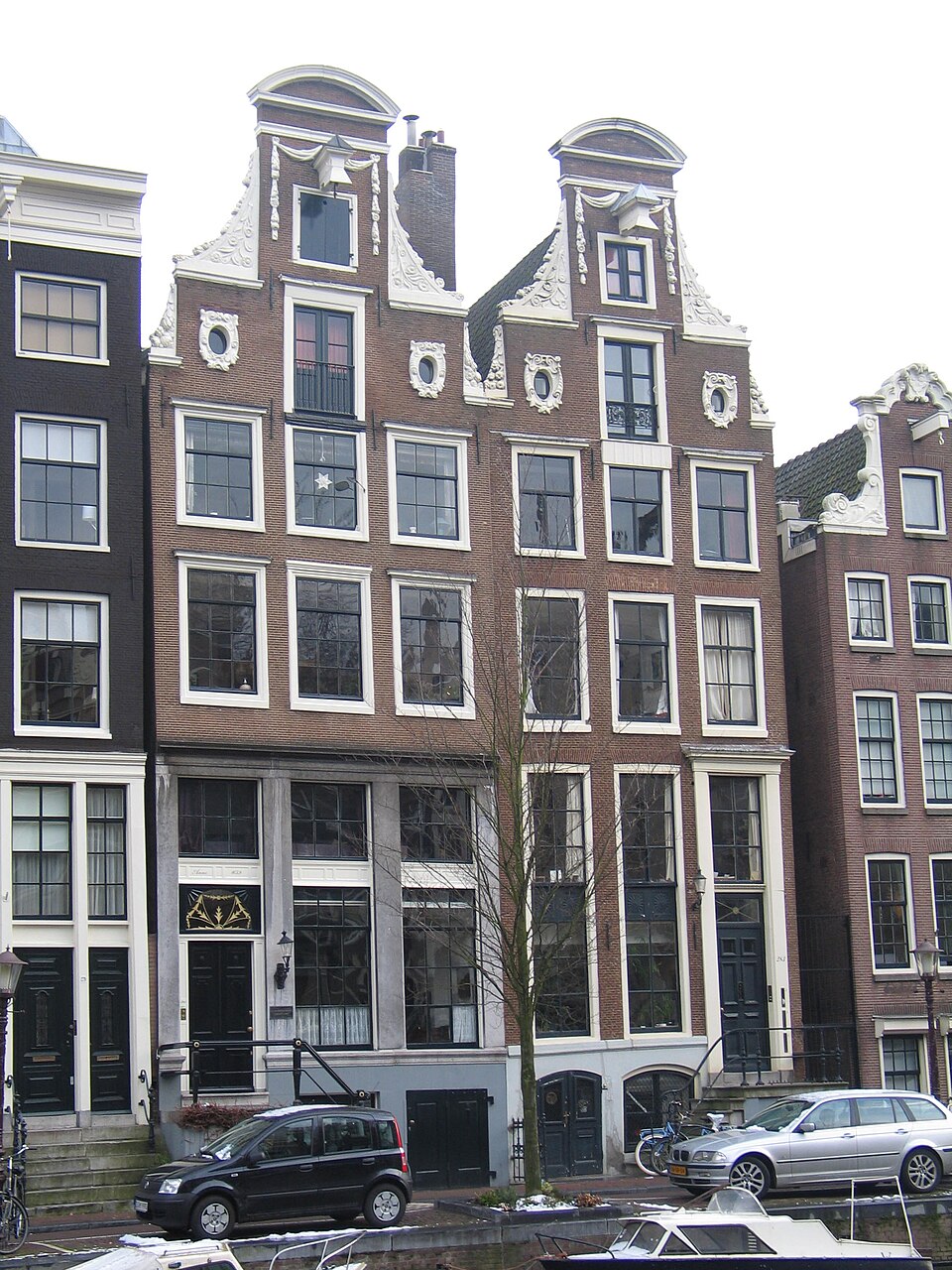
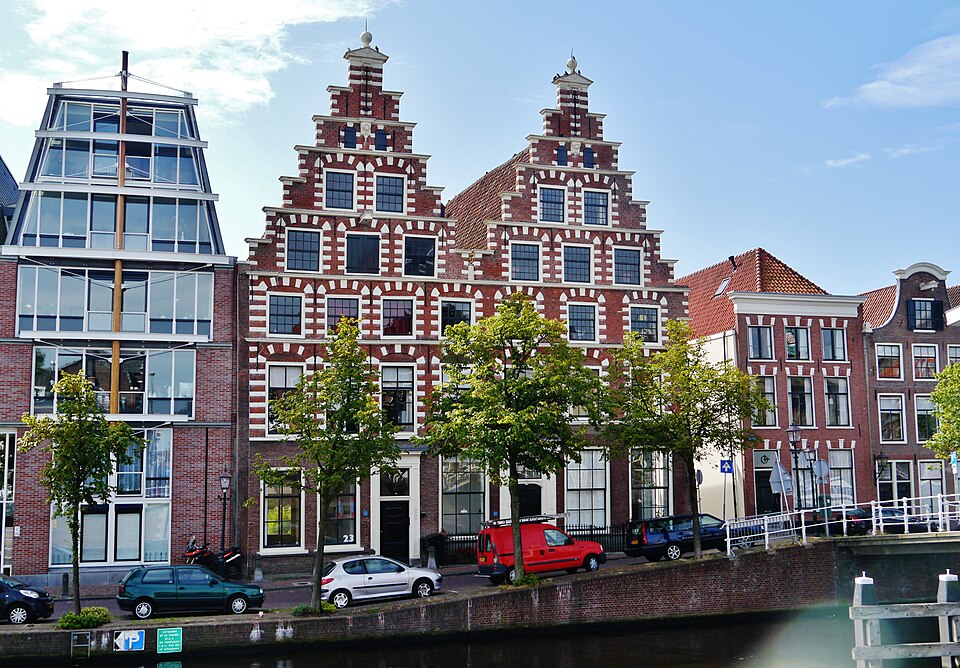
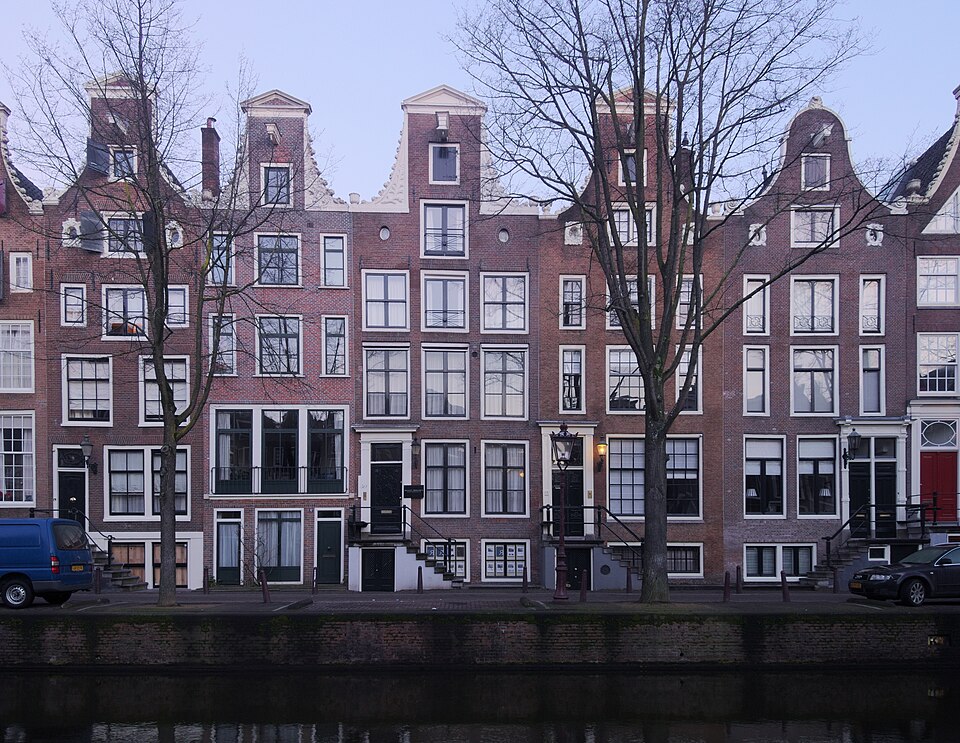
A canal house (Dutch: grachtenpand) is a (usually old) house overlooking a canal. These houses are often slim, high and deep. Canal houses usually had a basement and a loft and attic where trade goods could be stored. A special beam or pulley installation would be located in the attic to hoist up valuable goods, like spices, cotton, or heavier stuff like cocoa. In recent times, the pulleys are only used (albeit rarely) for moving furniture.
At the back of a canal house, there will usually be a back garden that runs either halfway or to the house behind. The garden would be laid out to the taste of the time and the financial position of the owner. At the bottom of the garden, there was sometimes a summerhouse where family and visitors could relax.
In the second half of the 17th century, there would sometimes be built a rear extension of the building and linked by a passage to the front house. The courtyard ensured light. It could be used for many purposes, and during World War II Anne Frank and her family were using the back house as a hiding place.
Further reading
Canal House is one of the 3D puzzles in World Artifacts: turn a cloud of broken pieces until it lines up. For iPhone, iPad, Apple Vision Pro and Android.

