World Artifacts › Atlas › Netherlands
Dutch Flag
The flag was orange, white and blue in the 1600s, after the House of Orange. The orange dye faded to red at sea and the red version gradually took over, and it was formally fixed in 1937.
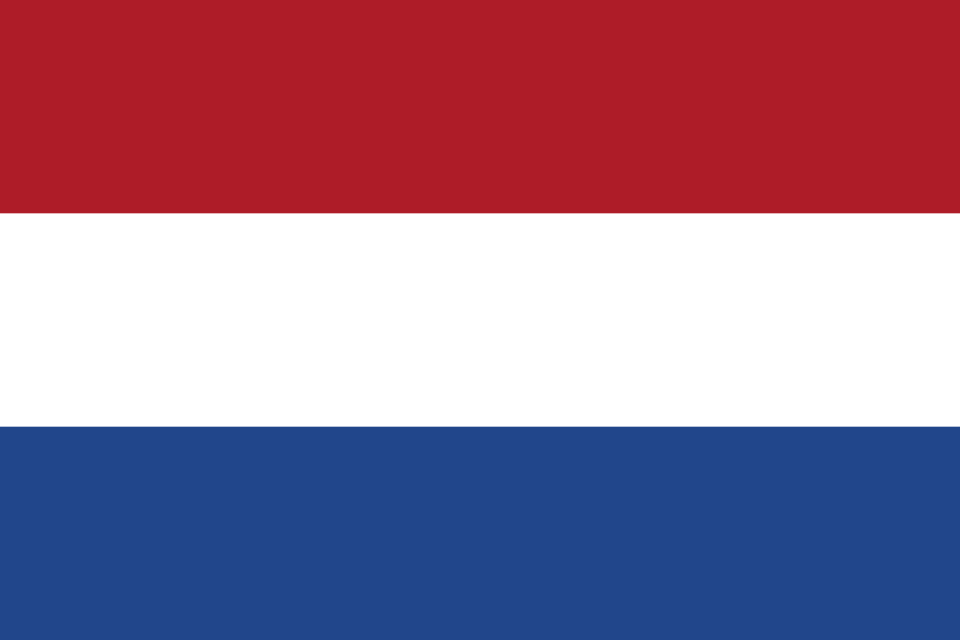
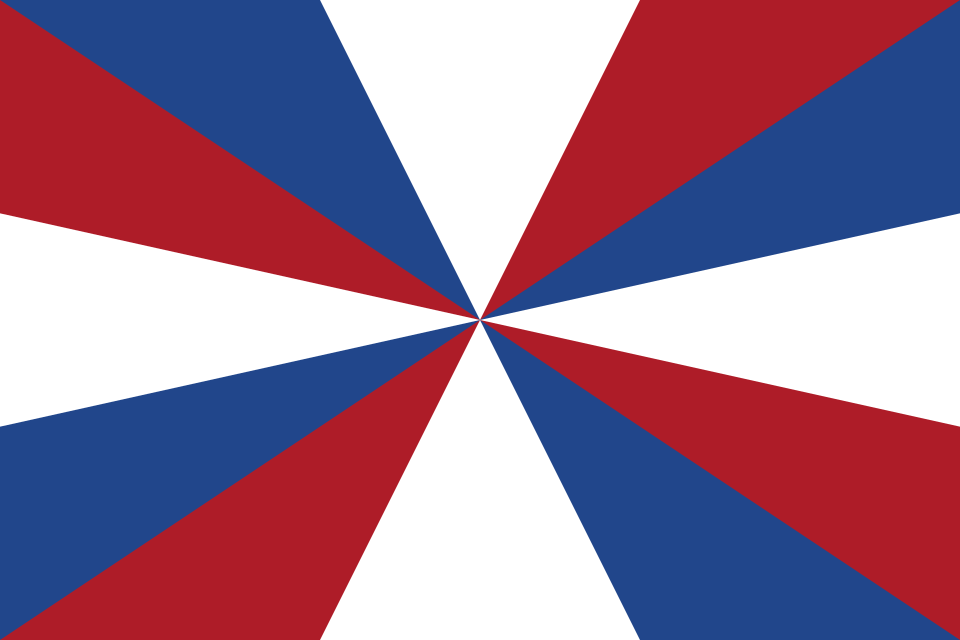
The national flag of the Netherlands (Dutch: de Nederlandse flag) is a horizontal tricolour of red, white, and blue. The current design originates as a variant of the late 16th century orange-white-blue Prinsenvlag ("Prince's Flag"), evolving in the early 17th century as the red-white-blue Statenvlag ("States Flag"), the naval flag of the States-General of the Dutch Republic, making the Dutch flag the oldest tricolour flag in continuous use. As a flag that symbolises the transformation from monarchy to republic, it has inspired both the derivative Russian flag, and after the French Revolution in 1789, the vertically striped French tricolour; both flags in turn influenced many other tricolours.
During the 1920s and the economic crisis of the 1930s, the old Prince's Flag with the colour orange gained some popularity among Protestants, Orangists, conservative liberals, fascists, and others. To end the confusion, the colours red, white and blue and its official status as the national flag of the Kingdom of the Netherlands were reaffirmed by royal decree on 19 February 1937.
Further reading
Dutch Flag is one of the 3D puzzles in World Artifacts: turn a cloud of broken pieces until it lines up. For iPhone, iPad, Apple Vision Pro and Android.

