World Artifacts › Atlas › Netherlands
Leeuwenhoek's Microscope
Van Leeuwenhoek was a draper who ground his own lenses and saw bacteria before anyone else, using a single tiny bead of glass in a brass plate rather than a tube with two lenses. He never told anyone how he made the lenses, and it took two centuries to match him.
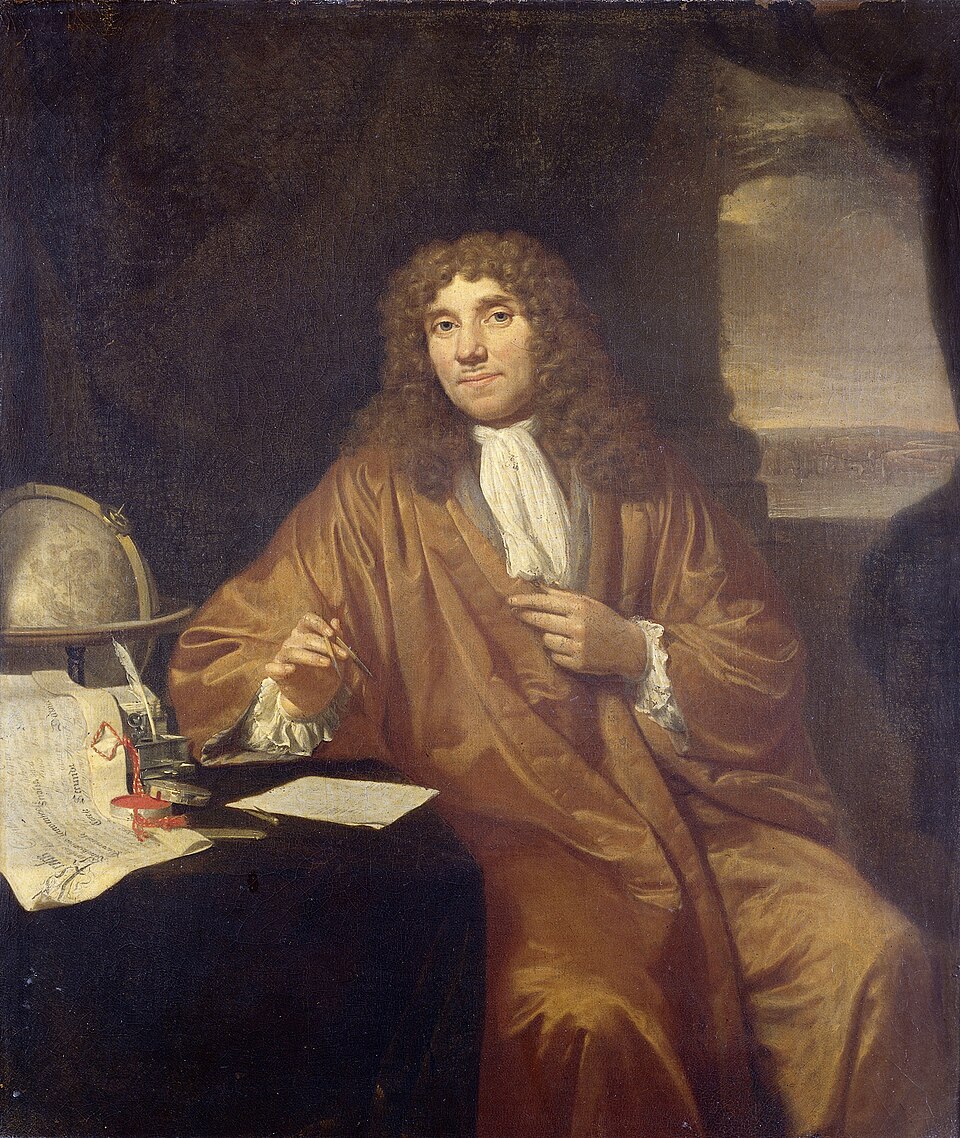
Antonie Philips van Leeuwenhoek ( AHN-tə-nee vahn LAY-vən-hook, -huuk; Dutch: [ˈɑntoːni vɑn ˈleːu.ə(n)ˌɦuk] ; 24 October 1632 - 26 August 1723) was a Dutch microbiologist and microscopist in the Golden Age of Dutch art, science and technology. A largely self-taught man in science, he is commonly known as "the Father of Microbiology", and one of the first microscopists and microbiologists. Van Leeuwenhoek is best known for his pioneering work in microscopy and for his contributions toward the establishment of microbiology as a scientific discipline.
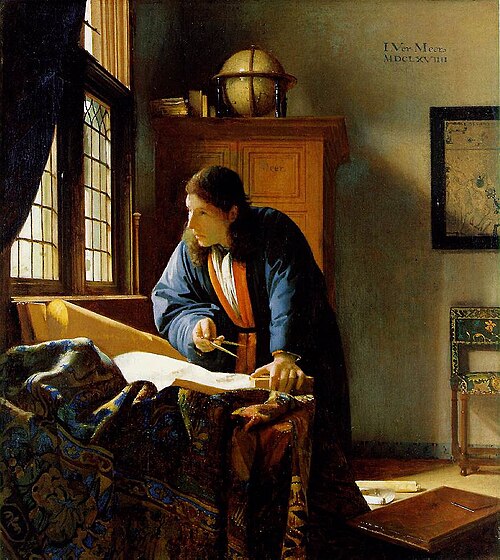
Raised in Delft, Dutch Republic, Van Leeuwenhoek worked as a draper in his youth and founded his own shop in 1654. He became well-recognized in municipal politics and developed an interest in lensmaking. In the 1670s, he started to explore microbial life with his microscope.
Further reading
- Single lens · Brian J. Ford (1985)A study of Leeuwenhek's single-lens microscopes and microscopy.Find a copy: AbeBooks · Amazon · WorldCat
- Antony van Leeuwenhoek and his "Little animals" · Clifford Dobell (1932)Dobell's work on Leeuwenhoek and his 'little animals', covering bacteria and protozoa.Find a copy: AbeBooks · Amazon · WorldCat
Leeuwenhoek's Microscope is one of the 3D puzzles in World Artifacts: turn a cloud of broken pieces until it lines up. For iPhone, iPad, Apple Vision Pro and Android.

