World Artifacts › Atlas › Netherlands
VOC Ship
The Dutch East India Company was the first business to sell shares that anyone could buy and sell on, which is what made Amsterdam the first stock exchange. It was also given the right to make war and to execute people, and it used both.
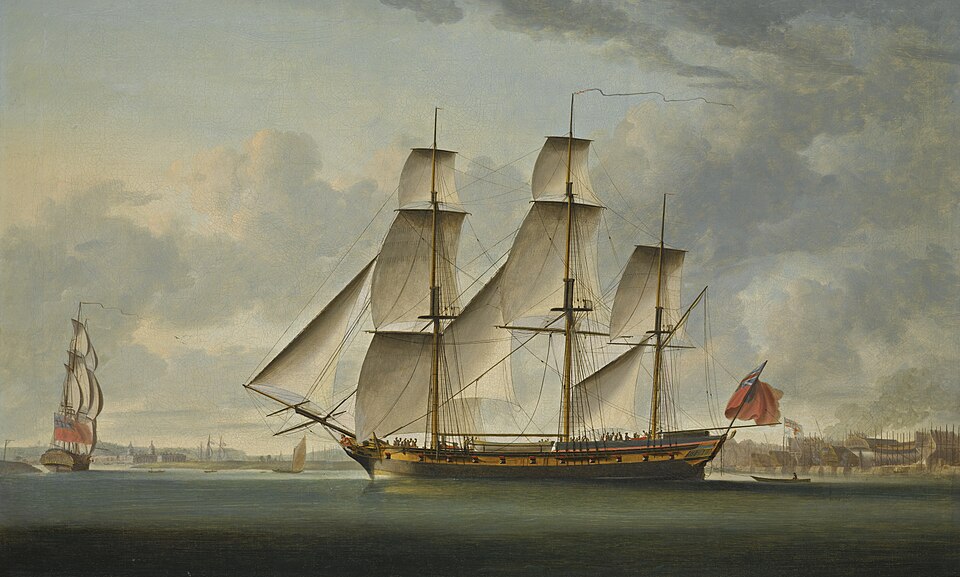
East Indiamen were merchant ships that operated under charter or licence for European trading companies which traded with the East Indies between the 17th and 19th centuries. The term was commonly used to refer to vessels belonging to the British, Dutch, French, Danish, Swedish, Austrian or Portuguese East India companies.
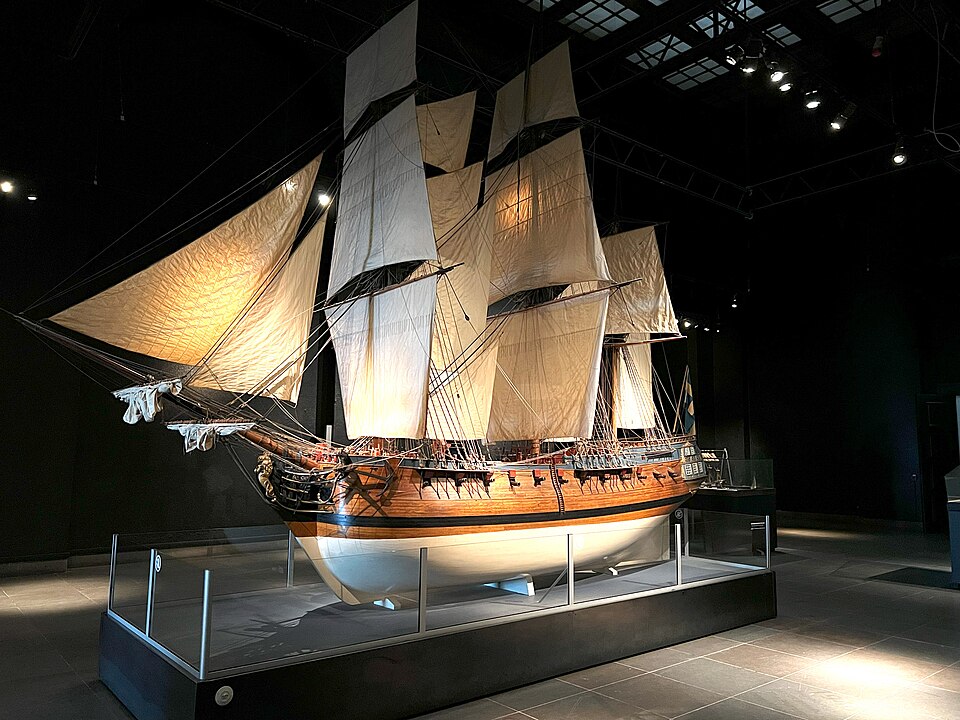
Several East Indiamen chartered by the British East India Company (EIC) were known as clippers. The EIC held a monopoly granted to it by Elizabeth I in 1600 for all English trade between the Cape of Good Hope and Cape Horn. This grant was progressively restricted during the late 18th and early 19th centuries, until the monopoly was lost in 1834. EIC East Indiamen usually ran between Britain, the Cape of Good Hope and India, where their primary destinations were the ports of Bombay, Madras and Calcutta.
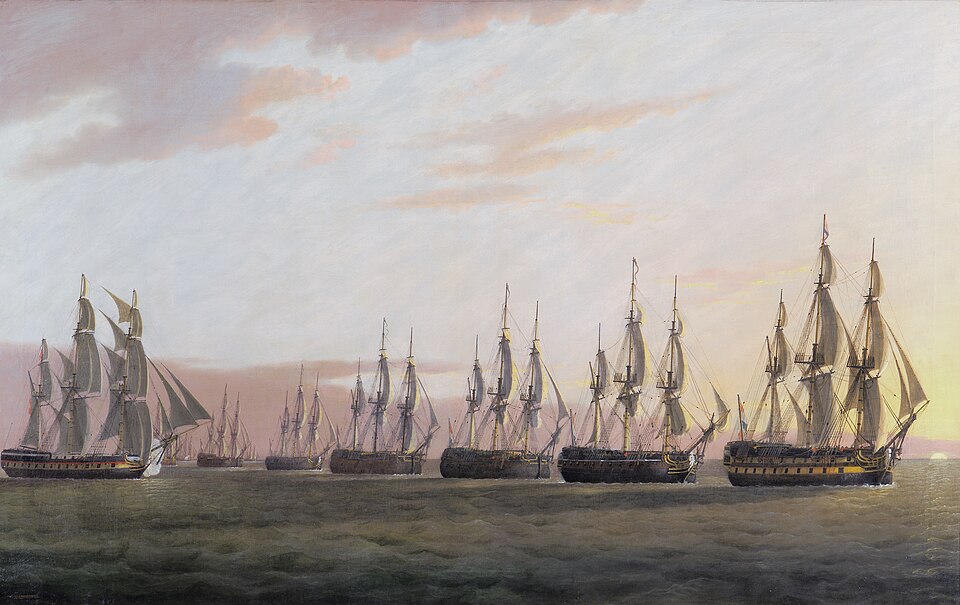
EIC East Indiamen often continued on to China before returning to England via the Cape of Good Hope and Saint Helena. When the EIC lost its monopoly, the ships of this design were sold off. A smaller, faster ship known as a Blackwall Frigate was built for the trade as the need to carry heavy armaments declined.
Further reading
- Dutch-Asiatic shipping in the 17th and 18th centuries · J. R. Bruijn (1979)A history of Dutch-Asiatic shipping and merchant ships in the 17th and 18th centuries.Find a copy: AbeBooks · Amazon · WorldCat
- The Dutch East India Company · Femme S. Gaastra (2002)A history of the Dutch East India Company.Find a copy: AbeBooks · Amazon · WorldCat
VOC Ship is one of the 3D puzzles in World Artifacts: turn a cloud of broken pieces until it lines up. For iPhone, iPad, Apple Vision Pro and Android.

