World Artifacts › Atlas › Netherlands
William of Orange
William of Orange was shot in his own house in Delft in 1584 by a man who had come to him for a passport, and he is generally recorded as the first head of state assassinated with a handgun. The bullet holes are still in the wall.
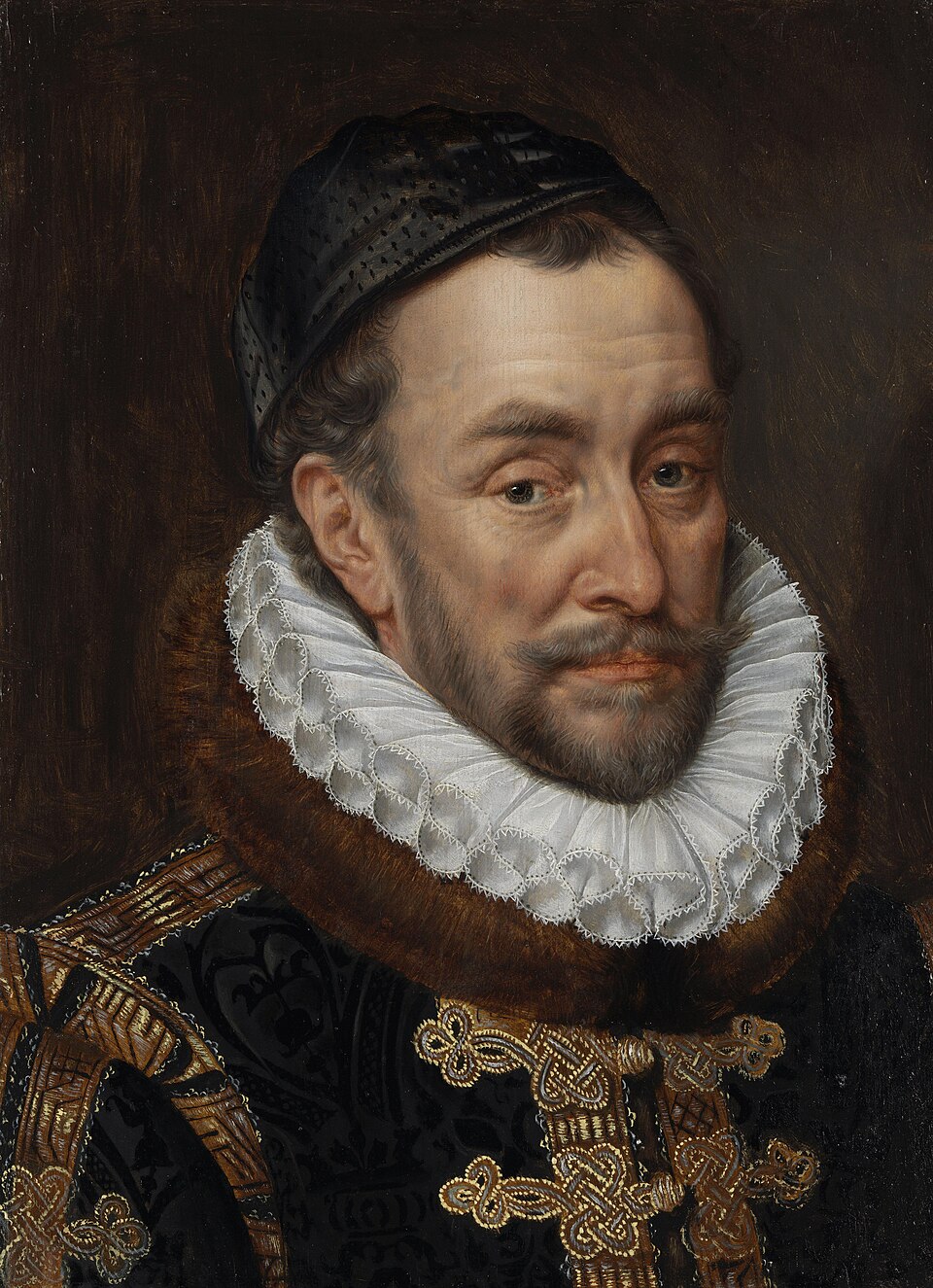
William the Silent or William the Taciturn (Dutch: Willem de Zwijger; 24 April 1533 - 10 July 1584), more commonly known in the Netherlands as William of Orange (Dutch: Willem van Oranje) and in the Dutch national anthem as William of Nassau (Dutch: Willem van Nassau), was the leader of the Dutch revolt against the Spanish Habsburgs that set off the Eighty Years' War (1568-1648) and resulted in the formal independence of the United Provinces in 1648. Born into the House of Nassau, he became Prince of Orange in 1544 and is thereby the founder of the Orange-Nassau branch and the ancestor of the monarchy of the Netherlands.
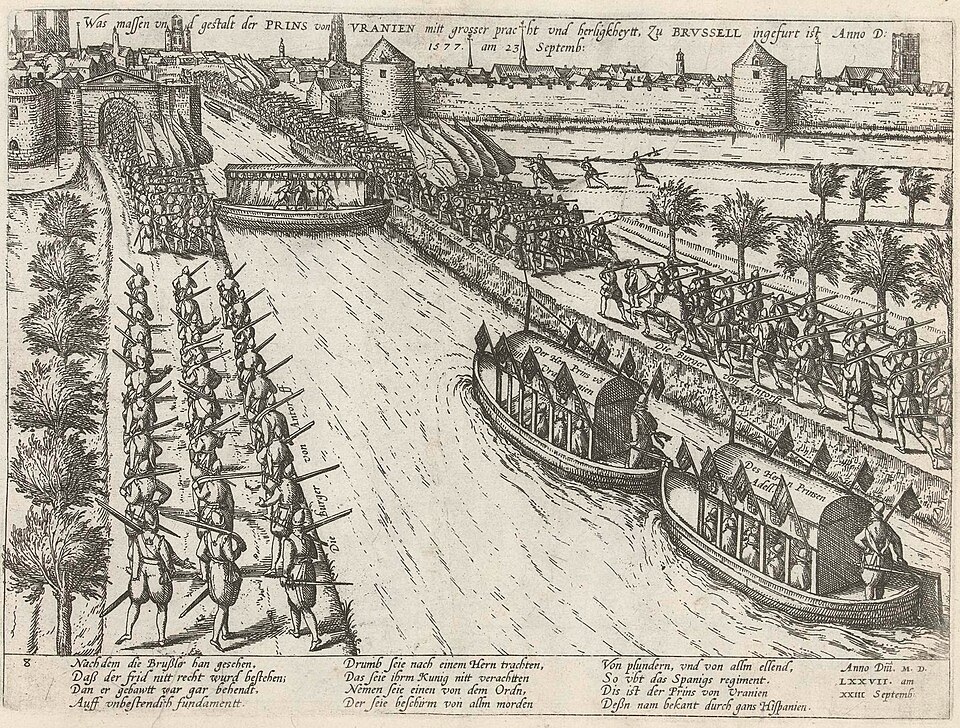
A wealthy nobleman, William originally served the Habsburgs as a member of the court of Margaret of Parma, governor of the Spanish Netherlands. Unhappy with the centralisation of political power away from the local estates and with the Spanish persecution of Dutch Protestants, William joined the Dutch uprising and turned against his former masters. The most influential and politically capable of the rebels, he led the Dutch to several successes in the fight against the Spanish. Declared an outlaw by the Spanish king in 1580, he was assassinated by Balthasar Gérard in Delft in 1584.
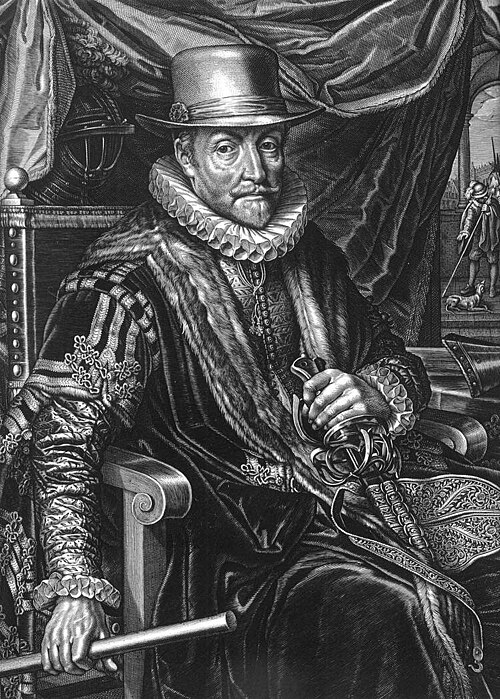
In modern Dutch society, William is widely considered a heroic figure and the principal founding father of the Netherlands. He is also known as Father of the Fatherland (Latin: Pater Patriae; Dutch: Vader des Vaderlands).
Further reading
- The Awful End of Prince William the Silent · Lisa Jardine (2005)Tells the story of the assassination of William the Silent in 1584 and his death.Find a copy: AbeBooks · Amazon · WorldCat
- William the Silent · Veronica Wedgwood (1678)A biography of William I, Prince of Orange, and the history of the Netherlands in his time.Find a copy: AbeBooks · Amazon · WorldCat
William of Orange is one of the 3D puzzles in World Artifacts: turn a cloud of broken pieces until it lines up. For iPhone, iPad, Apple Vision Pro and Android.

