World Artifacts › Atlas › Norway
Cod Drying Rack
Cod hung on these racks in the cold dry air lose most of their water without salt and keep for years. Dried Norwegian cod has been exported since the Viking age, and the biggest markets today are Italy and Nigeria.
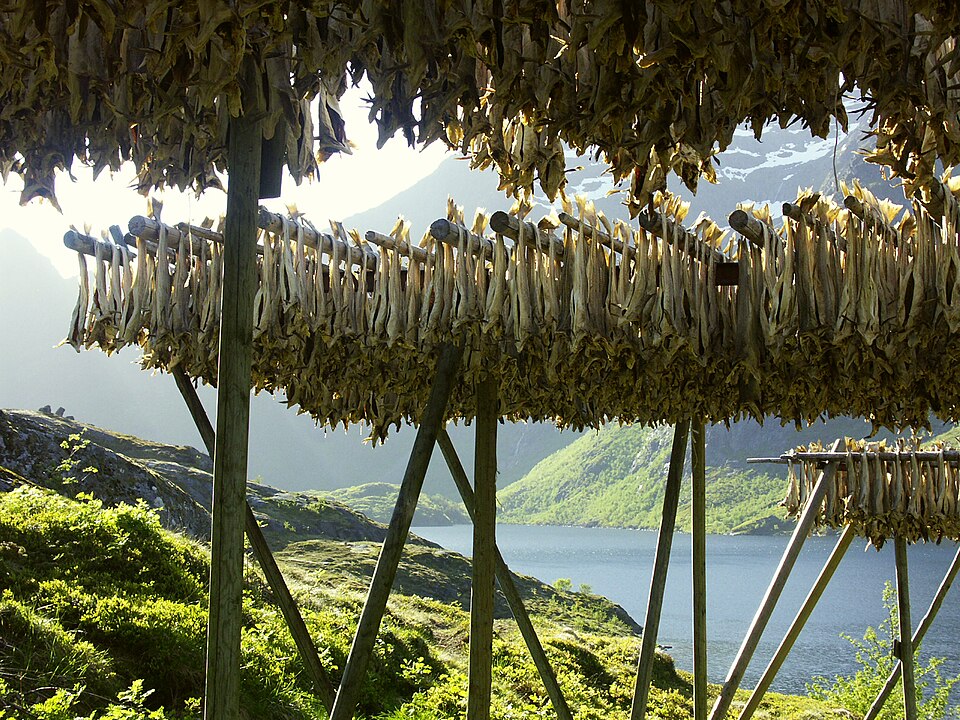
Stockfish is unsalted fish, especially cod, dried by cold air and wind on wooden racks (which are called "hjell" in Norway) on the foreshore. The drying of food is the world's oldest known preservation method, and dried fish has a storage life of several years. The method is cheap and effective in suitable climates; the work can be done by the fisherman and family, and the resulting product is easily transported to market.
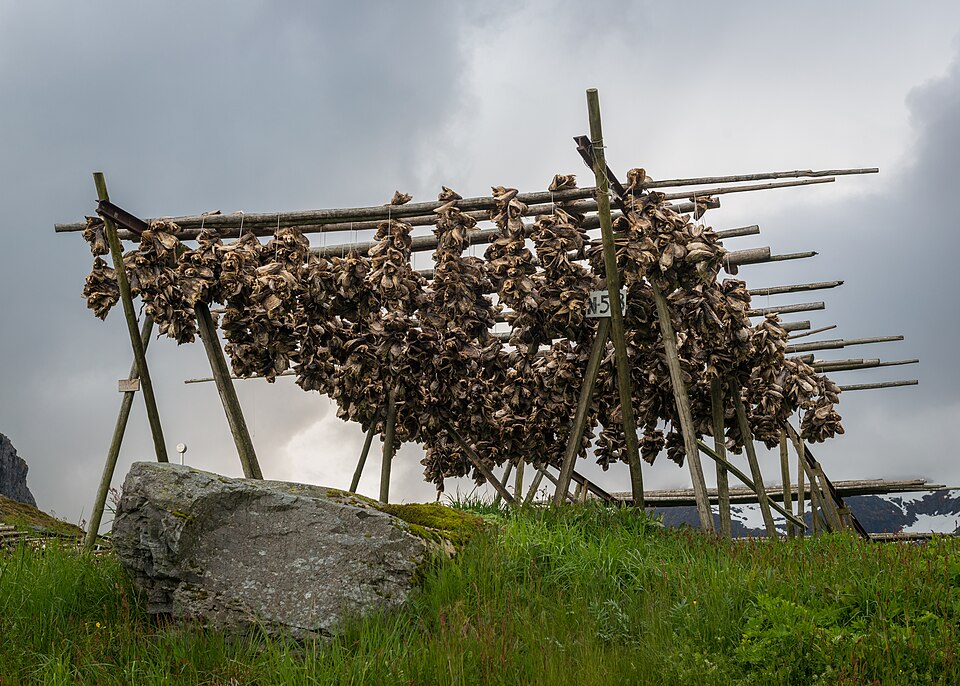
Over the centuries, several variants of dried fish have evolved. The stockfish (fresh dried, not salted) category is often mistaken for the klippfisk, or salted cod, category where the fish is salted before drying. Salting was not economically feasible until the 17th century, when cheap salt from southern Europe became available to the maritime nations of northern Europe.
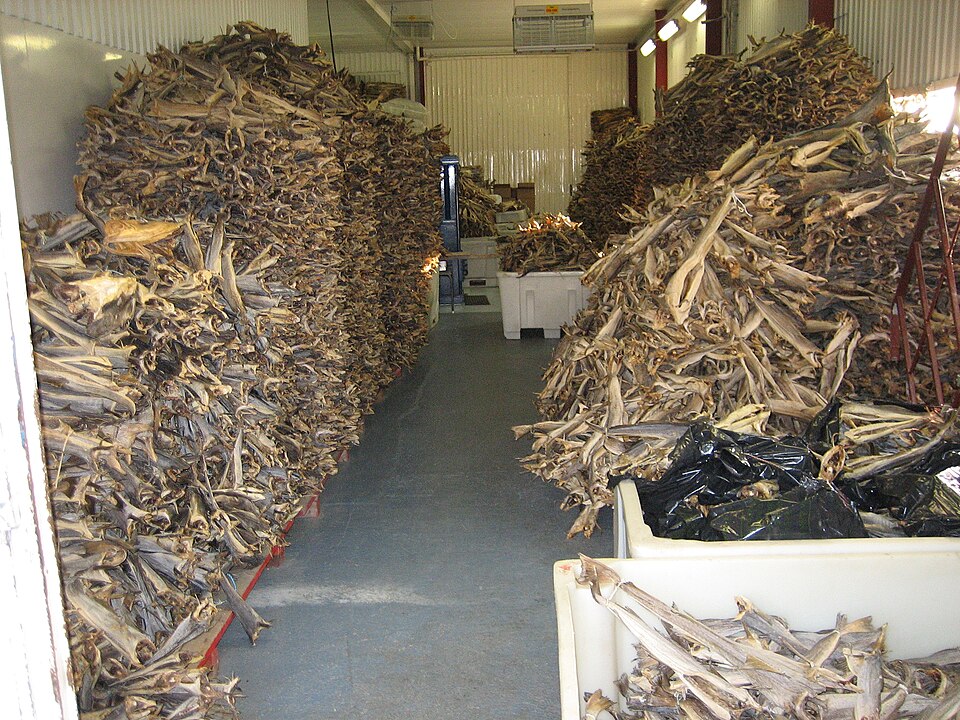
Stockfish is cured in a fermentation process where cold-adapted bacteria matures the fish, similar to the maturing process of cheese.
In English legal records of the medieval period, stock fishmongers are differentiated from ordinary fishmongers when the occupation of a plaintiff or defendant is recorded.
Further reading
- COD; A BIOGRAPHY OF THE FISH THAT CHANGED THE WORLD · Mark Kurlansky (1997)A history of the cod and the cod fisheries, including cooking of codfish.Find a copy: AbeBooks · Amazon · WorldCat
- Fish on Friday · Brian M. Fagan (2005)Covers fish as food and fisheries in Christendom, including the fasting tradition.Find a copy: AbeBooks · Amazon · WorldCat
Cod Drying Rack is one of the 3D puzzles in World Artifacts: turn a cloud of broken pieces until it lines up. For iPhone, iPad, Apple Vision Pro and Android.

