World Artifacts › Atlas › Norway
Kraken
The kraken is a Norwegian word, and it came into English from the sailors' accounts of something enormous rising near a ship. Giant squid do exist, are up to thirteen metres long, and were not scientifically described until the 1850s.
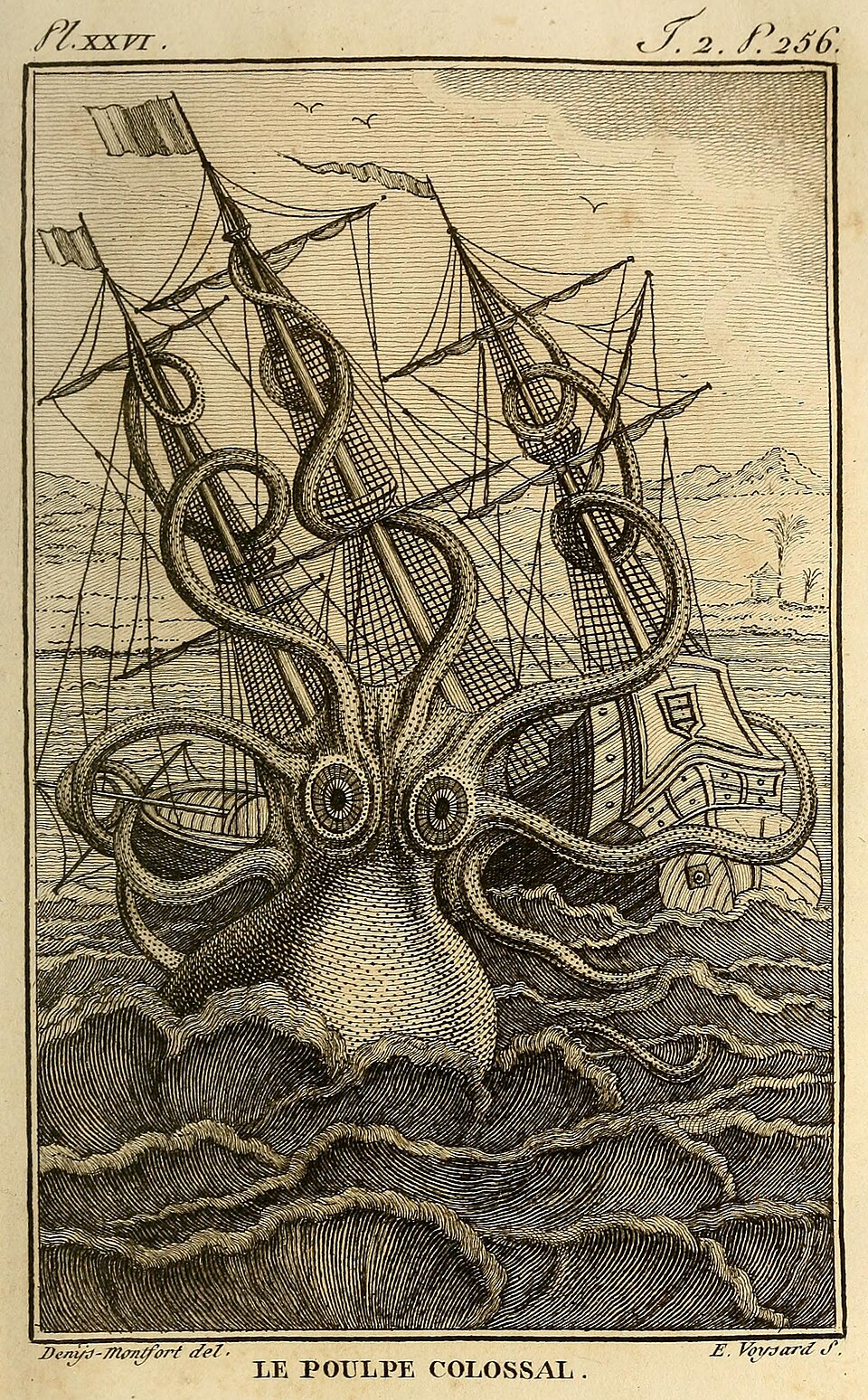
The kraken (; from Norwegian: kraken, ) is a legendary cryptid of enormous size, per its etymology something akin to a cephalopod, said to appear in the Norwegian Sea off the coast of Norway. It is believed that the legend of the Kraken may have originated from sightings of giant squid, which may grow to 10.5 metres (34 ft) in length.
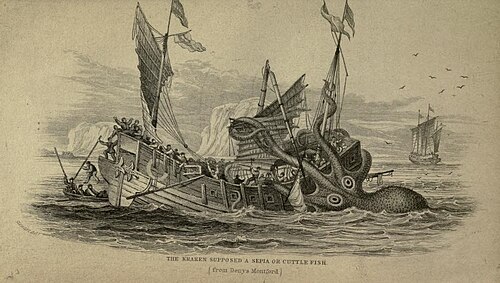
The kraken, as a subject of sailors' superstitions and mythos, was first described in a Norwegian glossary by Christen Jensøn in 1646. Later this creature appears in a travelogue by Francesco Negri in 1700, followed in 1734 by an account from Dano-Norwegian missionary and explorer Hans Egede, who described the kraken in detail and equated it with the hafgufa of medieval lore. However, the first description of the creature is usually credited to the Danish bishop Pontoppidan (1753). He described the kraken as an octopus (polypus) of tremendous size, and wrote that it had a reputation for pulling down ships. The French malacologist Denys-Montfort, of the 19th century, is also known for his pioneering inquiries into the existence of gigantic octopuses.
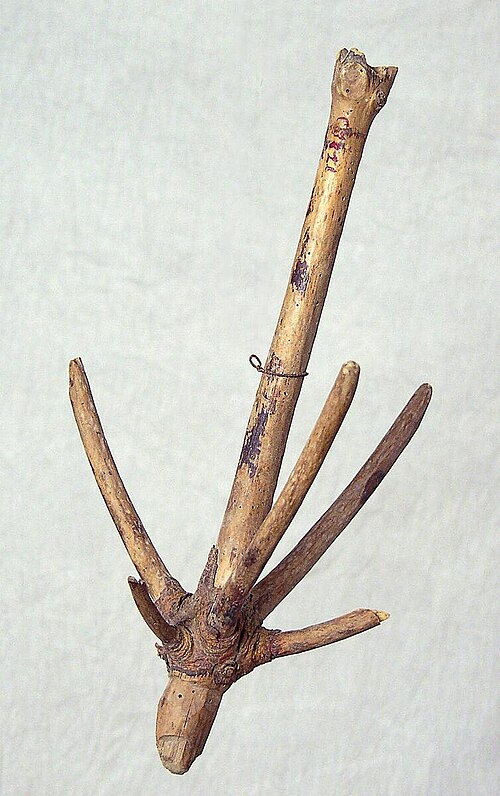
The great man-hunting octopus entered French fiction when Victor Hugo introduced the pieuvre octopus of Guernsey lore in his 1866 novel Toilers of the Sea, which he identified with the kraken of legend. This led to Jules Verne's depiction of the kraken in his novel Twenty Thousand Leagues Under the Seas, although Verne did not distinguish between octopuses and squids.
Further reading
- The search for the giant squid · Richard Ellis (1998)Covers the search for the giant squid, the real animal behind the kraken accounts.Find a copy: AbeBooks · Amazon · WorldCat
- Monsters of the Sea · Richard Ellis (1994)Covers sea monsters and marine animals, the tradition the kraken belongs to.Find a copy: AbeBooks · Amazon · WorldCat
Kraken is one of the 3D puzzles in World Artifacts: turn a cloud of broken pieces until it lines up. For iPhone, iPad, Apple Vision Pro and Android.

