World Artifacts › Atlas › Norway
Troll Doll
The wild-haired troll doll is Danish rather than Norwegian: a woodcarver made the first one in 1959 for his daughter because he could not afford a Christmas present. Norway has thoroughly adopted it, and the trolls it depicts are shared property.
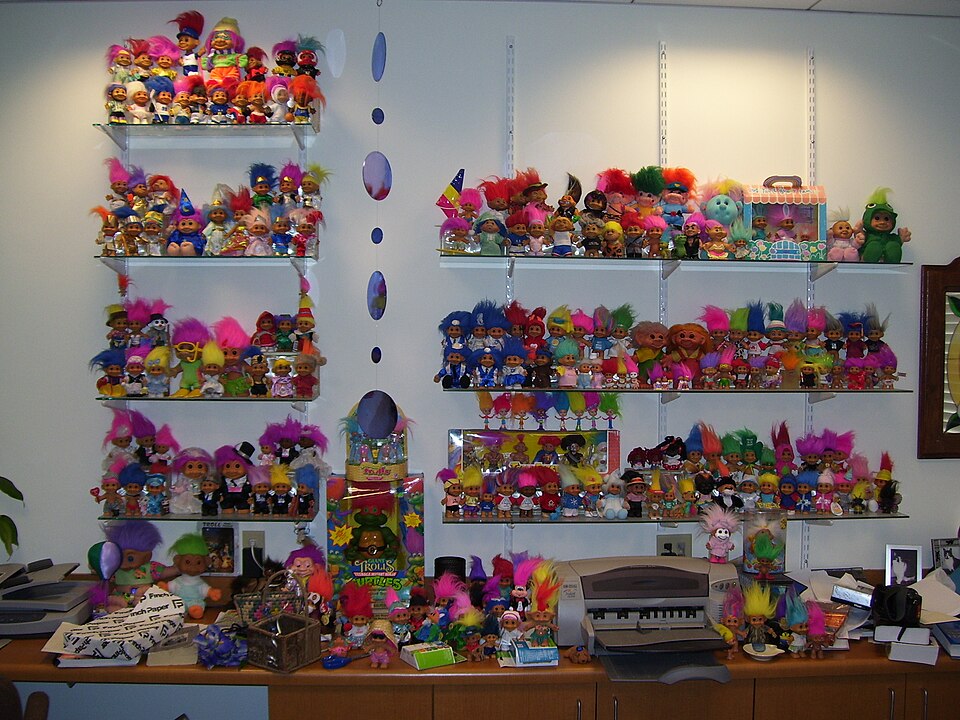
A troll doll (Danish: Gjøltrold) is a type of plastic doll with furry up-combed hair depicting a troll, also known as a Dam doll after their creator Danish woodcutter Thomas Dam. The inspiration came from trolls in old Scandinavian folklore. The toys are also known as good luck trolls.
The dolls were first created in 1956 and were larger and made from a softer, more rubbery material than the smaller versions that became popular in 1959, before becoming one of the United States' biggest toy fads in the early 1960s. They became popular again during the 1970s through the 1990s and were copied by several manufacturers under different names. During the 1990s, several video games and a video show were created based on troll dolls.
In 2005, the Dam company licensed the brand to DIC Entertainment to modernize the brand by creating a cartoon under the name Trollz, but the show only lasted one season. The failed cartoon also led to a lawsuit after a counter-claim lawsuit.
In 2013, the brand was bought by DreamWorks Animation, with an animated feature film called Trolls being released in 2016, followed by two sequels, released in 2020 and 2023.
Further reading
- Trolls · John Lindow (2014)A history of trolls in folklore and mythology, covering the creature the doll depicts.Find a copy: AbeBooks · Amazon · WorldCat
- Timeless Toys · Tim Walsh (2005)Covers the history of toys and toy collecting, the category the troll doll belongs to.Find a copy: AbeBooks · Amazon · WorldCat
Troll Doll is one of the 3D puzzles in World Artifacts: turn a cloud of broken pieces until it lines up. For iPhone, iPad, Apple Vision Pro and Android.

