World Artifacts › Atlas › Nepal
Ashoka Pillar of Lumbini
The pillar at the Buddha's birthplace.
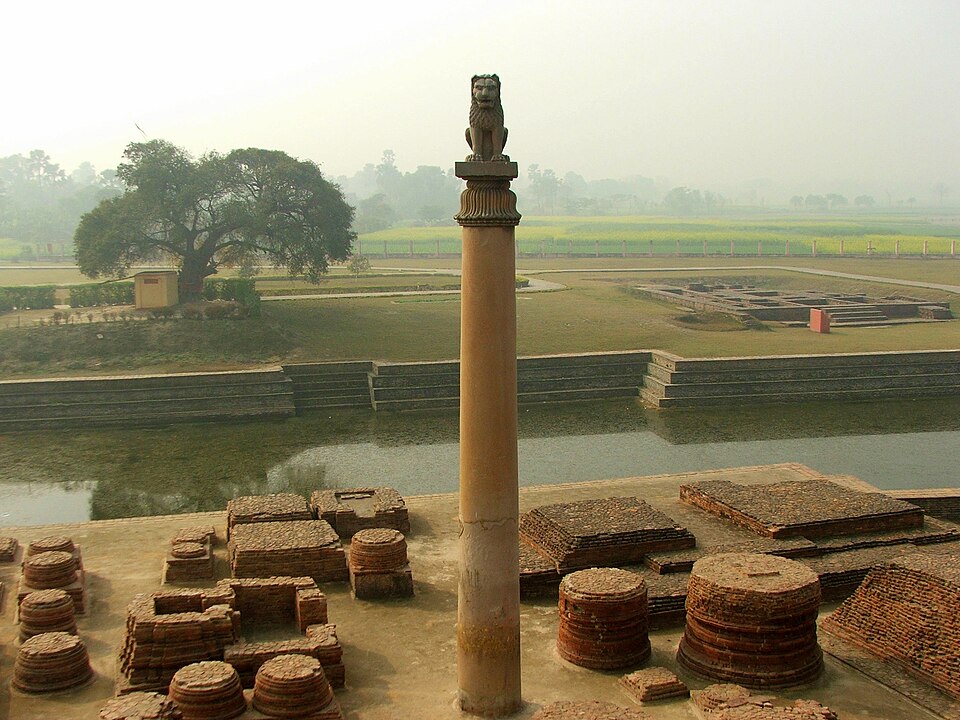
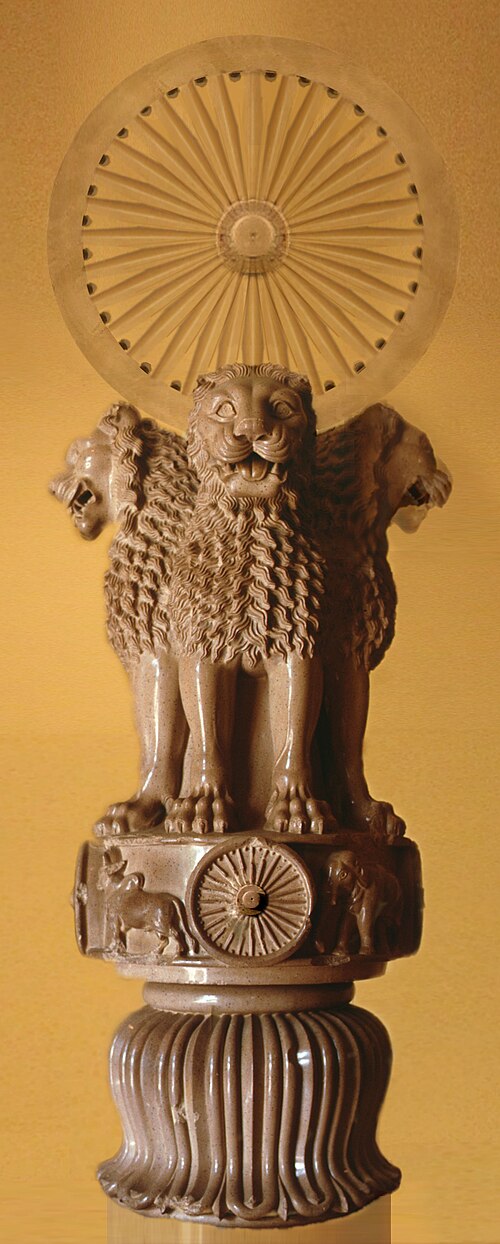
The pillars of Ashoka are a series of monolithic columns dispersed throughout the Indian subcontinent, erected - or at least inscribed with edicts - by the 3rd Mauryan Emperor Ashoka the Great, who reigned from c. 268 to 232 BC. Ashoka used the expression Dhaṃma thaṃbhā (Dharma stambha), i.e. "pillars of the Dharma" to describe his own pillars. These pillars constitute important monuments of the architecture of India, most of them exhibiting the characteristic Mauryan polish. Twenty of the pillars erected by Ashoka still survive, including those with inscriptions of his edicts. Only a few with animal capitals survive of which seven complete specimens are known. Two pillars were relocated by Firuz Shah Tughlaq to Delhi. Several pillars were relocated later by Mughal Empire rulers, the animal capitals being removed. Averaging between 12 and 15 m (40 and 50 ft) in height, and weighing up to 50 tons each, the pillars were dragged, sometimes hundreds of miles, to where they were erected.
Further reading
Ashoka Pillar of Lumbini is one of the 3D puzzles in World Artifacts: turn a cloud of broken pieces until it lines up. For iPhone, iPad, Apple Vision Pro and Android.

