World Artifacts › Atlas › Nepal
Mount Everest
The summit with its snow plume.
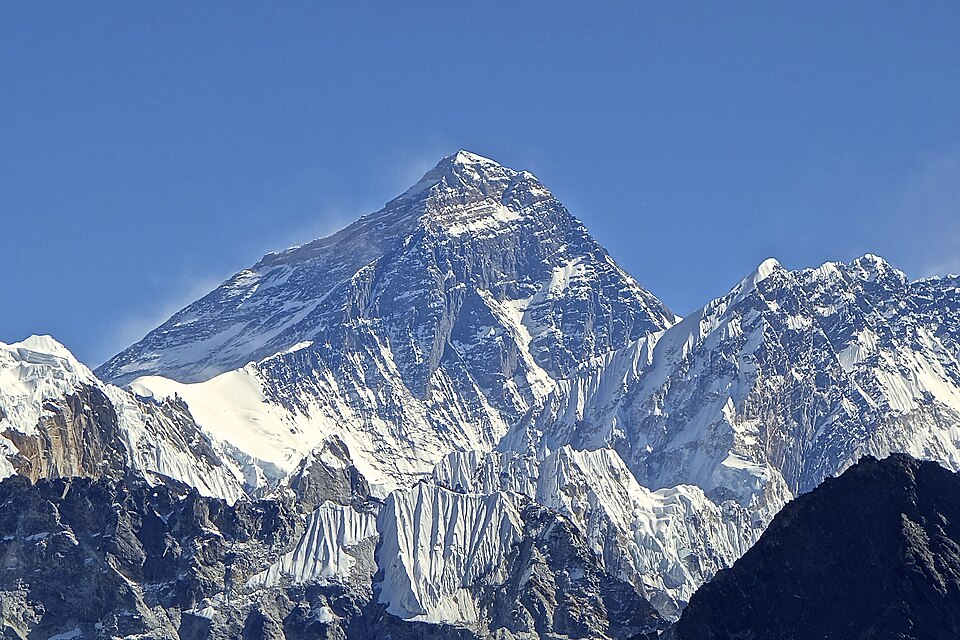
Mount Everest (known in Nepali as Sagarmāthā, in Sherpa as Chamolangma, and in Tibetan as Jomolangma/Čhomolangma) is the highest mountain on Earth above sea level. It lies in the Mahalangur Himal sub-range of the Himalayas and marks part of the China-Nepal border at its summit. Its height was most recently measured in 2020 through a joint survey by Nepalese and Chinese authorities as 8,848.86 m (29,031 ft 8+1⁄2 in).
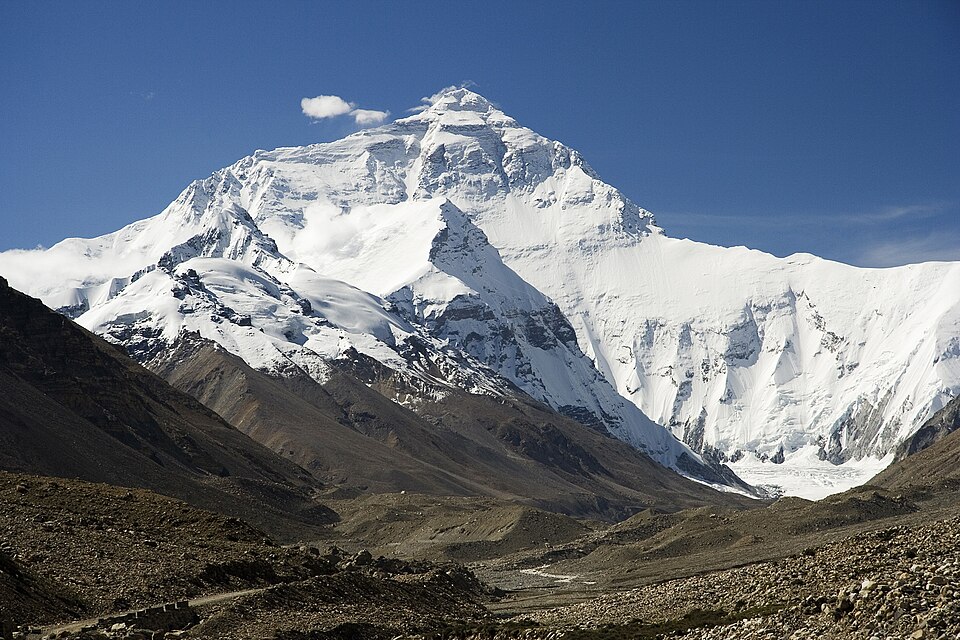
Mount Everest attracts many climbers, including highly experienced mountaineers. There are two main climbing routes, one approaching the summit from the southeast in Nepal (known as the standard route) and the other from the north in China. While not posing substantial technical climbing challenges on the standard route, Everest presents dangers such as altitude sickness, weather, and wind, as well as hazards from avalanches and the Khumbu Icefall. As of May 2024, 340 people have died on Everest. Over 200 bodies remain on the mountain and have not been removed due to the dangerous conditions.
Further reading
- Everest · Walt Unsworth (1981)A history of mountaineering on Everest, beginning with the first Himalayan climbing steps in 1879 and 1883.Find a copy: AbeBooks · Amazon · WorldCat
- Into the silence · Wade Davis (2011)Covers the early Everest mountaineering expeditions and their setting after World War I.Find a copy: AbeBooks · Amazon · WorldCat
Mount Everest is one of the 3D puzzles in World Artifacts: turn a cloud of broken pieces until it lines up. For iPhone, iPad, Apple Vision Pro and Android.

