World Artifacts › Atlas › New Zealand
Kakapo
The kākāpō is a flightless nocturnal parrot that can weigh four kilos. There are only a couple of hundred, every one has a name and a transmitter, and the males boom from a bowl dug in the ground on a note low enough to carry for kilometres.
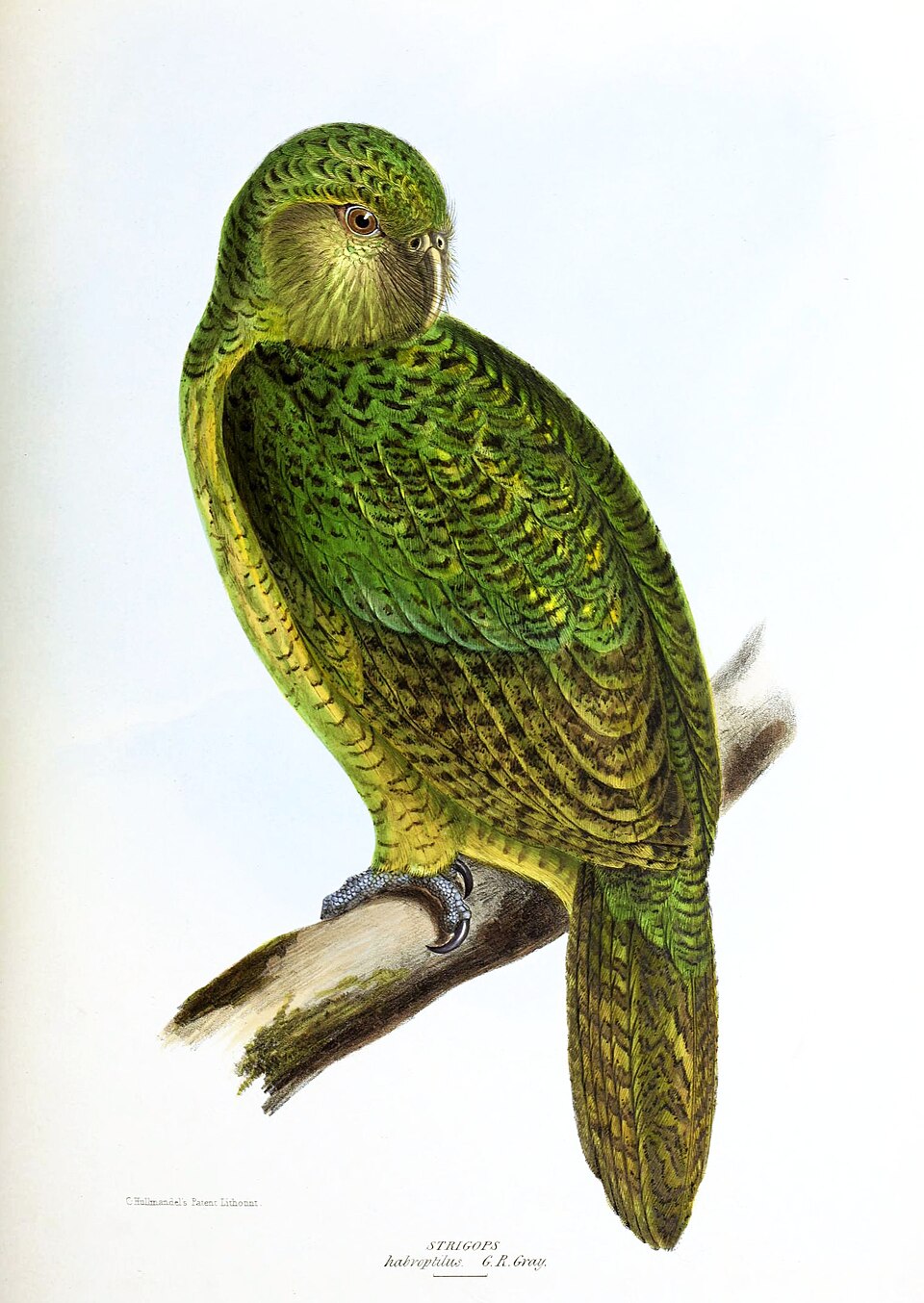
The kākāpō (Māori: [ˈkaːkaːpɔː]; pl.: kākāpō; Strigops habroptilus), sometimes known as the owl-parrot, is a species of large, nocturnal, ground-dwelling parrot of the superfamily Strigopoidea. It is endemic to New Zealand.
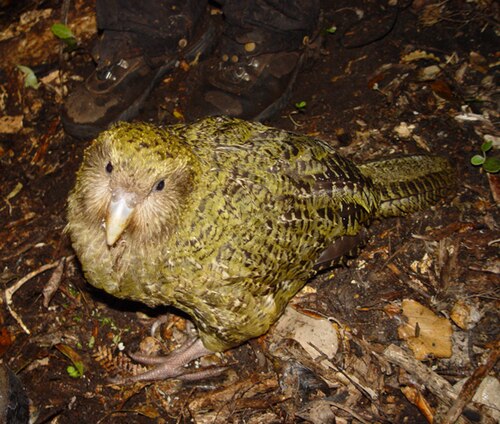
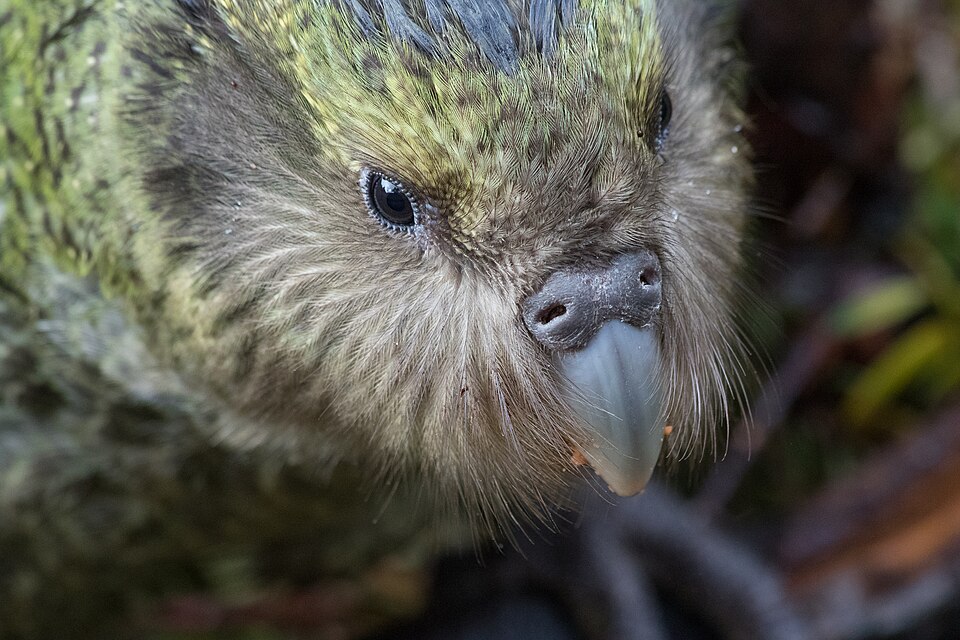
Kākāpō can be up to 64 cm (25 in) long. They have a combination of unique traits among parrots: finely blotched yellow-green plumage, a distinct facial disc, owl-like forward-facing eyes with surrounding discs of specially textured feathers, a large grey beak, short legs, large blue feet, relatively short wings and a short tail. It is the world's only flightless parrot, the world's heaviest parrot, and also is nocturnal, herbivorous, visibly sexually dimorphic in body size, has a low basal metabolic rate, and does not have male parental care. It is the only parrot to have a polygynous lek breeding system. It is also possibly one of the world's longest-living birds, with a reported lifespan of up to 100 years. Adult males weigh around 1.5-3 kilograms (3.3-6.6 lb); the equivalent figure for females is 0.950-1.6 kilograms (2.09-3.53 lb).
Further reading
- Kakapo · Alison Ballance (2010)A book devoted to the kākāpō, covering the species and its conservation as a rare bird.Find a copy: AbeBooks · Amazon · WorldCat
- Last Chance to See · Douglas Adams (1990)Douglas Adams's travel account of journeys to see endangered species and rare animals.Find a copy: AbeBooks · Amazon · WorldCat
Kakapo is one of the 3D puzzles in World Artifacts: turn a cloud of broken pieces until it lines up. For iPhone, iPad, Apple Vision Pro and Android.

