World Artifacts › Atlas › New Zealand
Kiwi
A kiwi lays an egg up to a fifth of the female's body weight, the largest egg for body size of any bird. It is the only bird with nostrils at the tip of its beak, and it finds worms by smell in the dark.
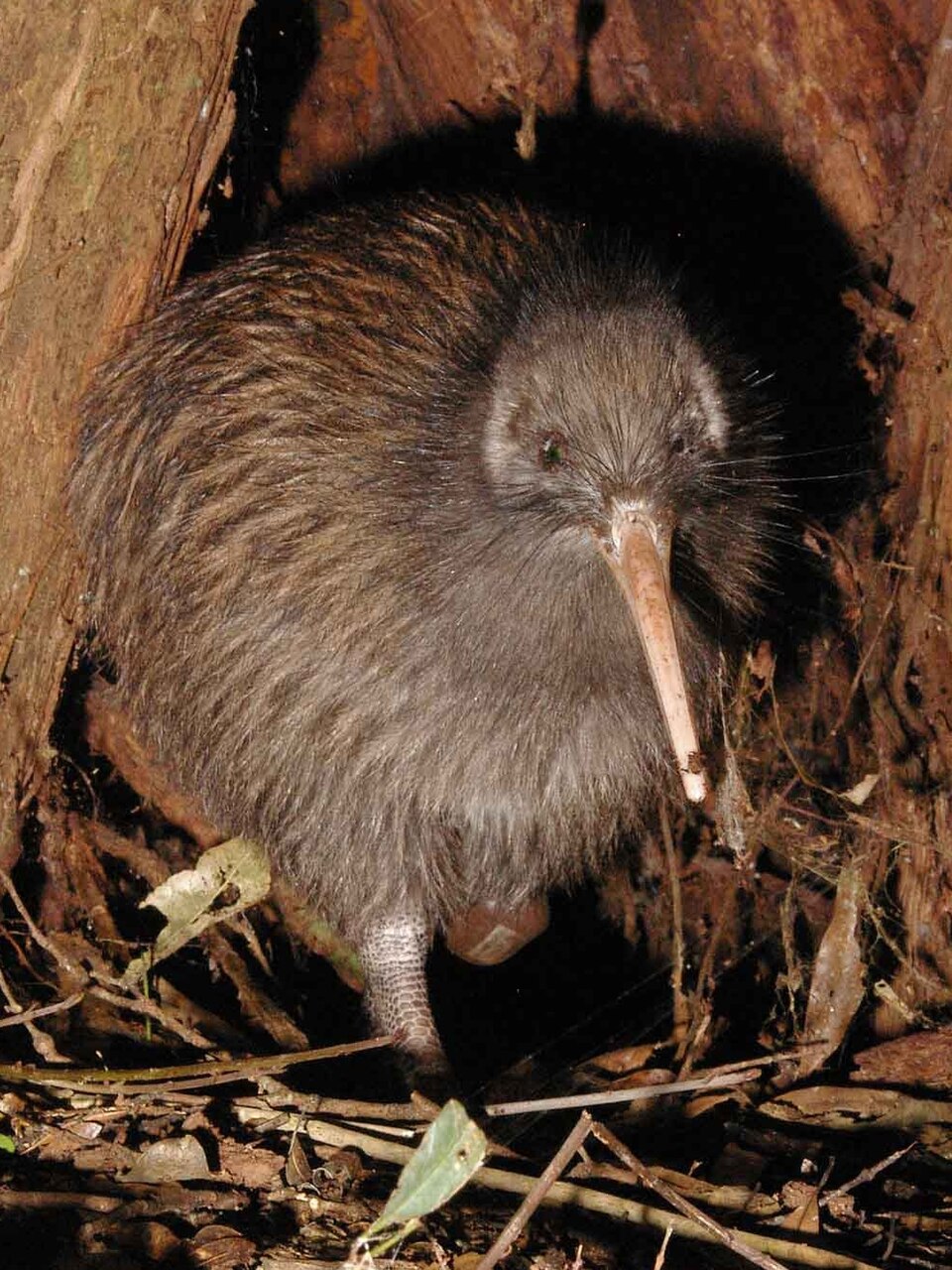
Kiwi are flightless birds endemic to New Zealand of the order Apterygiformes. The five extant species fall into the family Apterygidae and genus Apteryx. Approximately the size of a domestic chicken, kiwi are the smallest ratites (which also include ostriches, emus, rheas, cassowaries and the extinct elephant birds and moa).
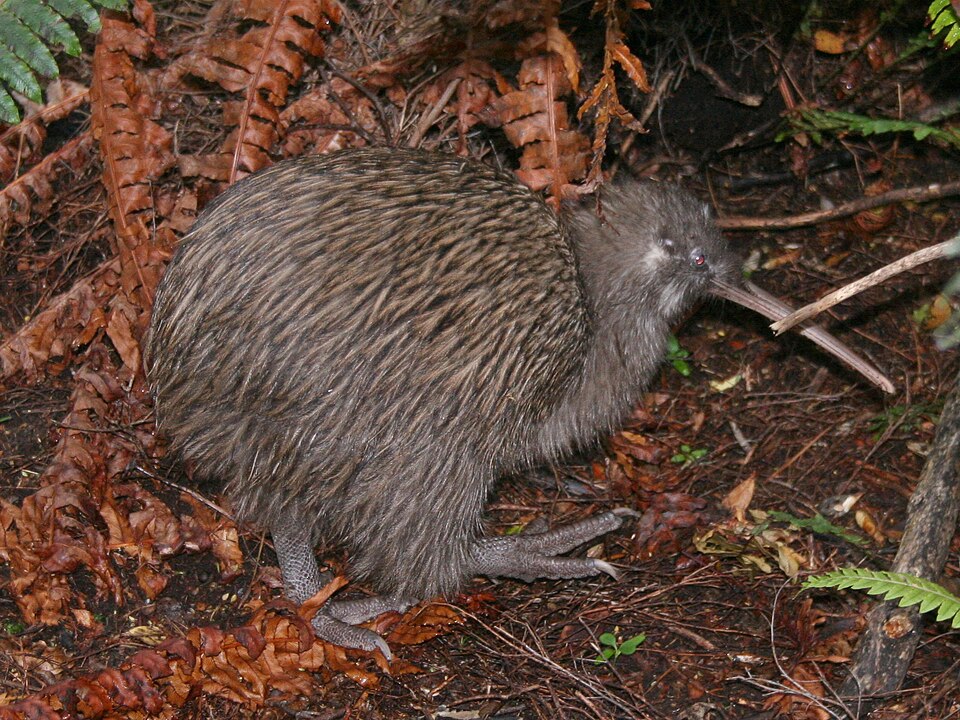
DNA sequence comparisons have yielded the conclusion that kiwi are much more closely related to the extinct Malagasy elephant birds than to the moa with which they shared New Zealand. There are five recognised species, four of which are currently listed as vulnerable, and one of which is near threatened. All species have been negatively affected by historic deforestation, but their remaining habitat is well protected in large forest reserves and national parks. At present, the greatest threat to their survival is predation by invasive mammalian predators.
The vestigial wings are so small as to be invisible under their bristly, hair-like, two-branched feathers. Kiwi eggs are one of the largest in proportion to body size (up to 20% of the female's weight) of any order of bird in the world. Other unique adaptations of kiwi, such as short and stout legs and using their nostrils at the end of their long beak to detect prey before they see it, have helped the bird to become internationally well known.
Kiwi is one of the 3D puzzles in World Artifacts: turn a cloud of broken pieces until it lines up. For iPhone, iPad, Apple Vision Pro and Android.

