World Artifacts › Atlas › New Zealand
Poi
Poi are weights on cords, swung in patterns to a beat, and the traditional explanation is that they were used to build wrist strength and coordination for weapons. They are now performed as an art in their own right, sometimes by dozens of women at once.

Māori culture (Māori: Māoritanga) is the customs, cultural practices, and beliefs of the Māori people of New Zealand. Māori culture is a part of Eastern Polynesian culture and forms a distinctive part of New Zealand culture. The culture is found throughout the world due to a large diaspora and the incorporation of Māori motifs into popular culture.
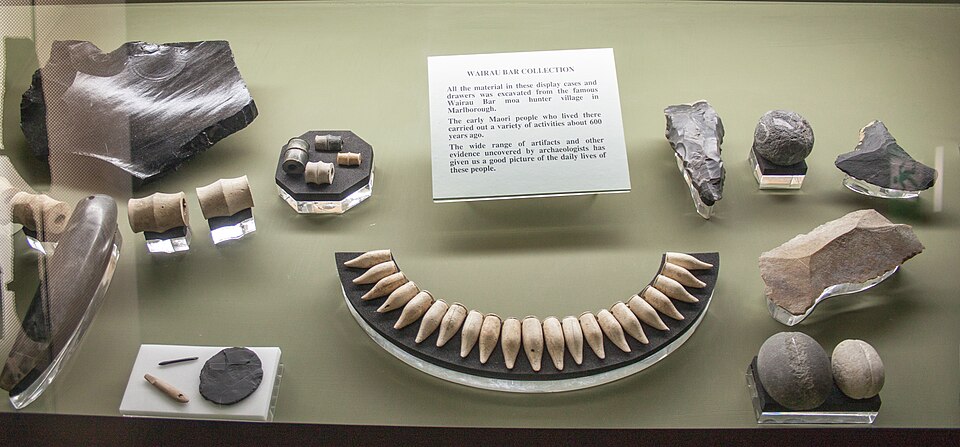
Within Māoridom, and to a lesser extent throughout New Zealand as a whole, the word Māoritanga is often used as an approximate synonym for Māori culture, the Māori-language suffix -tanga being roughly equivalent to the qualitative noun-ending -ness in English. Māoritanga has also been translated as "[a] Māori way of life." The term kaupapa, meaning the guiding beliefs and principles which act as a base or foundation for behaviour, is also widely used to refer to Māori cultural values.
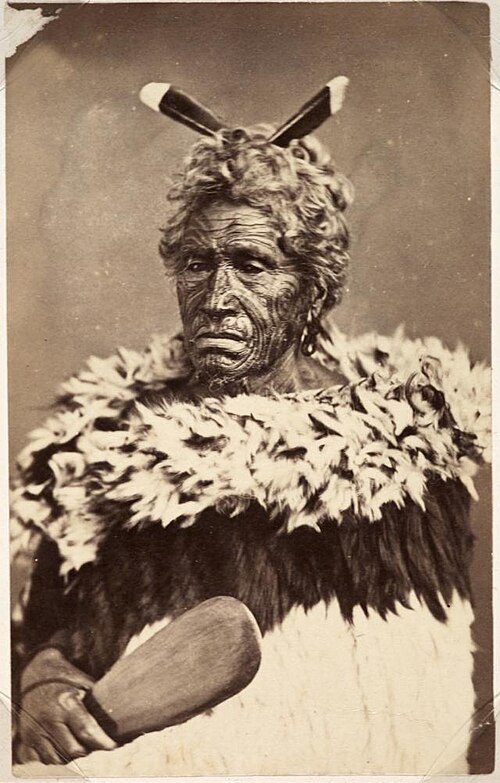
Four distinct but overlapping cultural eras have contributed historically to Māori culture:
Archaic period - before Māori split from other Polynesian cultures
Classic period - before European contact
19th century - early interaction with Europeans
Post 1900 - till present
Māoritanga in the modern era has been shaped by increasing urbanisation, closer contact with Pākehā (New Zealanders of European descent) and revival of traditional practices.
Further reading
- Maori music · Mervyn McLean (1971)A study of Maori music, covering its history and criticism within Polynesian music.Find a copy: AbeBooks · Amazon · WorldCat
- Games and pastimes of the Maori · Elsdon Best (1925)Covers Maori games, pastimes, music and social life, the setting in which poi belong.Find a copy: AbeBooks · Amazon · WorldCat
Poi is one of the 3D puzzles in World Artifacts: turn a cloud of broken pieces until it lines up. For iPhone, iPad, Apple Vision Pro and Android.

