World Artifacts › Atlas › Peru
Nazca Hummingbird
The giant line drawing in the desert.
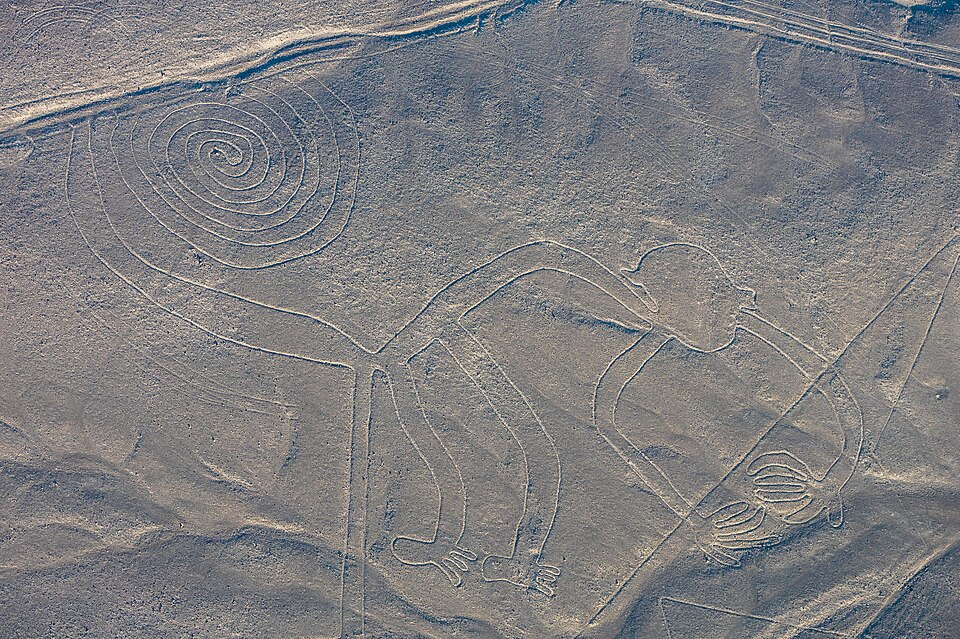
The Nazca lines (, ) are a group of geoglyphs made in the soil of the Nazca Desert in southern Peru. They were created between 500 BC and 500 AD by people making depressions or shallow incisions in the desert floor, removing pebbles and leaving different-colored dirt exposed. There are two major phases of the Nazca lines, Paracas phase, from 400 to 200 BC, and Nazca phase, from 200 BC to 500 AD. In the 21st century, several hundred new figures have been found with the use of drones, and archaeologists believe that there are more to be found.
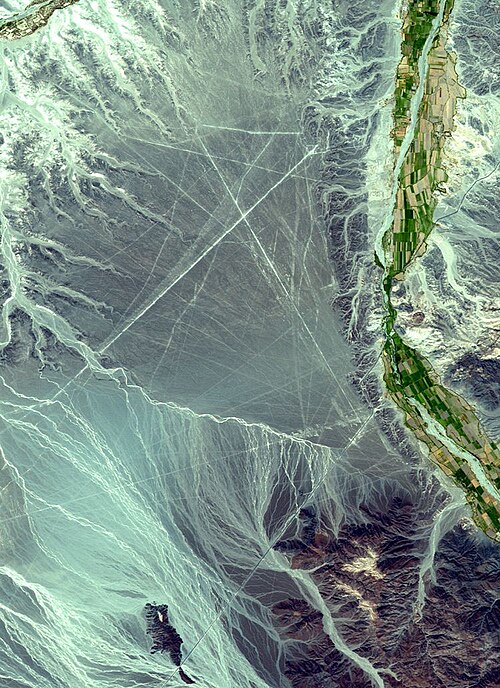
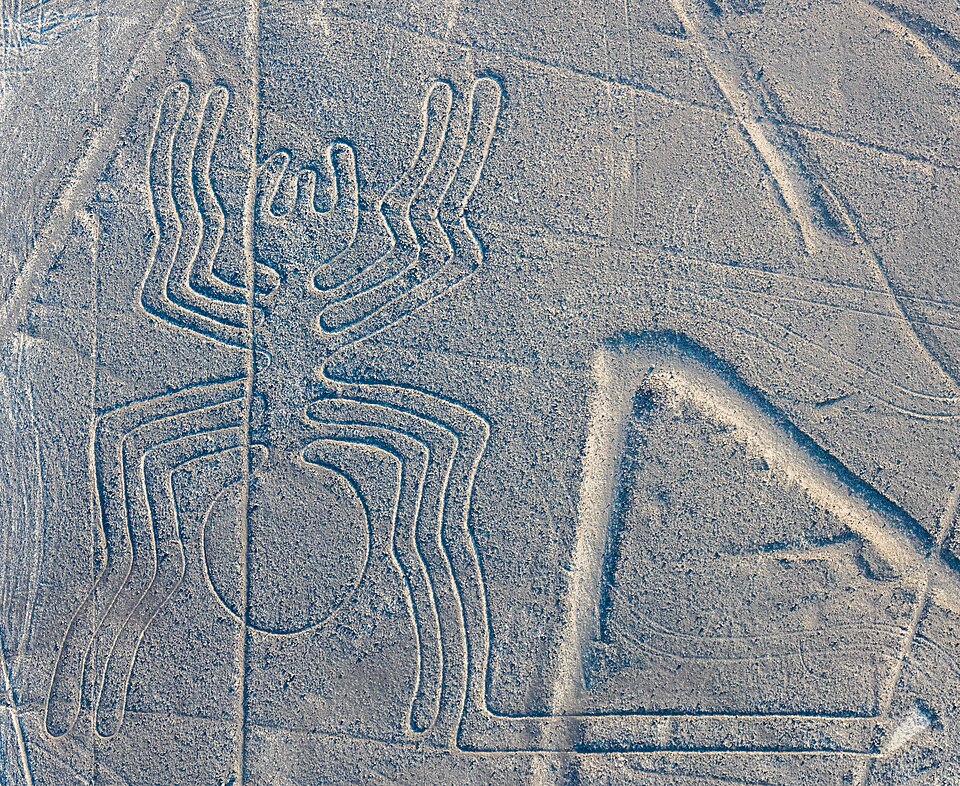
Most lines run straight across the landscape, but there are also figurative designs of animals and plants. The combined length of all the lines is more than 1,300 km (800 mi), and the group covers an area of about 50 km2 (19 sq mi). The lines are typically 10 to 15 cm (4-6 in) deep. They were made by removing the top layer of reddish-brown ferric oxide-coated pebbles to reveal a yellow-grey subsoil. The width of the lines varies considerably, but more than half are slightly more than 33 cm (13 in) wide. In some places they may be only 30 cm (12 in) wide, and in others reach 1.8 m (6 ft) wide.
Further reading
- The Lines of Nazca · Anthony F. Aveni (1990)A study of the Nazca culture, its social organization, religion and the lines in the desert.Find a copy: AbeBooks · Amazon · WorldCat
- Lines to the mountain gods · Evan Hadingham (1987)A study of the Nazca lines and Andean religion, covering Peruvian antiquities and Indian beliefs.Find a copy: AbeBooks · Amazon · WorldCat
Nazca Hummingbird is one of the 3D puzzles in World Artifacts: turn a cloud of broken pieces until it lines up. For iPhone, iPad, Apple Vision Pro and Android.

