World Artifacts › Atlas › Philippines

Balangay

Plank boats fastened with wooden pegs and lashings have been dug up in Butuan, the oldest of them from around the fourth century. They show that people here were building ocean-going hulls a thousand years before the Spanish arrived.
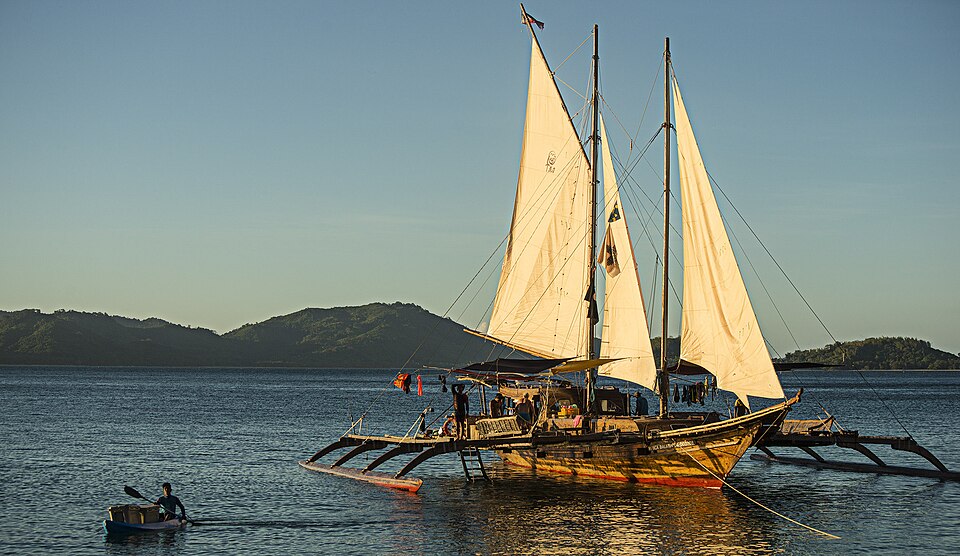
The Balatik of the Tao Expedition of Palawan, a reconstruction of a large sailing paraw, which is essentially a typical Visayan balangay with large double outriggers. It is gaff rigged, which is European.
The Balatik of the Tao Expedition of Palawan, a reconstruction of a large sailing paraw, which is essentially a typical Visayan balangay with large double outriggers. It is gaff rigged, which is European.Göran Höglund (Kartläsarn) · CC BY-SA 2.0 · Source

A balangay, or barangay, is a type of lashed-lug boat built by joining planks edge-to-edge using pins, dowels, and fiber lashings. They are found throughout the Philippines and were used largely as trading ships up until the colonial era. The oldest known balangay are the eleven Butuan boats, which have been carbon-dated individually from 689 to 988 CE and were recovered from several sites in Butuan, Agusan del Norte. The Butuan boats are the single largest concentration of lashed-lug boat remains of the Austronesian boatbuilding traditions. They are found in association with large amounts of trade goods from East Asia, Southeast Asia, and as far as Persia, indicating they traded as far as the Middle East.
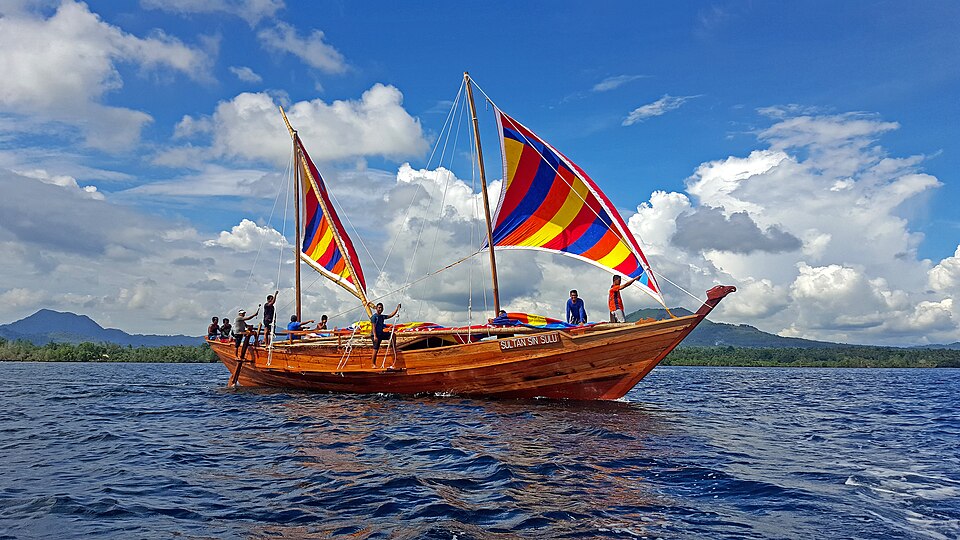
The balangay Sultan sin Sulu in Maimbung, Sulu. These replicas are meant to recreate the Butuan boats, but are inaccurate in that they do not have outriggers or Austronesian rigs.
The balangay Sultan sin Sulu in Maimbung, Sulu. These replicas are meant to recreate the Butuan boats, but are inaccurate in that they do not have outriggers or Austronesian rigs.Fung360 · CC BY-SA 4.0 · Source

Balangay were the first wooden watercraft excavated in Southeast Asia. Balangay are celebrated annually in the Balanghai Festival of Butuan.
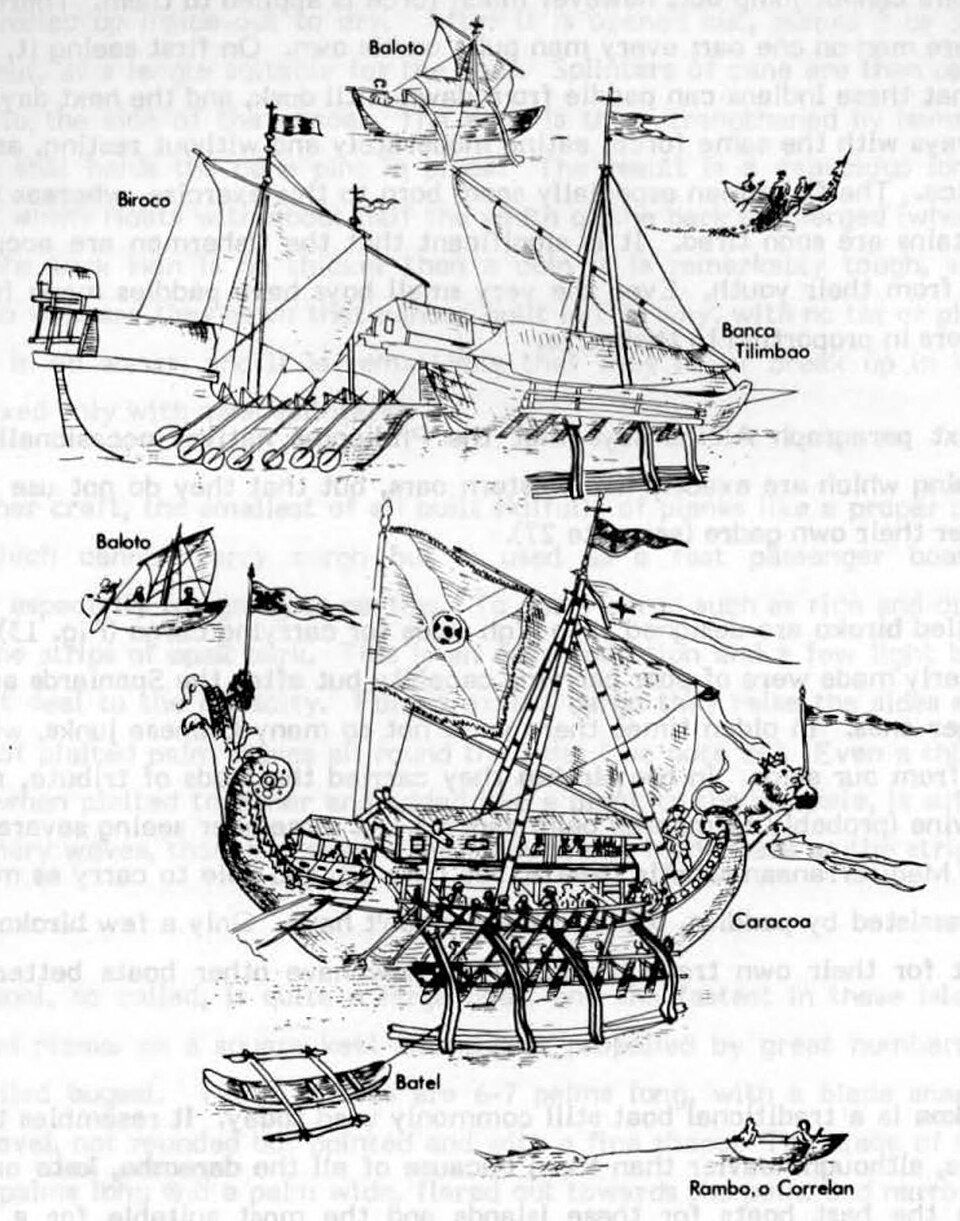
Visayan biroko, baloto, and tilimbao (upper half of illustration), along with the larger joangan warship, image traced from an illustration in the Historia de las Islas e Indios de Bisayas (1668)
Visayan biroko, baloto, and tilimbao (upper half of illustration), along with the larger joangan warship, image traced from an illustration in the Historia de las Islas e Indios de Bisayas (1668)Francisco Ignacio Alcina (1668) G. Adrian Horridge (1982) · Public domain · Source

Further reading

Balangay is one of the 3D puzzles in World Artifacts: turn a cloud of broken pieces until it lines up. For iPhone, iPad, Apple Vision Pro and Android.


Download on the App StoreGet it on Google Play