World Artifacts › Atlas › Philippines
Banaue Rice Terraces
The terraces climb the mountainside in steps fed by channels from the rainforest above, and they are still farmed by the families who inherited them. How old they are is genuinely disputed: the traditional claim is two thousand years and some archaeologists argue for a few hundred.
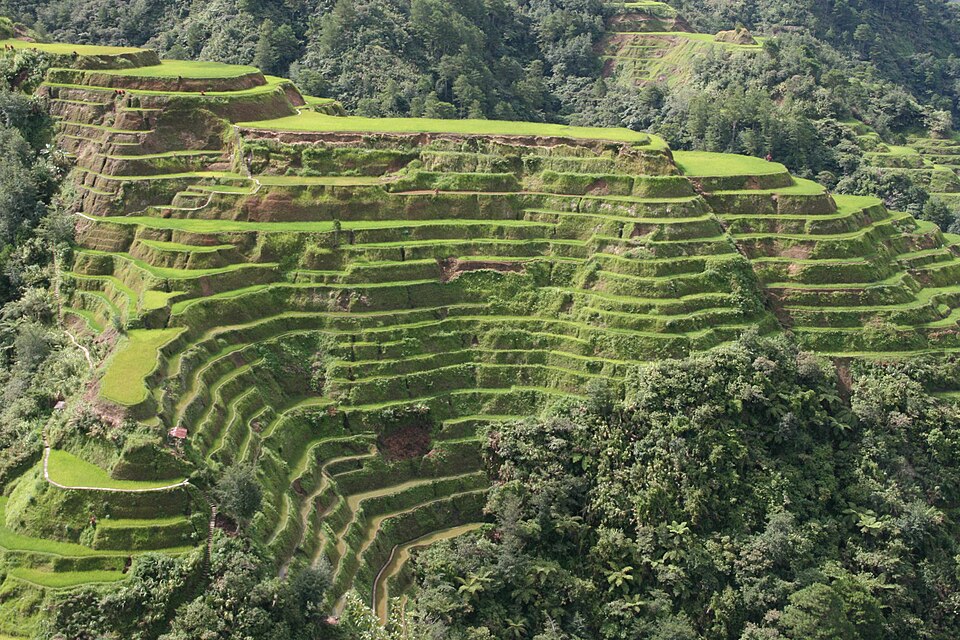
The Banaue Rice Terraces (Filipino: Hagdan-hagdang Palayan ng Banawe) [bɐˈnawe] are terraces that were carved into the mountains of Banaue, Ifugao, in the Philippines, by the ancestors of the Igorot people. The terraces were built with minimal equipment, largely by hand. The terraces are located approximately 1,500 meters (4,900 feet) above sea level. These are fed by an ancient irrigation system from the rainforests above the terraces.
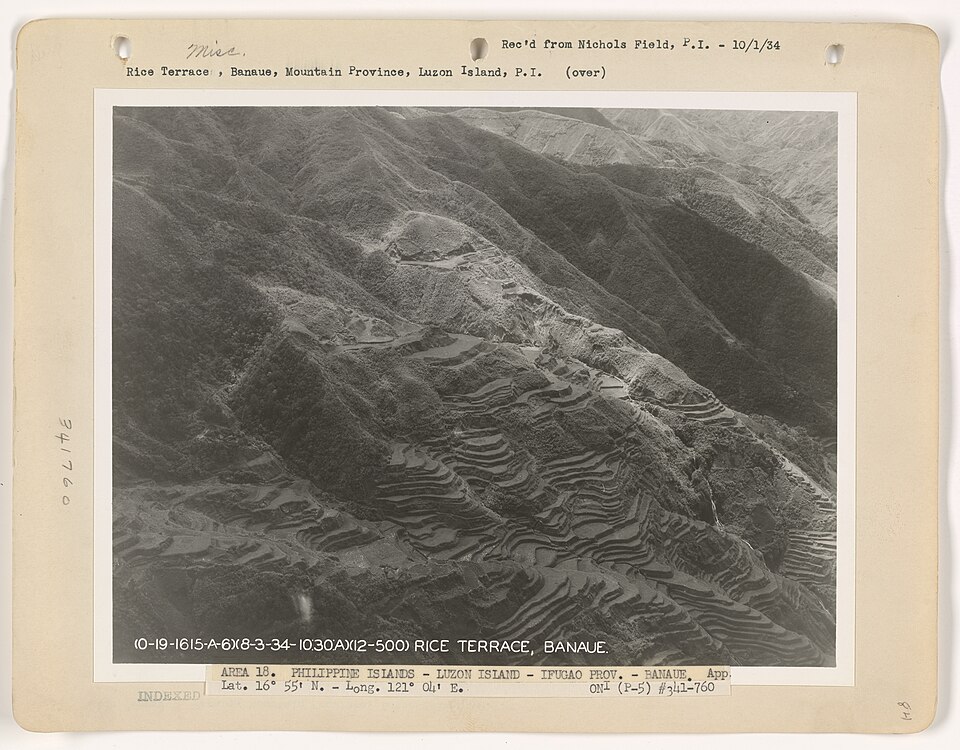
Locals up to this day still plant rice and vegetables on the terraces, although conservationists have begun arguing that these are no longer “real” rice terraces due to increasingly higher incidence of planting vegetables in lieu of rice. More and more younger Ifugaos do not find farming appealing, often opting for the more lucrative hospitality industry generated by the terraces. The result is the gradual erosion of the characteristic "steps", which require constant reconstruction and care. In 2010, a further problem encountered was drought, with the terraces drying up completely in March of that year.
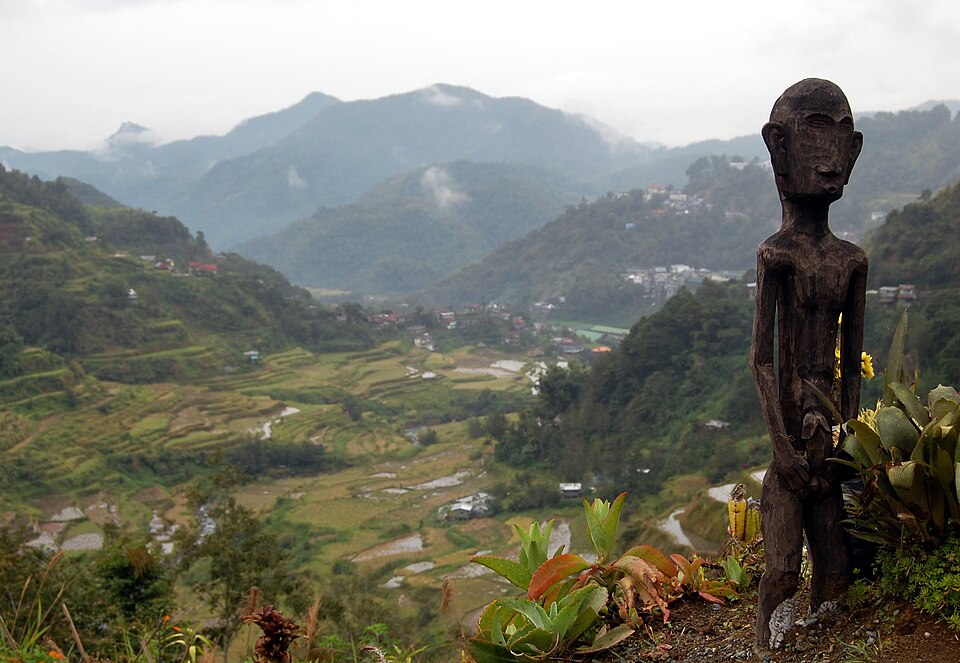
Anthropologist Otley Beyer has estimated that the terraces are over 2000 years old, but several researchers dispute this and contend that they were built much later. Nevertheless, rice is an ancient ancestral crop of the Philippines, having been carried by Austronesian migrations into the islands since at least 1500 BCE (3500 years ago).
Further reading
Banaue Rice Terraces is one of the 3D puzzles in World Artifacts: turn a cloud of broken pieces until it lines up. For iPhone, iPad, Apple Vision Pro and Android.

