World Artifacts › Atlas › Philippines
Halo-halo
Halo-halo means mix-mix, and the instruction is the recipe: shaved ice, evaporated milk and a dozen sweet things stirred together in the glass. It descends from Japanese shaved ice brought by migrants before the war.
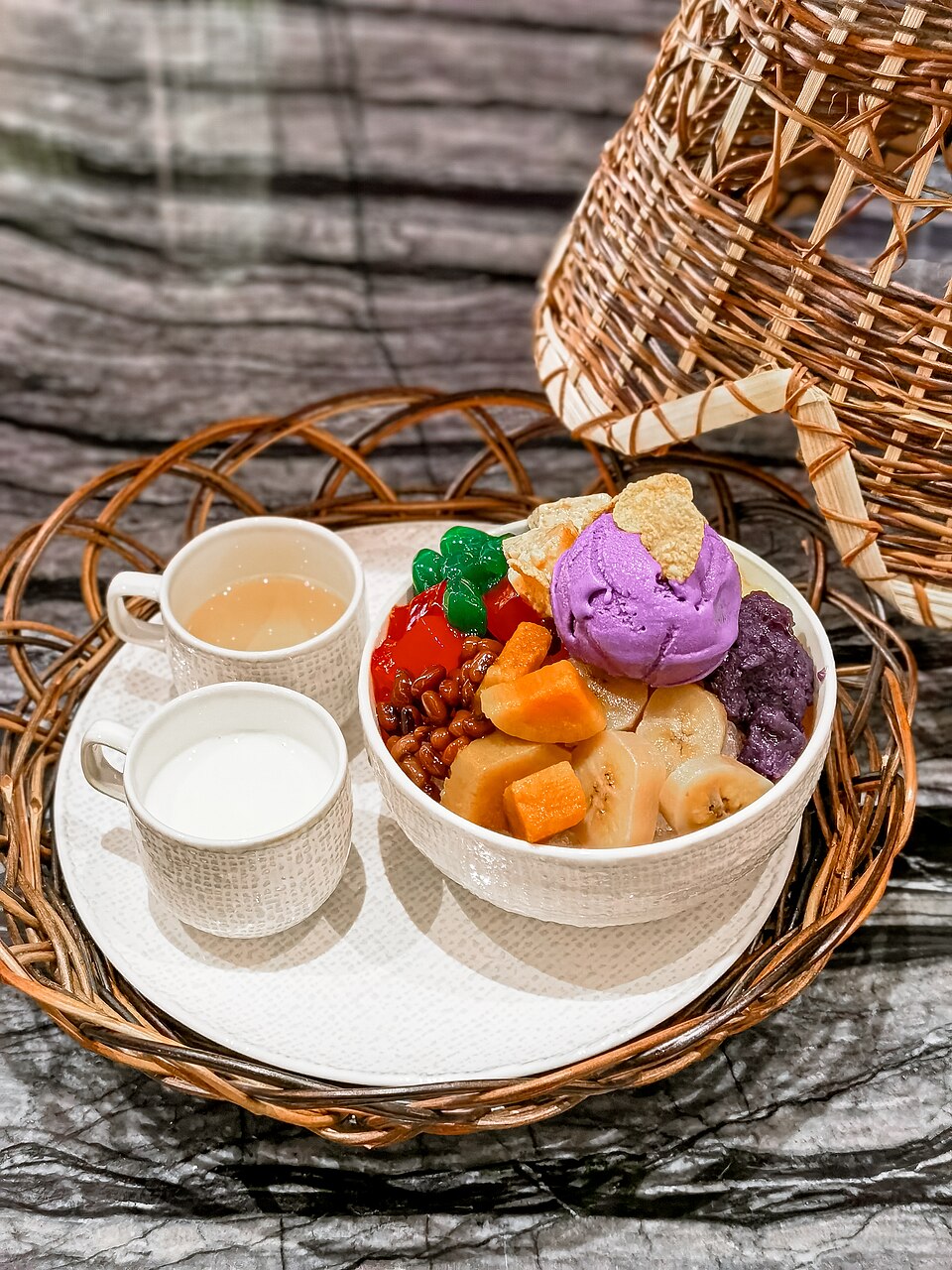
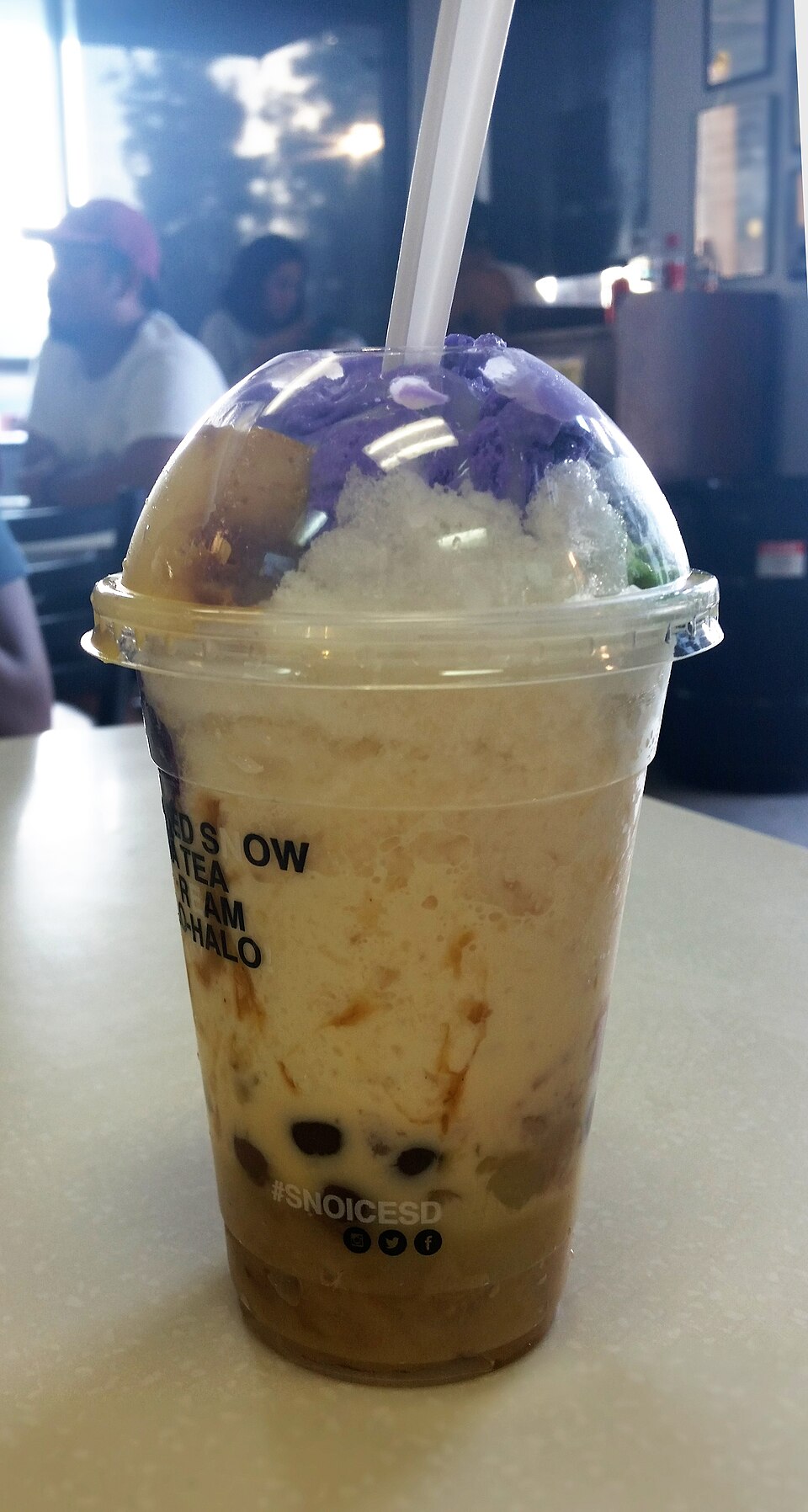
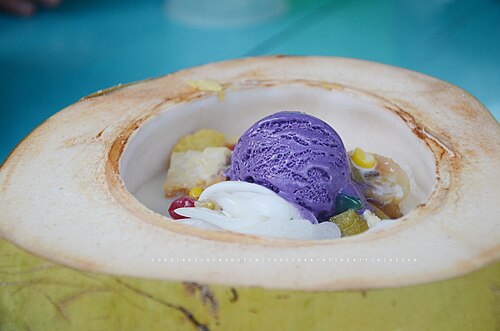
Halo-halo is a cold dessert in the Philippines made with crushed ice, evaporated milk or sometimes coconut milk, and flavoring such as ube jam (ube halaya), sweetened kidney beans or garbanzo beans, coconut strips, sago, gulaman (agar), pinipig, boiled taro or soft yams in cubes, flan, slices or portions of fruit preserves, and other root crop preserves. The dessert is often topped with a scoop of ube ice cream and sometimes other fruit-based ice cream flavors like melon or coconut, though it is just as likely to go without ice cream as well. It is usually prepared in a tall clear glass and served with a long spoon. Halo-halo is considered to be the unofficial national dessert of the Philippines.
Further reading
Halo-halo is one of the 3D puzzles in World Artifacts: turn a cloud of broken pieces until it lines up. For iPhone, iPad, Apple Vision Pro and Android.

