World Artifacts › Atlas › Philippines
WWII Jeep
American army jeeps left behind in 1945 were bought cheap, stretched to take a dozen passengers and decorated to the owner's taste. Government programmes have been trying to replace them with modern minibuses for years, against considerable resistance.
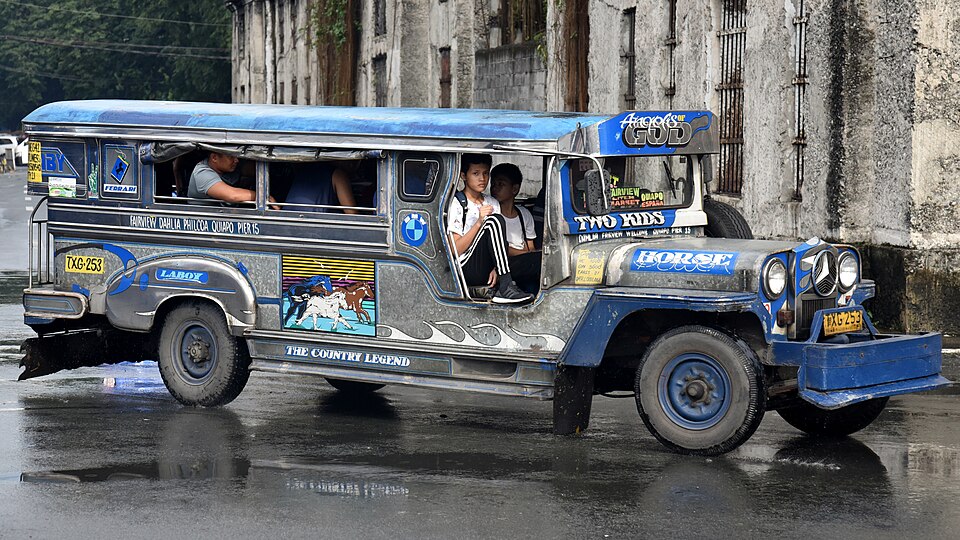
A jeepney (Tagalog: [ˈdʒiːpni]), or simply a jeep (Tagalog: [ˈdʒiːp]), is a type of public utility vehicle (PUV) that serves as the most popular means of public transportation in the Philippines. Known for its crowded seating and kitsch decorations, it is a cultural icon of the Philippines and has its own art, "Jeepney art". At the 1964 New York World's Fair, a Sarao jeepney was exhibited in the Philippine pavilion as a national symbol for Filipinos.
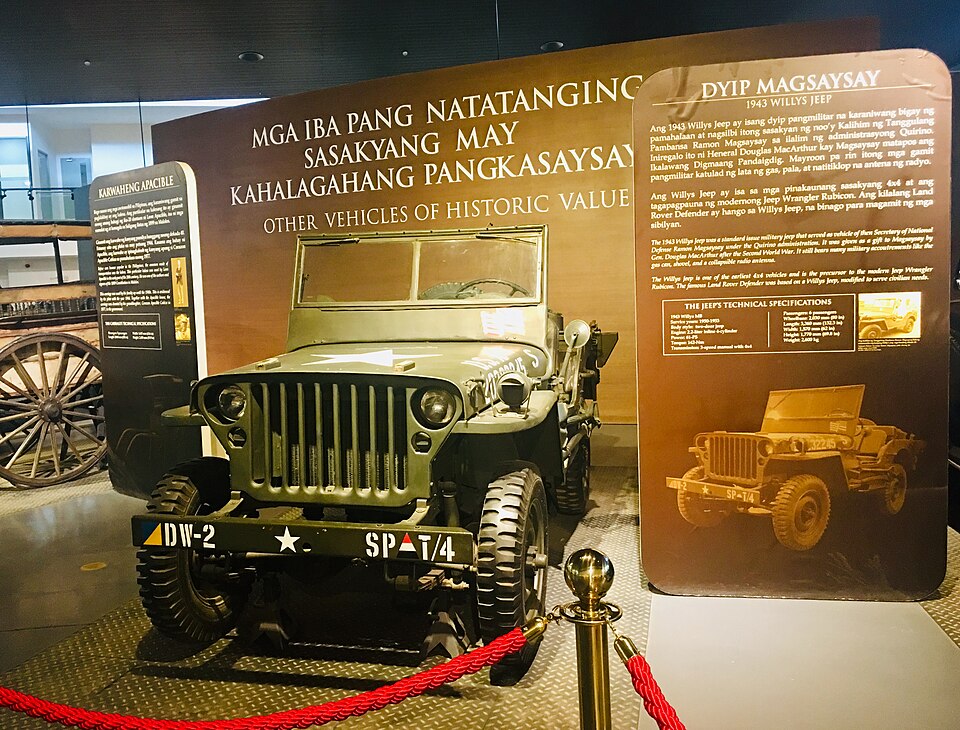
Jeepneys originate from the American colonial period-share taxis known as "auto calesas", commonly shortened to "AC". These evolved to modified imported cars with attached carriages in the 1930s which served as cheap passenger utility vehicles in Manila. These vehicles were mostly destroyed in World War II. The need for replacement transport vehicles led to the use of U.S. military jeeps left over from the war, which became the template for the modern jeepney. A jeepney modernization program launched by the Department of Transportation in 2017 seeks to use more environmentally-friendly vehicles, but has raised concerns regarding the preservation of the jeepney's iconic look as most modern jeepneys resemble regular minibuses.
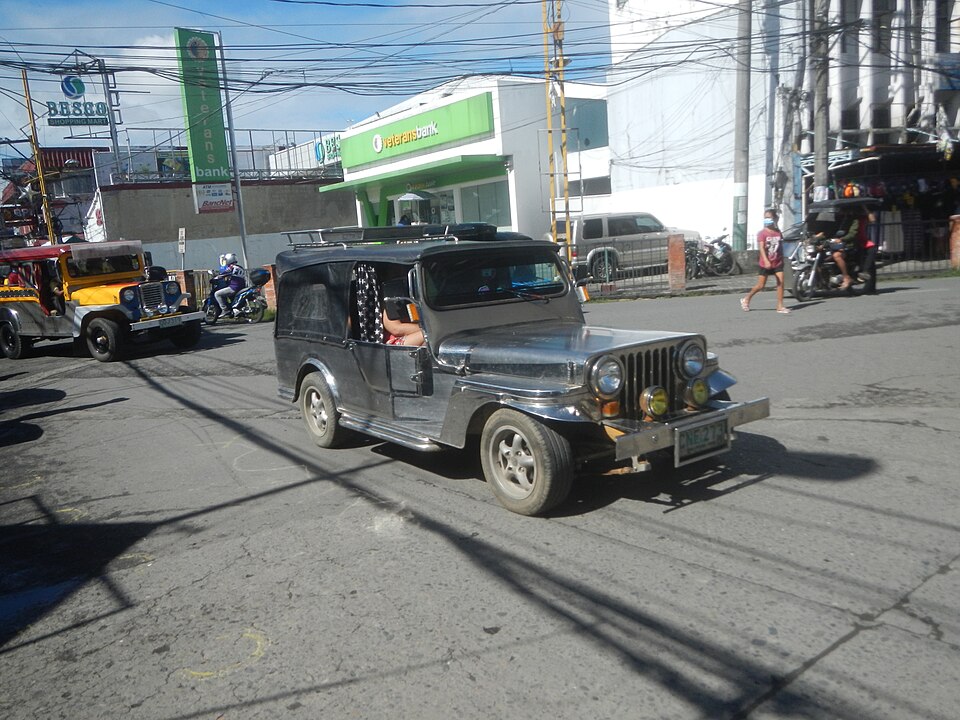
As of 2022, there were an estimated 600,000 drivers nationwide dependent on driving jeepneys for their livelihood. In Metro Manila, an estimated nine million commuters take the jeepney each day.
Further reading
WWII Jeep is one of the 3D puzzles in World Artifacts: turn a cloud of broken pieces until it lines up. For iPhone, iPad, Apple Vision Pro and Android.

