World Artifacts › Atlas › Poland
Pierogi
The pierogi filled with potato and cheese are called Ruskie, which does not mean Russian: it refers to Ruthenia, the old region now mostly in Ukraine. Poles have had to explain this in restaurants abroad for some years now.
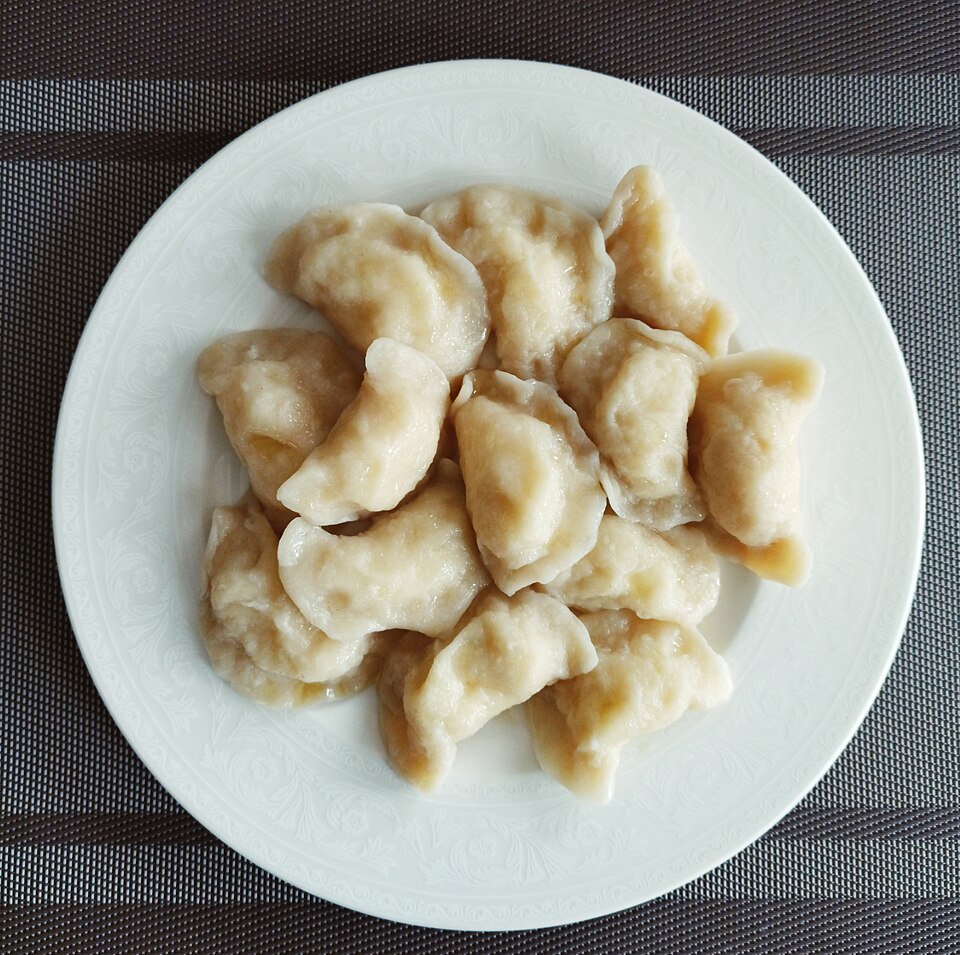
Pierogi ( pirr-OH-ghee; Polish: [pjɛˈrɔɡʲi] , sing. pieróg [ˈpjɛruk] ) are filled dumplings made by wrapping unleavened dough around a filling and cooking in boiling water. They are occasionally flavored with a savory or sweet garnish. Typical fillings include potato and tvorog cheese, sauerkraut, ground meat, mushrooms, fruits, or berries. Savory pierogi are often served with a topping of sour cream, fried onions, or both.
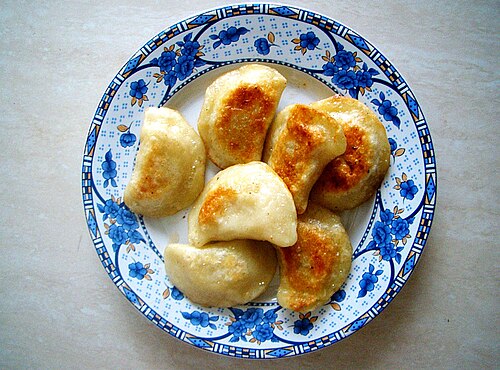
Dumplings under the name pierogi are a traditional Polish dish, holding considerable culinary significance in Poland. The recipe itself dates back to at least 1682, when Poland's first cookbook, Compendium ferculorum, albo Zebranie potraw, was published. Pierogi are also popular in modern-day Canadian and American cuisines.
Further reading
Pierogi is one of the 3D puzzles in World Artifacts: turn a cloud of broken pieces until it lines up. For iPhone, iPad, Apple Vision Pro and Android.

