World Artifacts › Atlas › Poland
Polish Pottery Bowl
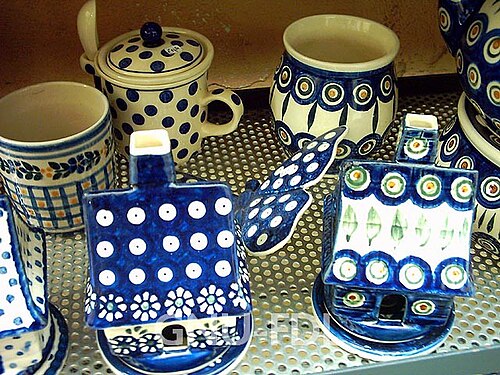
Bolesławiec pottery is decorated by stamping, using sponges cut into shapes, so the dots and scales are printed by hand rather than painted. The pattern is built up one stamp at a time and no two pieces match exactly.
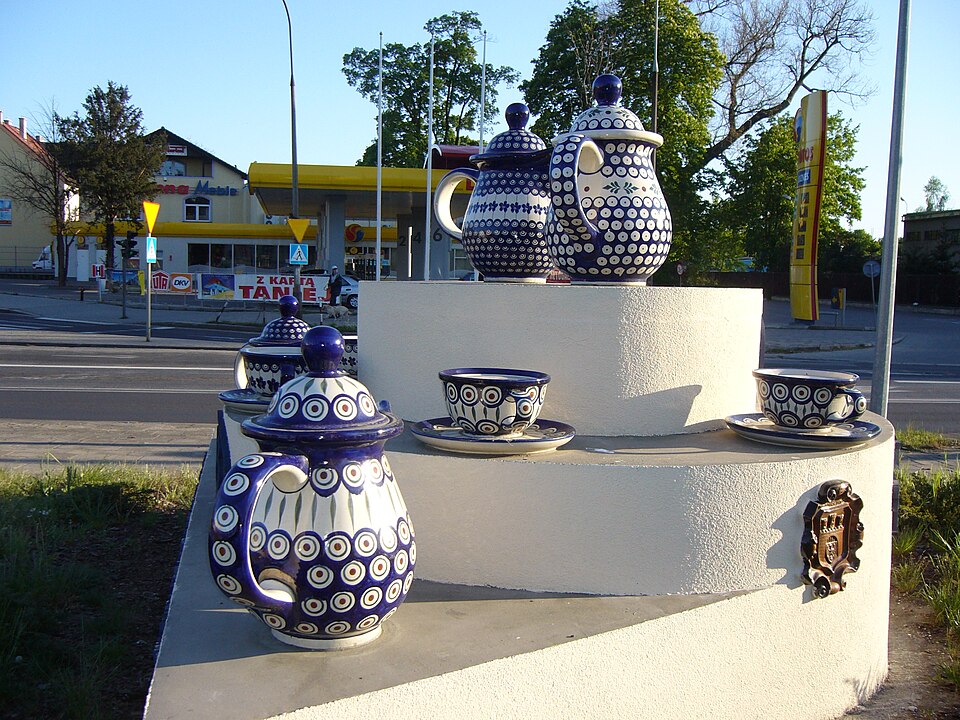
Bolesławiec pottery (English: BOLE-swavietz, Polish: [bɔlɛ'swavjɛt͡s]), also referred to as Polish pottery, is the collective term for fine pottery and stoneware produced in the town of Bolesławiec, in south-western Poland. The ceramics are characterized by a cobalt blue polka dot pattern on a white background or vice versa.
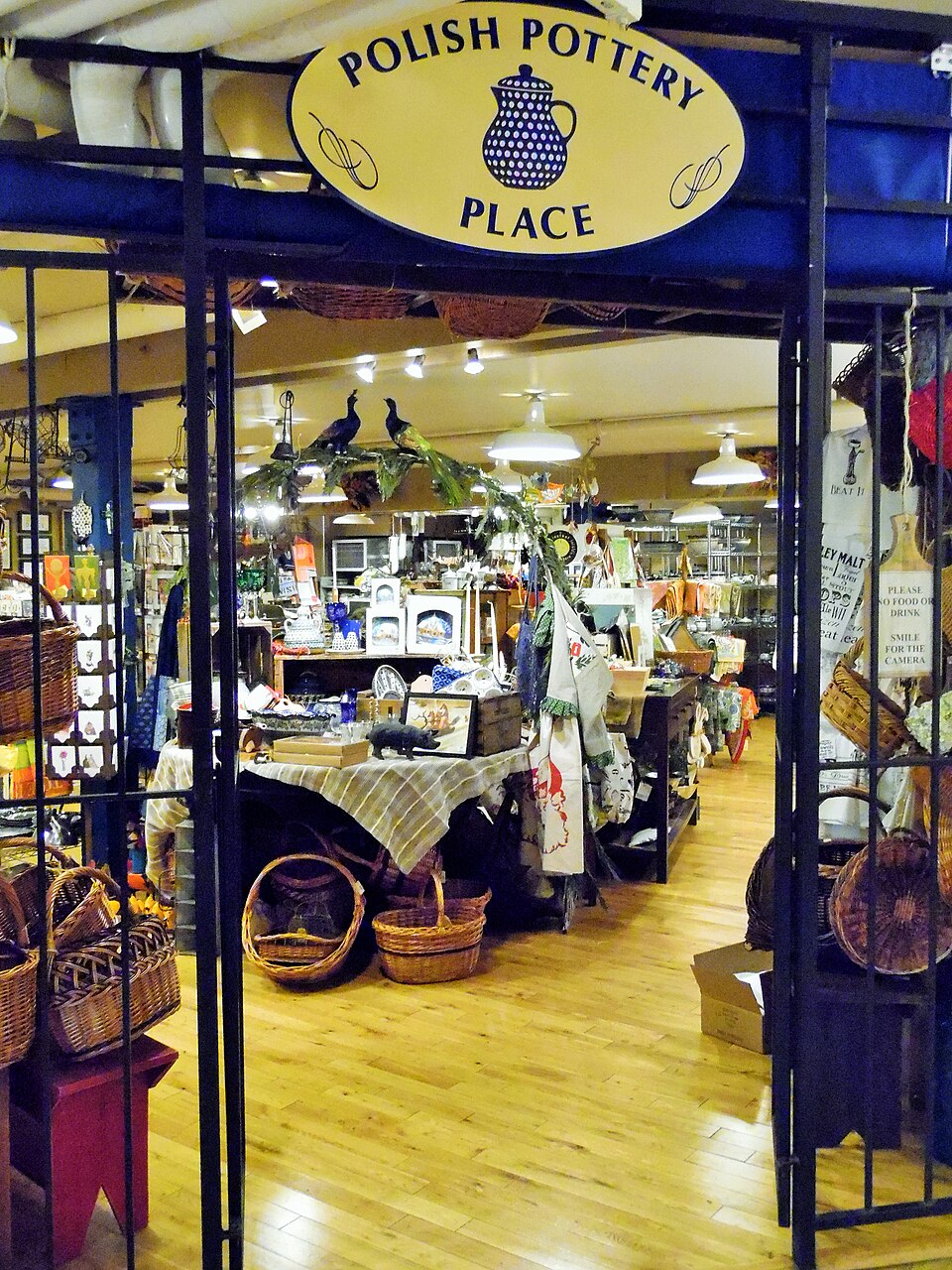
The art originated in the late Middle Ages, but it fully developed in the 19th century and has continued ever since. The scope of the stoneware ranges from teapots and jugs to plates, platters and candelabra. The pottery is collectively known as "Polish stoneware", as it became one of Poland's unofficial cultural symbols.
Polish Pottery Bowl is one of the 3D puzzles in World Artifacts: turn a cloud of broken pieces until it lines up. For iPhone, iPad, Apple Vision Pro and Android.

