World Artifacts › Atlas › Poland
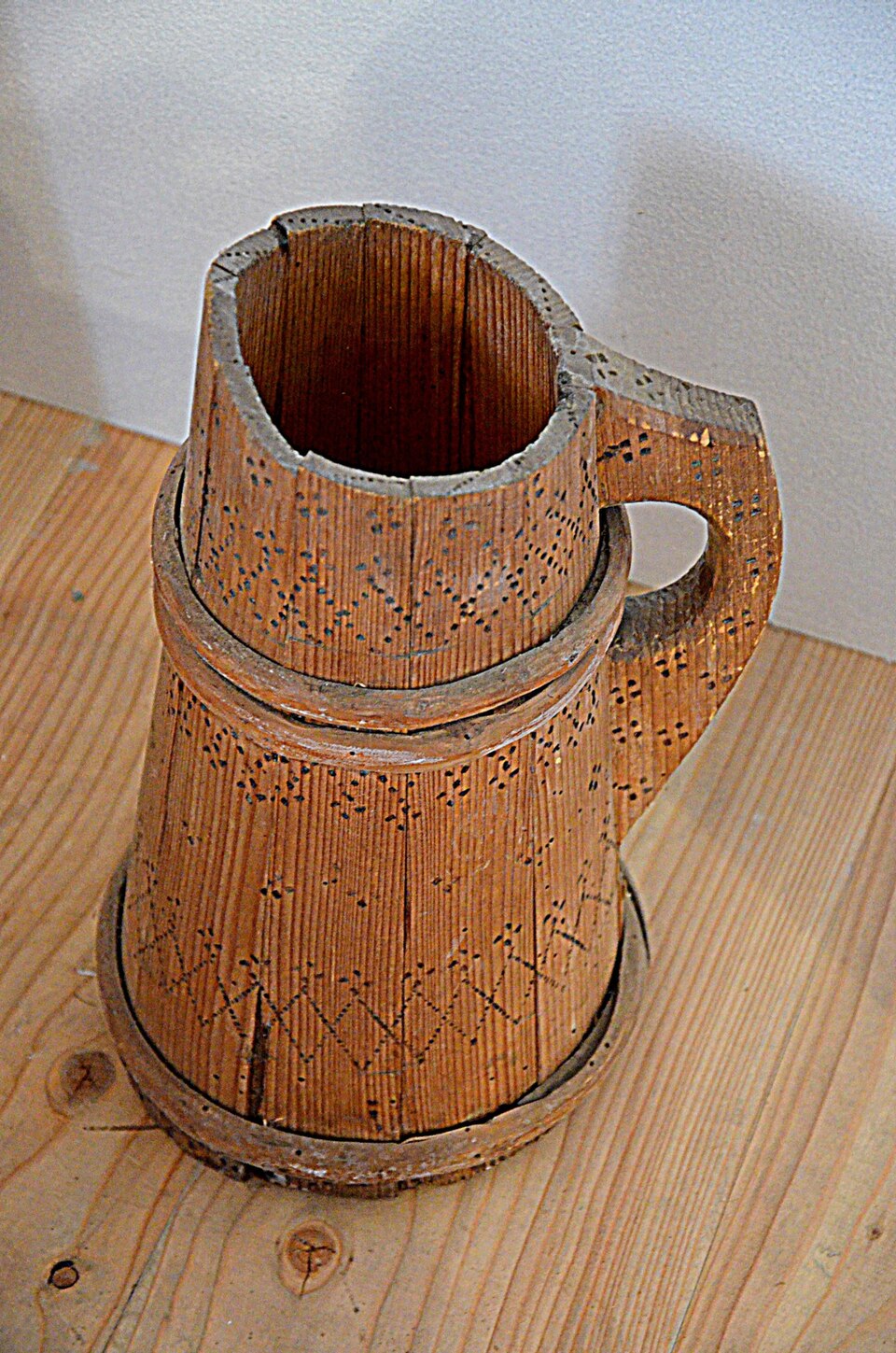
Śmigus-dyngus Bucket
On Easter Monday people throw water over each other, which in villages means buckets and in cities means water pistols. It is old enough to have been banned by bishops and is still enthusiastically observed.
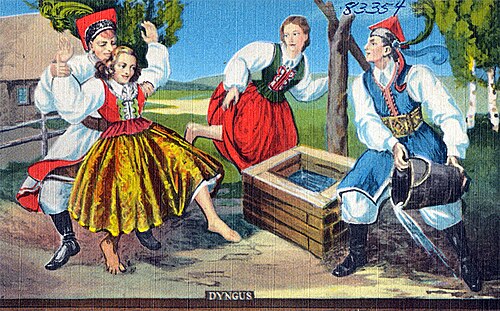
Śmigus-dyngus (Polish pronunciation: [ˈɕmigus ˈdɨnɡus]) or lany poniedziałek (Polish pronunciation: [ˈlanɨ ˌpɔɲɛˈd͡ʑawɛk]) is a celebration held on Easter Monday across Central Europe, and in small parts of Eastern and Southern Europe. The Eastertide tradition is widely associated with Poland in English-speaking countries and is observed by Polish diaspora communities, particularly among Polish Americans who call it Dyngus Day. Customs surrounding Śmigus-dyngus celebrate the arrival of Christianity in Poland. A similar tradition also exists among Hungarians, the Easter sprinkling called locsolkodás (sprinkling) and in Slovakia, called oblievačka (the pouring).
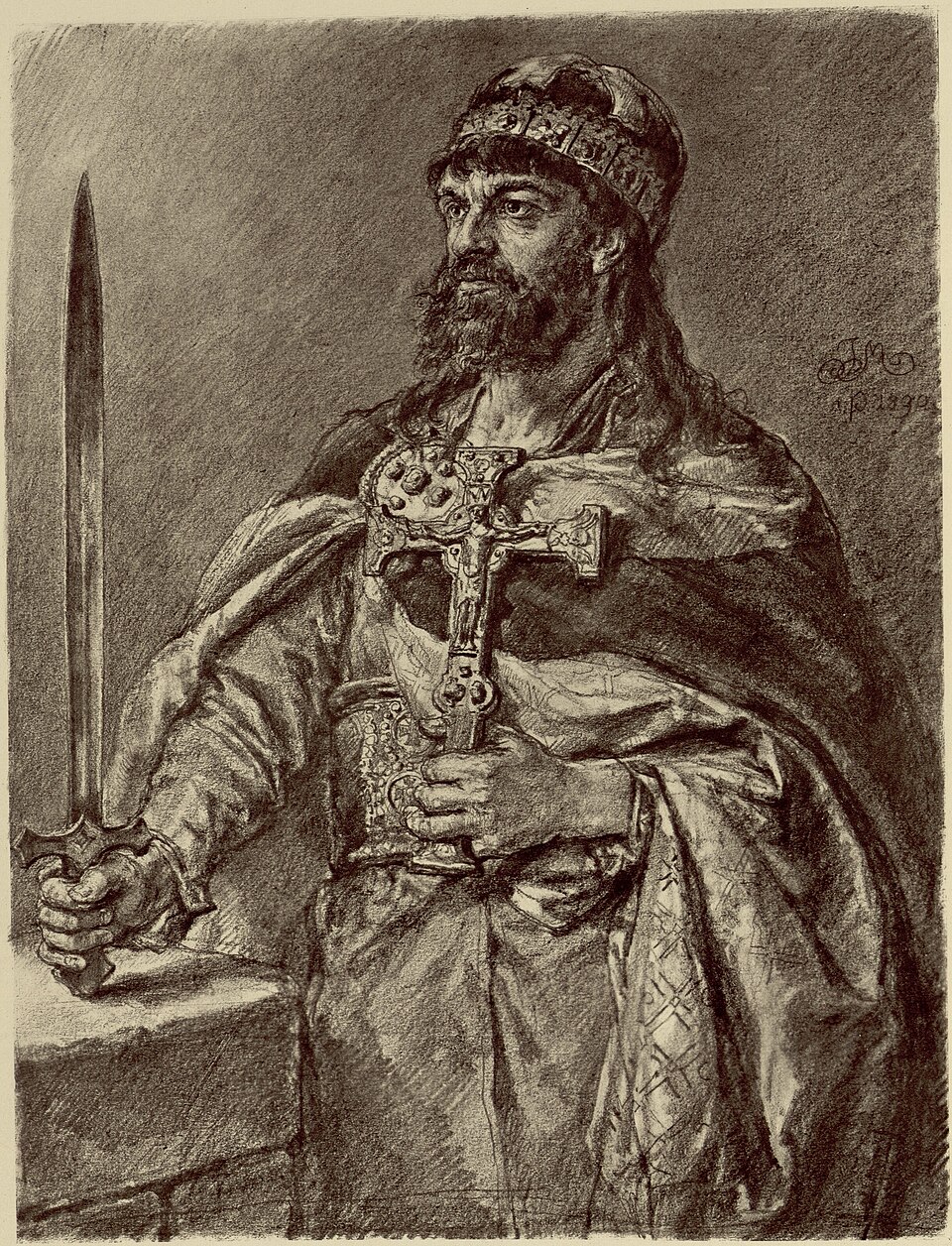
On Śmigus-dyngus, Polish families traditionally visit or call relatives, gifting them Paschal eggs. Mass has historically been well attended by Christians on Śmigus-dyngus. People douse each other in water; in particular, boys throw water over girls on Easter Monday. This is symbolic of the "cleansing of one from sins and marking the end of Lent with a day of feasting and merrymaking". The custom may derive from a commemoration of the Baptism of Poland, when the Polish people became Christians and received baptism en masse. Additionally, certain scholars trace the custom to Jerusalem, in which water was used to disperse crowds who were gathering to discuss the resurrection of Jesus.
Further reading
Śmigus-dyngus Bucket is one of the 3D puzzles in World Artifacts: turn a cloud of broken pieces until it lines up. For iPhone, iPad, Apple Vision Pro and Android.

