World Artifacts › Atlas › Poland
Wawel Cathedral
Most Polish kings and many national heroes are buried here, and the Sigismund bell in the tower is rung by hand for great occasions by a team of a dozen ringers. Poles say hearing it is lucky, and it is only rung a few times a year.
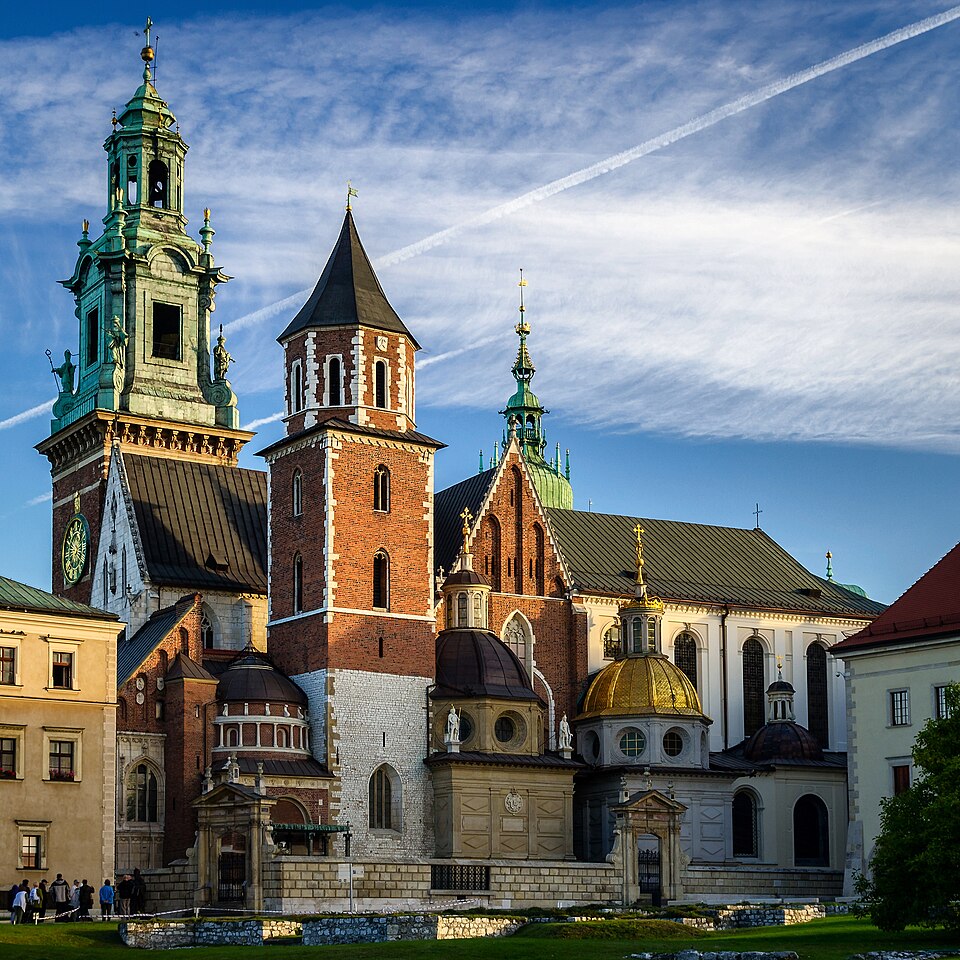
The Archcathedral Basilica of Saint Stanislaus and Saint Wenceslaus (Polish: Bazylika archikatedralna św. Stanisława i św. Wacława), known colloquially as Wawel Cathedral (Polish: Katedra Wawelska), is a Catholic cathedral situated on Wawel Hill in Kraków, Poland. Nearly 1,000 years old, it is part of the Wawel Castle Complex and is a national sanctuary which served as the coronation site of Polish monarchs.
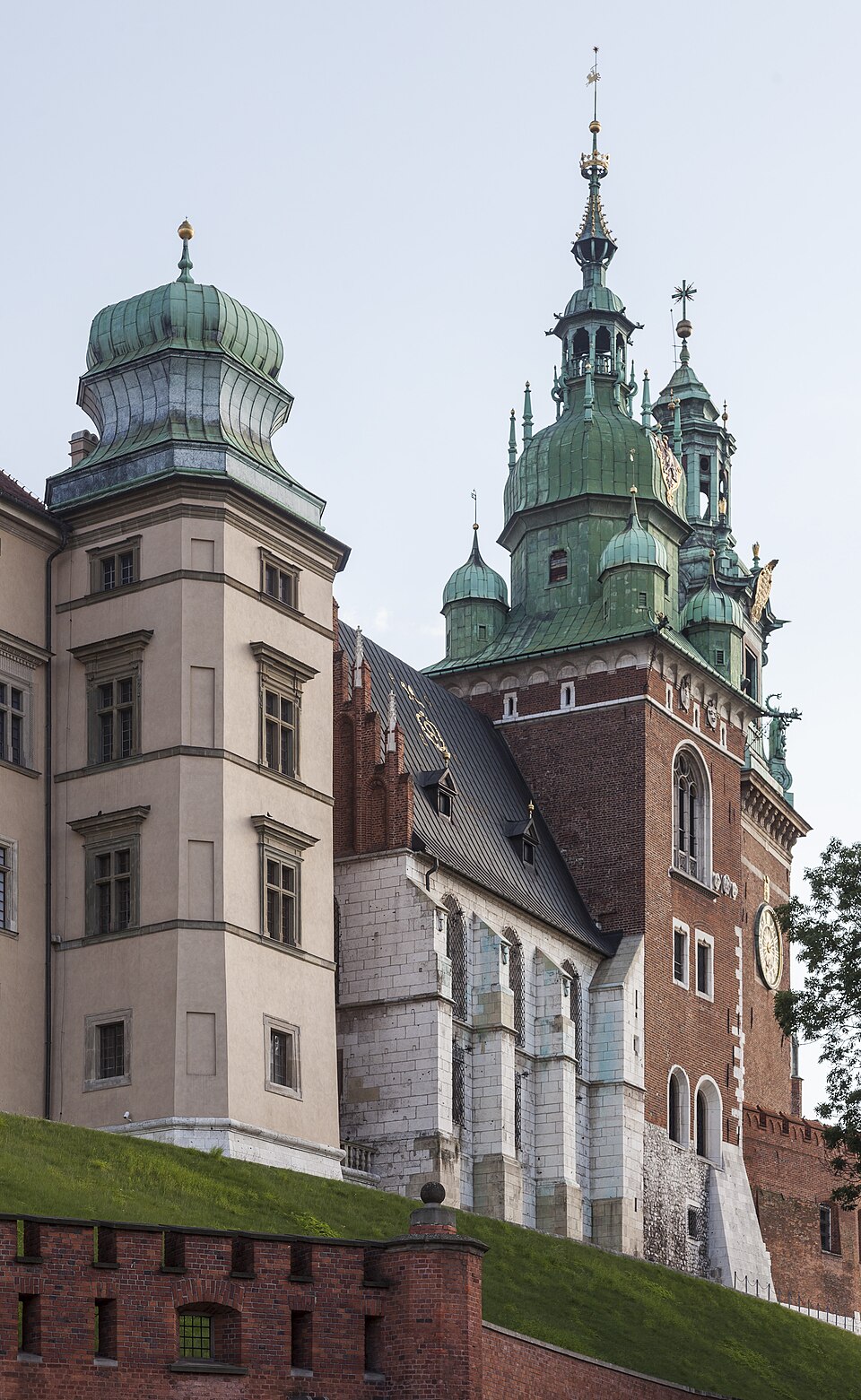
The current Gothic cathedral is the third edifice on this site; the first was constructed and destroyed in the 11th century and the second one, constructed in the 12th century, was destroyed by a fire in 1305. The construction of the existing church began in the 14th century on the orders of Bishop Nanker. Over time, the building was expanded by successive rulers resulting in its versatile and eclectic architectural composition. There are examples of Romanesque, Gothic, Renaissance, Baroque, Neoclassical and Neogothic elements in the cathedral's façade and interior. The exterior is adorned by side chapels and representative mausoleums, most notable being the golden-domed Sigismund's Chapel.
Further reading
Wawel Cathedral is one of the 3D puzzles in World Artifacts: turn a cloud of broken pieces until it lines up. For iPhone, iPad, Apple Vision Pro and Android.

