World Artifacts › Atlas › Poland
White-tailed Eagle
The eagle on Poland's arms wears a crown, which was removed by the communist government and put back in 1990. The bird in the emblem is white on red, and the story is that the first ruler saw one against a red sunset and founded a city where it nested.
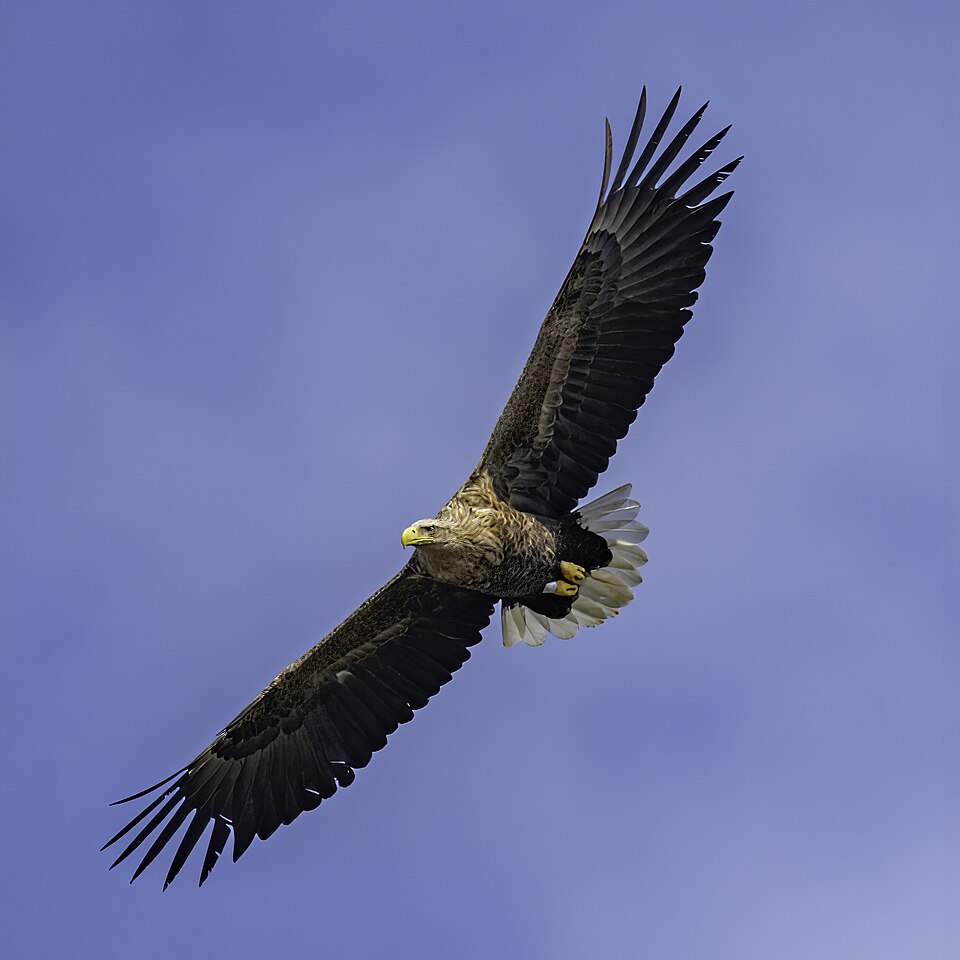
The white-tailed eagle (Haliaeetus albicilla), sometimes known as the "sea eagle", is a large bird of prey, widely distributed across temperate Eurasia. Like other eagles, it is a member of the family Accipitridae (or accipitrids) which also includes other diurnal raptors such as hawks, kites, and harriers. One of up to eleven members in the genus Haliaeetus, which are commonly called sea eagles, it is also referred to as the white-tailed sea-eagle. Sometimes, it is known as the ern or erne (depending on spelling by sources), gray sea eagle and Eurasian sea eagle.
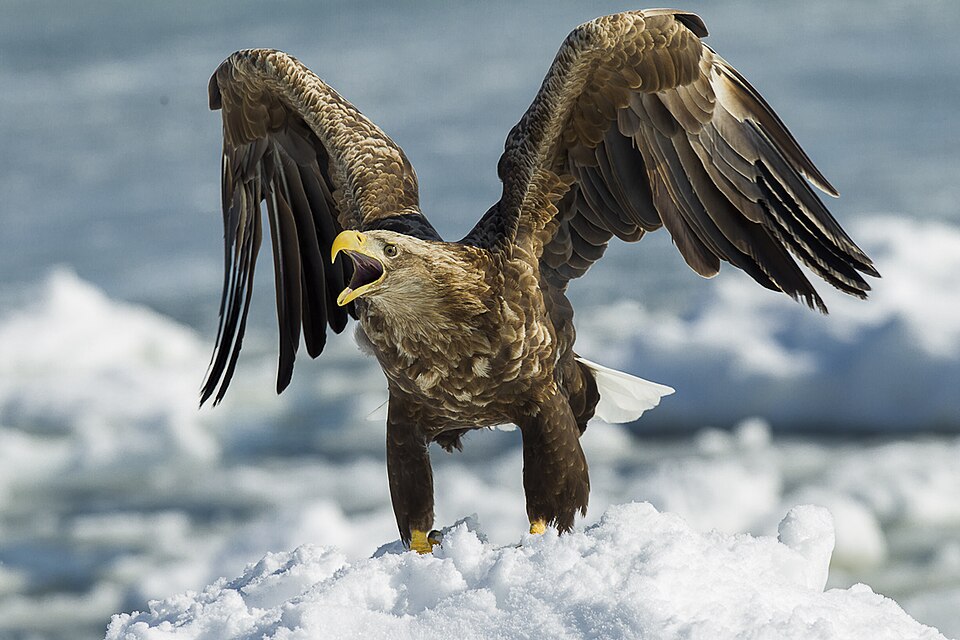
While found across a wide range, breeding from as far west as Greenland and Iceland across to as far east as Hokkaido, Japan, they may be scarce and have thinly distributed nesting due to human activities, including habitat alteration and destruction of wetlands, about a century of systematic human persecution (from the early 1800s to around World War II) followed by inadvertent poisoning and epidemics of nesting failure due to chemical pesticides and organic compounds, which have threatened eagles since the 1950s and continue to be a concern. For these reasons, the white-tailed eagle was considered endangered or extinct in several countries. Some populations have since recovered well, due to governmental protection, dedicated conservationists and naturalists protecting habitats and nesting sites, regulating poaching and pesticide usage, as well as careful reintroduction into their former range.

Further reading
White-tailed Eagle is one of the 3D puzzles in World Artifacts: turn a cloud of broken pieces until it lines up. For iPhone, iPad, Apple Vision Pro and Android.

