World Artifacts › Atlas › Poland
Wieliczka Salt Chapel
Miners carved a chapel out of the rock salt hundreds of metres down, over nearly seventy years, including altarpieces and chandeliers made from salt crystal. The whole mine has over two thousand chambers and was worked continuously for seven centuries.
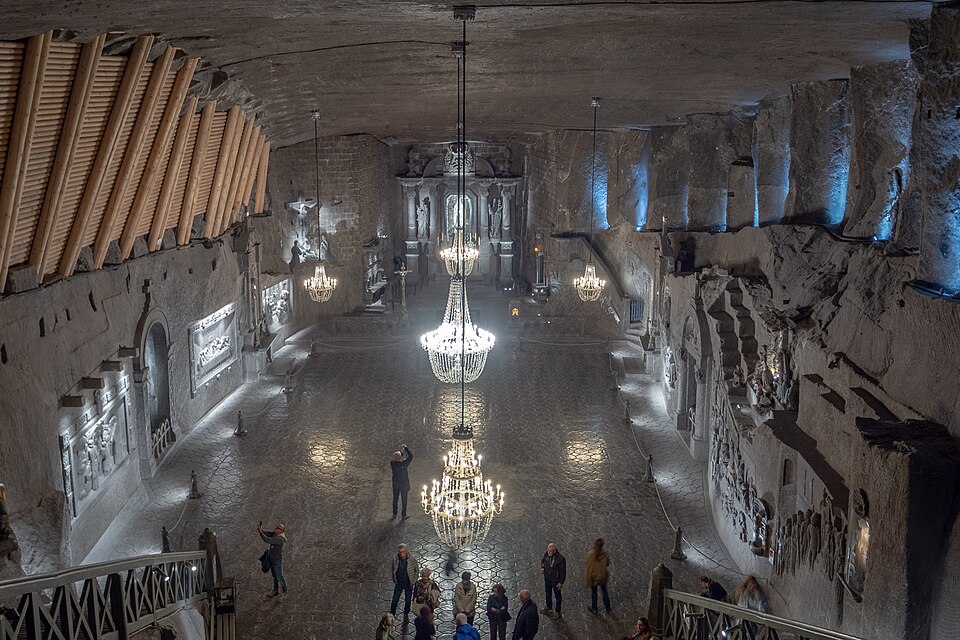
The Wieliczka Salt Mine (Polish: Kopalnia soli Wieliczka) is a salt mine in the town of Wieliczka, near Kraków in southern Poland.
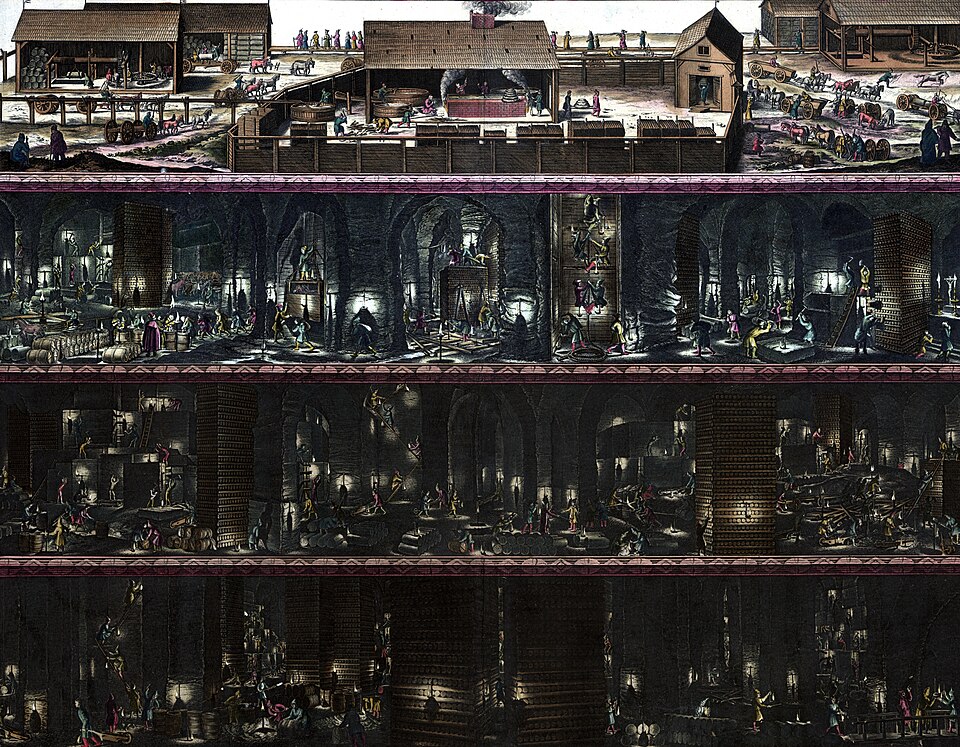
From Neolithic times, sodium chloride (table salt) was produced there from the upwelling brine. The Wieliczka salt mine, excavated from the 13th century, produced table salt continuously until 1996, as one of the world's oldest operating salt mines. Throughout its history, the royal salt mine was operated by the Żupy Krakowskie (Kraków Salt Mines) company.
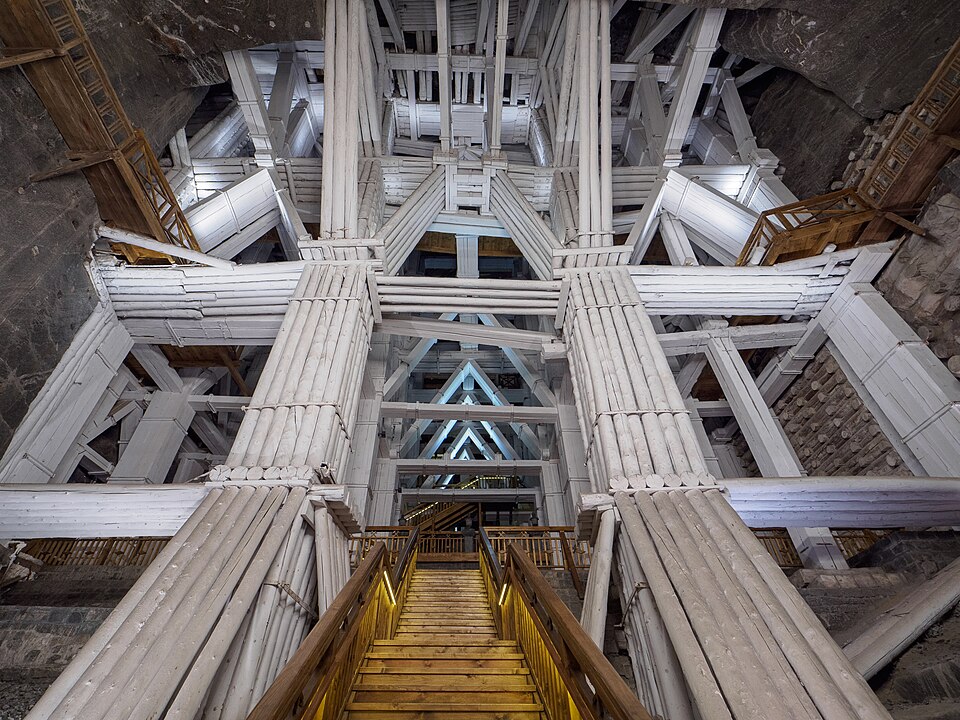
Due to falling salt prices and mine flooding, commercial salt mining was discontinued in 1996.
The Wieliczka Salt Mine is now an official Polish Historic Monument (Pomnik Historii) and a UNESCO World Heritage Site. Its attractions include the shafts and labyrinthine passageways, displays of historic salt-mining technology, an underground lake, four chapels and numerous statues carved by miners out of the rock salt, and more recent sculptures by contemporary artists.
Wieliczka Salt Chapel is one of the 3D puzzles in World Artifacts: turn a cloud of broken pieces until it lines up. For iPhone, iPad, Apple Vision Pro and Android.

