World Artifacts › Atlas › Poland
Winged Hussar
Nobody knows what the wings were for. The theory that they whistled and frightened horses does not survive testing, and the likeliest explanation is that they were parade equipment that the paintings have made compulsory in every later depiction.
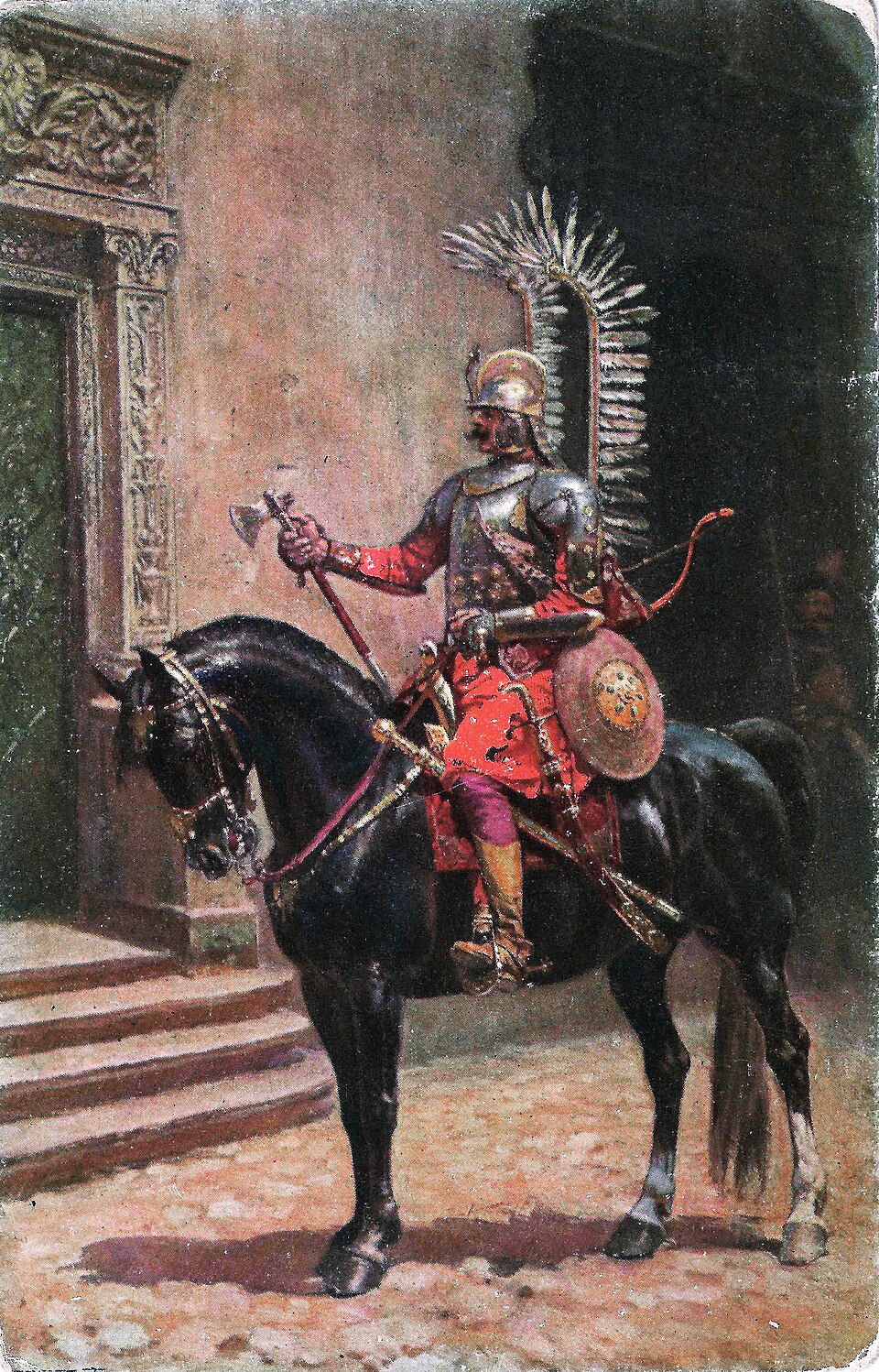
The Polish hussars (; Polish: husaria [xuˈsarja]), alternatively known as the winged hussars, were an elite heavy cavalry formation active in Poland and in the Polish-Lithuanian Commonwealth from 1503 to 1702. Their epithet is derived from large rear wings, which were intended to demoralize the enemy during a charge. The hussars ranked as the elite of Polish cavalry until their official disbanding in 1776.
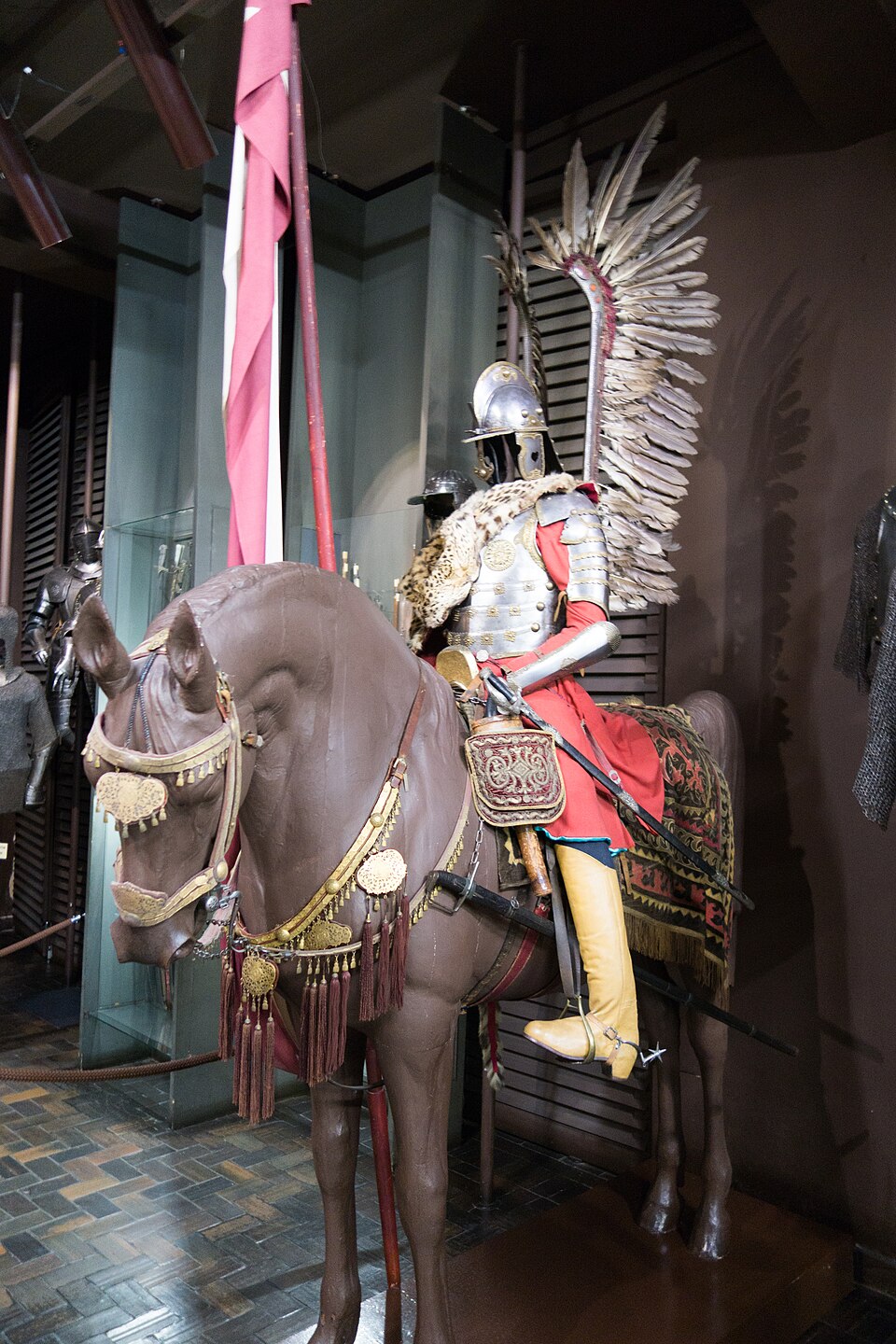
The hussar dress was ostentatious and comprised plated body armour (cuirass, spaulders, bevors, and arm bracers) adorned by gold ornaments, a burgonet or lobster-tailed pot helmet and jackboots as well as versatile weaponry such as lances, long thrusting swords, sabres, pistols, carbines, maces, hatchets, war hammers, and horseman's picks. It was customary to maintain a red-and-white colour scheme, and to be girded with tanned animal hide. The wings were traditionally assembled from the feathers of raptors, and the angel-like frame was fastened onto the armour or saddle.
The early hussars were light cavalry units of exiled Serbian warriors who came to Poland from Hungary as mercenaries in the early 16th century. Following the reforms of King Stephen Báthory (r. 1576-1586), the Polish military officially adopted the unit and transformed it into heavy shock cavalry, with troops recruited from the Polish nobility. The Polish hussar differs greatly from the light, unarmoured hussars that developed concurrently outside Poland.
Further reading
Winged Hussar is one of the 3D puzzles in World Artifacts: turn a cloud of broken pieces until it lines up. For iPhone, iPad, Apple Vision Pro and Android.

