World Artifacts › Atlas › Portugal
Caravel
The caravel's lateen sails let it sail much closer to the wind than a square rig, which is what made exploration possible: a ship could get home against the prevailing northerlies down the African coast. Without that, the outward voyages would have been one-way.
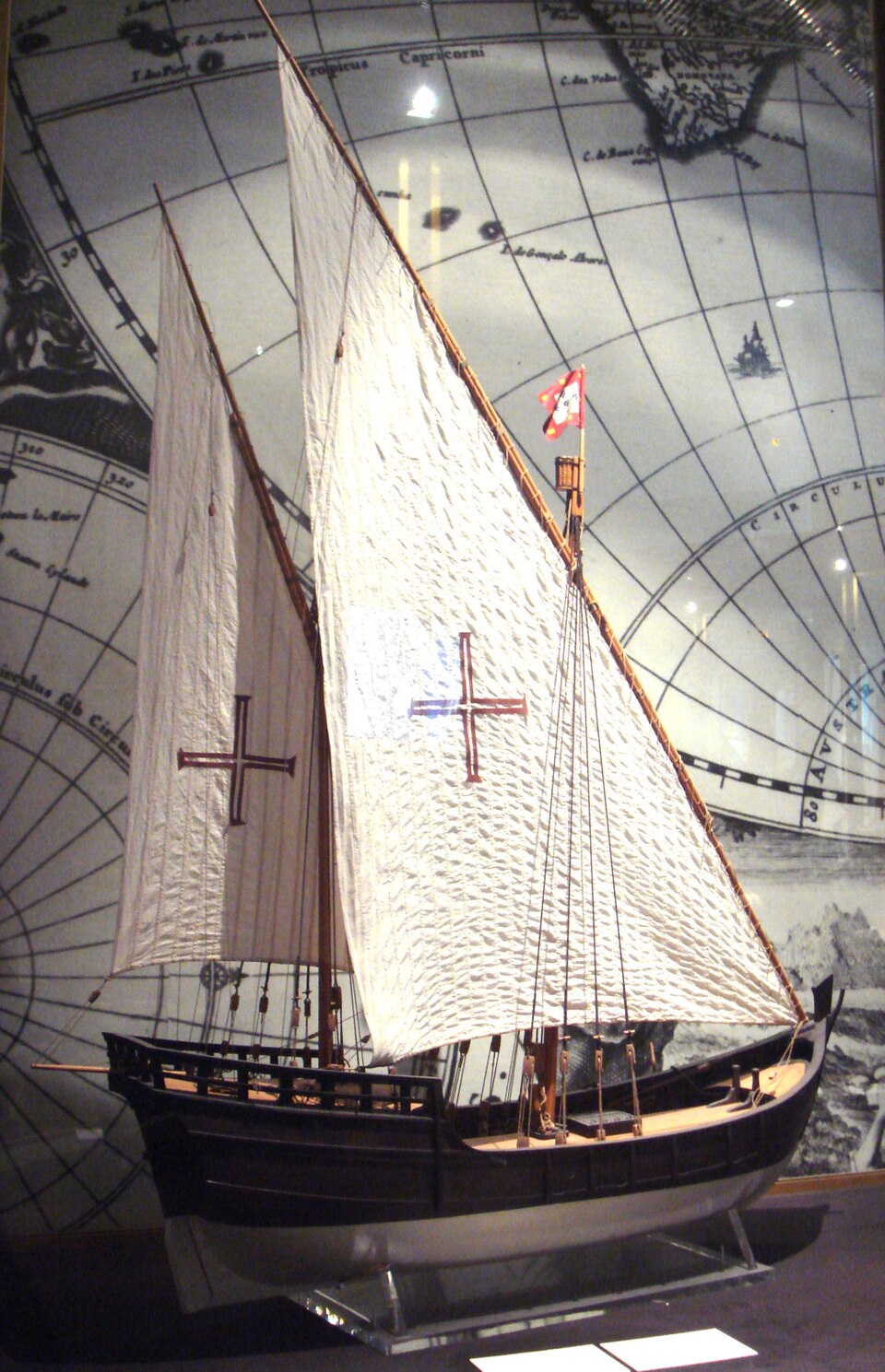
The caravel (Galician: carabela, IPA: [kaɾaˈbɛla]; Portuguese: caravela, IPA: [kɐɾɐˈvɛlɐ]; Spanish: carabela, IPA: [kaɾaˈbela]) was a small sailing ship that developed from the fishing craft of Galicia, Portugal, and Atlantic Andalusia. It could be rigged either entirely with lateen sails or with a combination of lateen and square sails. It was noted for its capacity for sailing windward (beating) and for its remarkable speed. Caravels were used by the Portuguese and the Spanish for voyages of exploration during the 15th and 16th centuries, in the Age of Exploration.
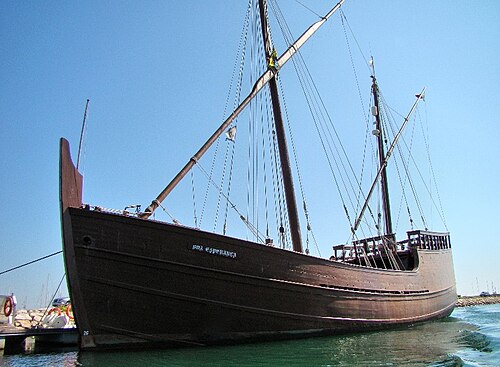
The caravel is a poorly understood type of vessel. Though there are now some archaeologically investigated wrecks that are most likely caravels, information on this type is limited. The ships of the Greeks and Romans of classical antiquity are better understood than caravels are.
Further reading
- The Portuguese Seaborne Empire, 1415-1825 · C.R. BOXER (1969)Surveys the Portuguese seaborne empire from 1415 to 1825, the age of exploration in which caravels sailed.Find a copy: AbeBooks · Amazon · WorldCat
- Prince Henry "the Navigator" · Peter Russell (2000)Study of Prince Henry the Navigator, the Portuguese figure associated with early exploration.Find a copy: AbeBooks · Amazon · WorldCat
Caravel is one of the 3D puzzles in World Artifacts: turn a cloud of broken pieces until it lines up. For iPhone, iPad, Apple Vision Pro and Android.

