World Artifacts › Atlas › Portugal
Cork Handbag
Cork can be sliced thin and backed with fabric, which gives a leather-like material that is light, waterproof and comes off a tree that is not cut down. Portugal has built an export business out of turning its oldest crop into handbags and shoes.
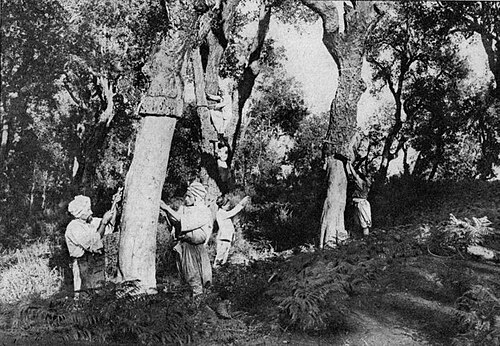
Cork is an impermeable buoyant material. It is the phellem layer of bark tissue which is harvested for commercial use primarily from Quercus suber (the cork oak), which is native to southwest Europe and northwest Africa. Cork is composed of suberin, a hydrophobic substance. Because of its impermeable, buoyant, elastic, and fire retardant properties, it is used in a variety of products, the most common of which is wine stoppers.
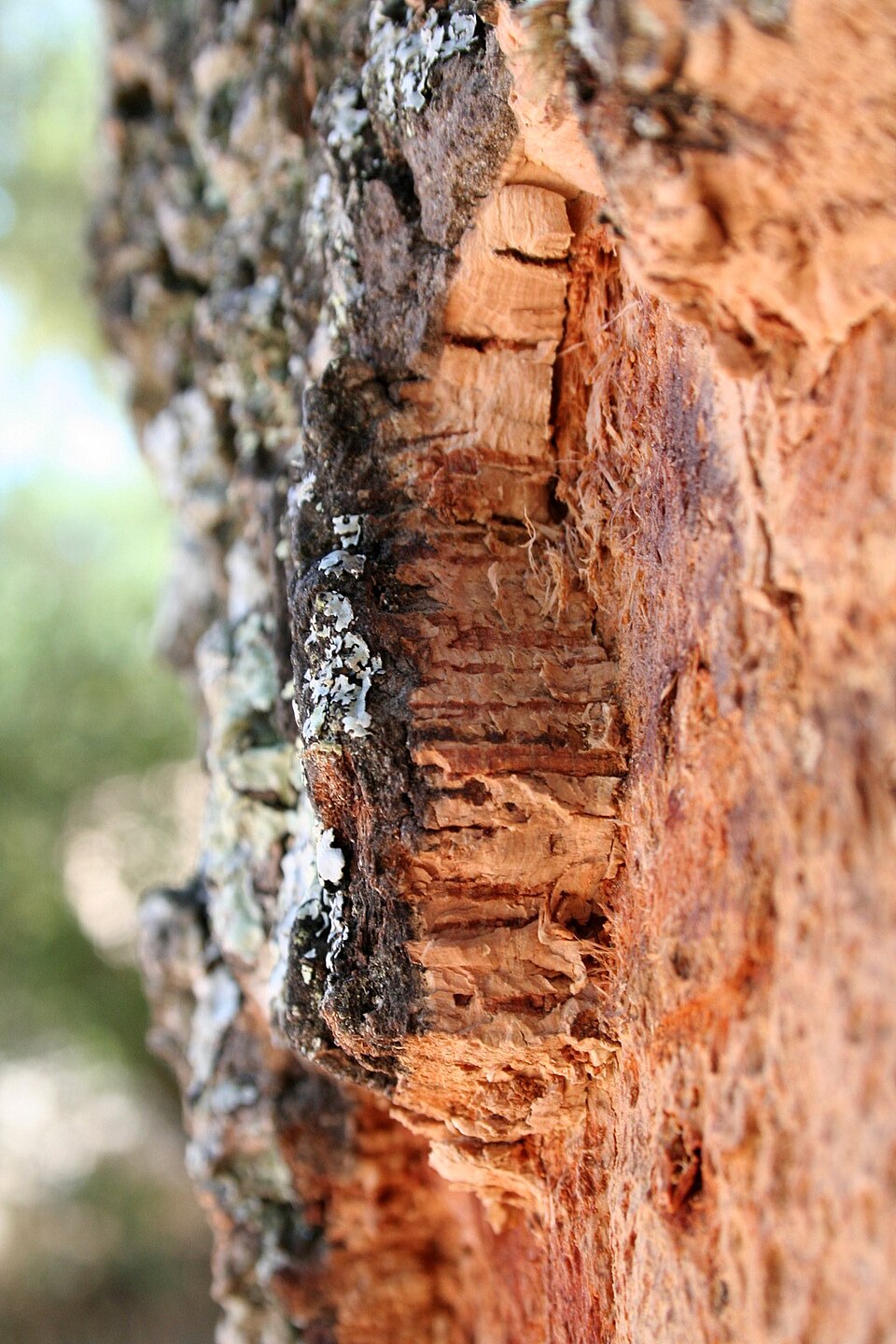
The montado landscape of Portugal produces approximately half of the cork harvested annually worldwide, with Corticeira Amorim being the leading company in the industry. Cork was examined microscopically by Robert Hooke, which led to his discovery and naming of the cell.
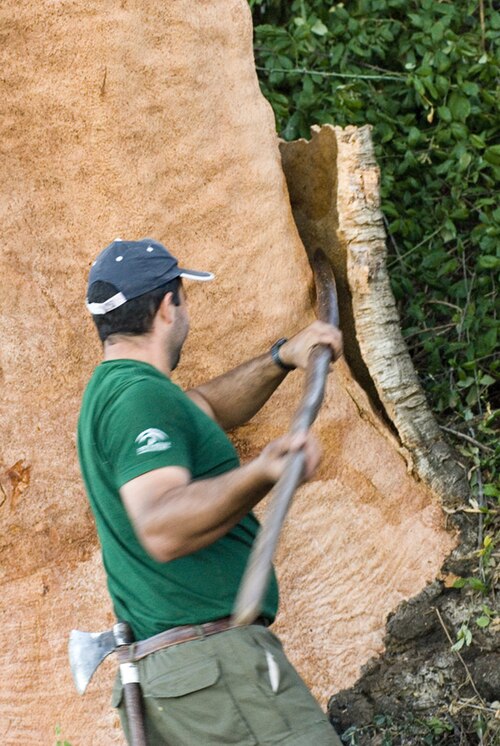
Cork composition varies depending on geographic origin, climate and soil conditions, genetic origin, tree dimensions, age (virgin or reproduction), and growth conditions. However, in general, cork is made up of suberin (average of about 40%), lignin (22%), polysaccharides (cellulose and hemicellulose) (18%), extractables (15%) and others.
Cork Handbag is one of the 3D puzzles in World Artifacts: turn a cloud of broken pieces until it lines up. For iPhone, iPad, Apple Vision Pro and Android.

