World Artifacts › Atlas › Portugal
Pastel de Nata
The custard tarts come from the monastery at Belém, where monks used egg white to starch their habits and had yolks left over. When the religious orders were dissolved in 1834 the recipe was sold to a nearby sugar refinery, and the shop there still uses it under secrecy.
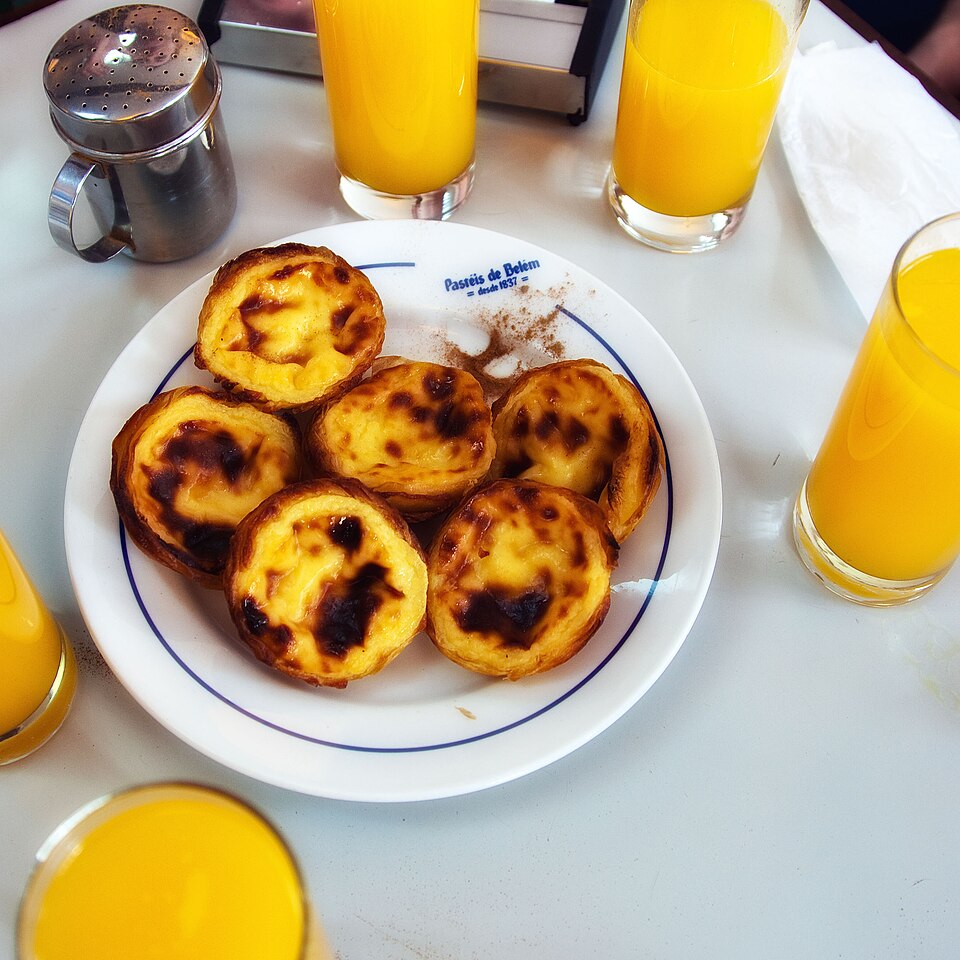
Pastel de nata (Portuguese: [pɐʃˈtɛl dɨ ˈnatɐ]; literally, cream pastry; pl.: pastéis de nata) is a Portuguese egg custard tart pastry, optionally dusted with cinnamon. Outside Portugal, they are particularly popular in other parts of Western Europe, former Portuguese colonies, such as Brazil, Mozambique, Macau, Goa, Malacca and Timor-Leste, and other parts of Asia. The Macau variant has been adopted by KFC and is available in regions such as mainland China, Hong Kong, Taiwan, Thailand, South Korea, Singapore and Malaysia. In Indonesia, this pastry is especially popular in Kampung Tugu, Jakarta, a culturally Portuguese (Mardijker) enclave.

Further reading
Pastel de Nata is one of the 3D puzzles in World Artifacts: turn a cloud of broken pieces until it lines up. For iPhone, iPad, Apple Vision Pro and Android.

