World Artifacts › Atlas › Qatar
LNG Tanker
The tanker with round tanks.
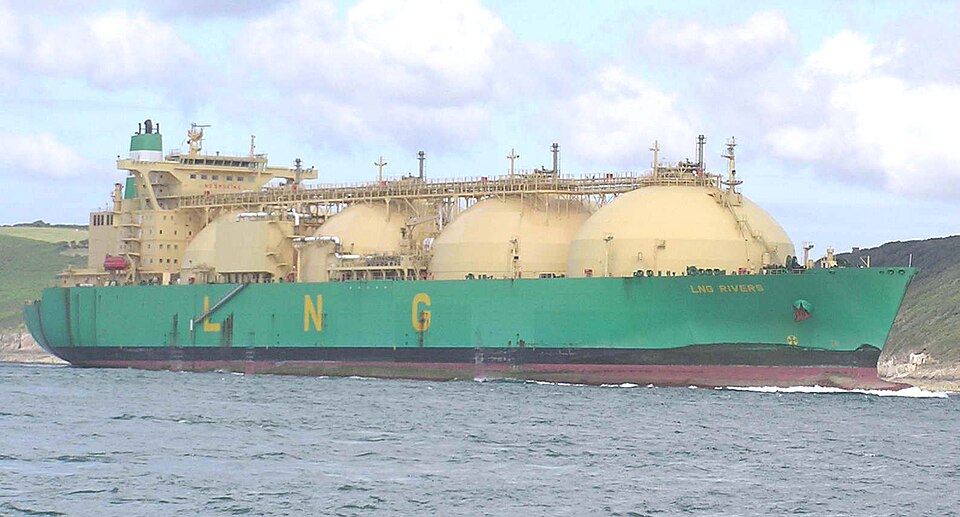
An LNG carrier is a tank ship designed for transporting liquefied natural gas (LNG). It is designed to transport LNG at cryogenic temperatures of around -162°C (-260°F). These vessels use heavily insulated containment systems, with membrane or spherical tanks, to keep gas in liquid form, reducing its volume 600 times. This enables safe, efficient sea transport from liquefaction plants to import terminals, especially between locations not connected by pipelines, such as supplying Asia and Europe from gas-producing regions.
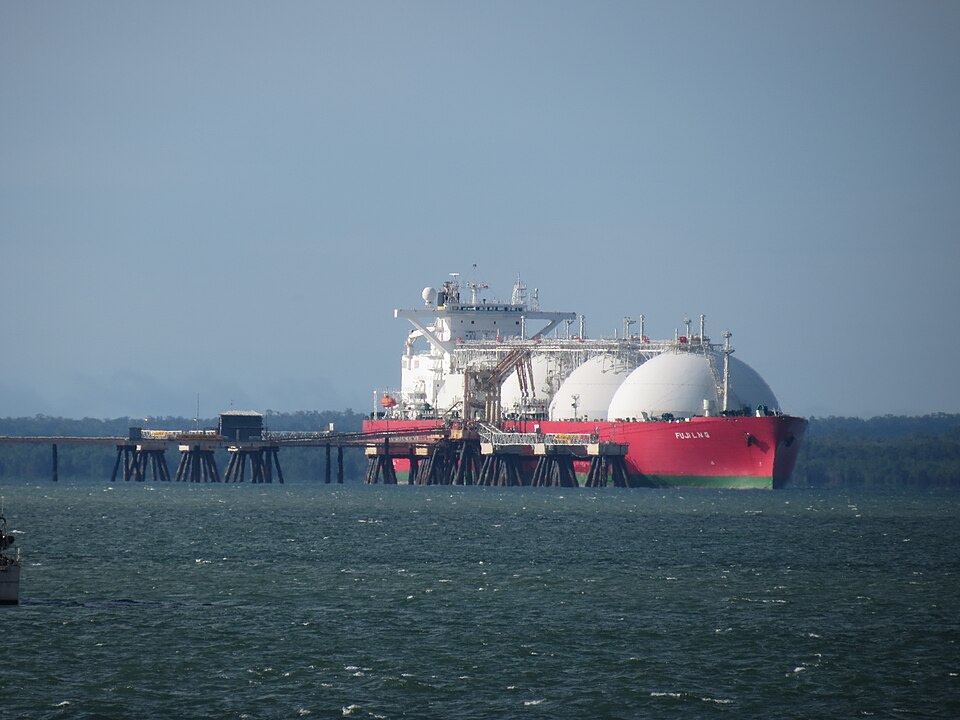
Typically, modern LNG carriers use the natural gas they carry as fuel, enhancing efficiency. A Gas Combustion Unit (GCU) is often used to manage gas that vaporizes during transit.
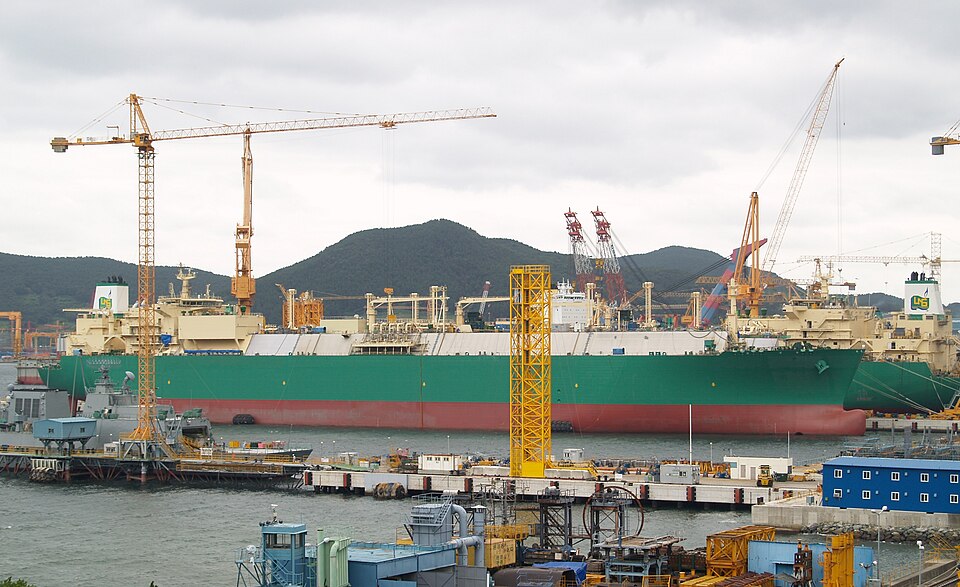
The first oceangoing liquified natural gas tanker in the world was Methane Pioneer, which entered service in 1959 with a carrying capacity of 5,500 cubic metres (190,000 cu ft). LNG carriers have increased in size to giant Q-Max LNG ships that can carry up to 266,000 m3 (9,400,000 cu ft). As of 2023, there were 772 active LNG carriers in the world.
Further reading
LNG Tanker is one of the 3D puzzles in World Artifacts: turn a cloud of broken pieces until it lines up. For iPhone, iPad, Apple Vision Pro and Android.

