World Artifacts › Atlas › Russia
Balalaika
The balalaika was a peasant instrument that had nearly died out when a musician standardised it into a family of sizes in the 1880s and put it in concert halls. The triangular body was cheap to make from flat boards.
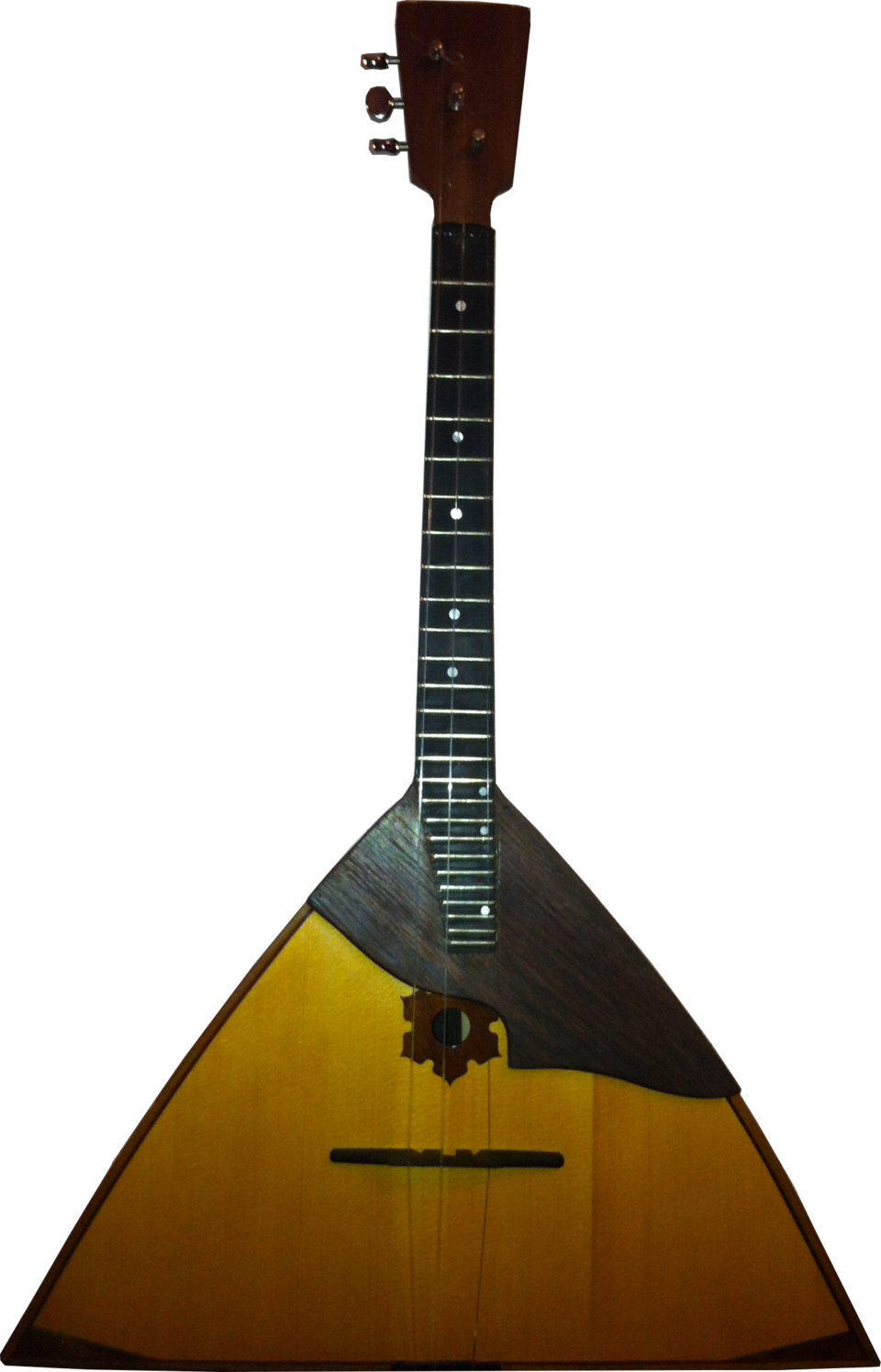
The balalaika (Russian: балала́йка, pronounced [bəɫɐˈɫajkə]) is a Russian stringed musical instrument with a characteristic triangular wooden, hollow body, fretted neck, and three strings. Two strings are usually tuned to the same note and the third string is a perfect fourth higher. The higher-pitched balalaikas are used to play melodies and chords. The instrument generally has a short sustain, necessitating rapid strumming or plucking when it is used to play melodies. Balalaikas are often used for Russian folk music and dancing.
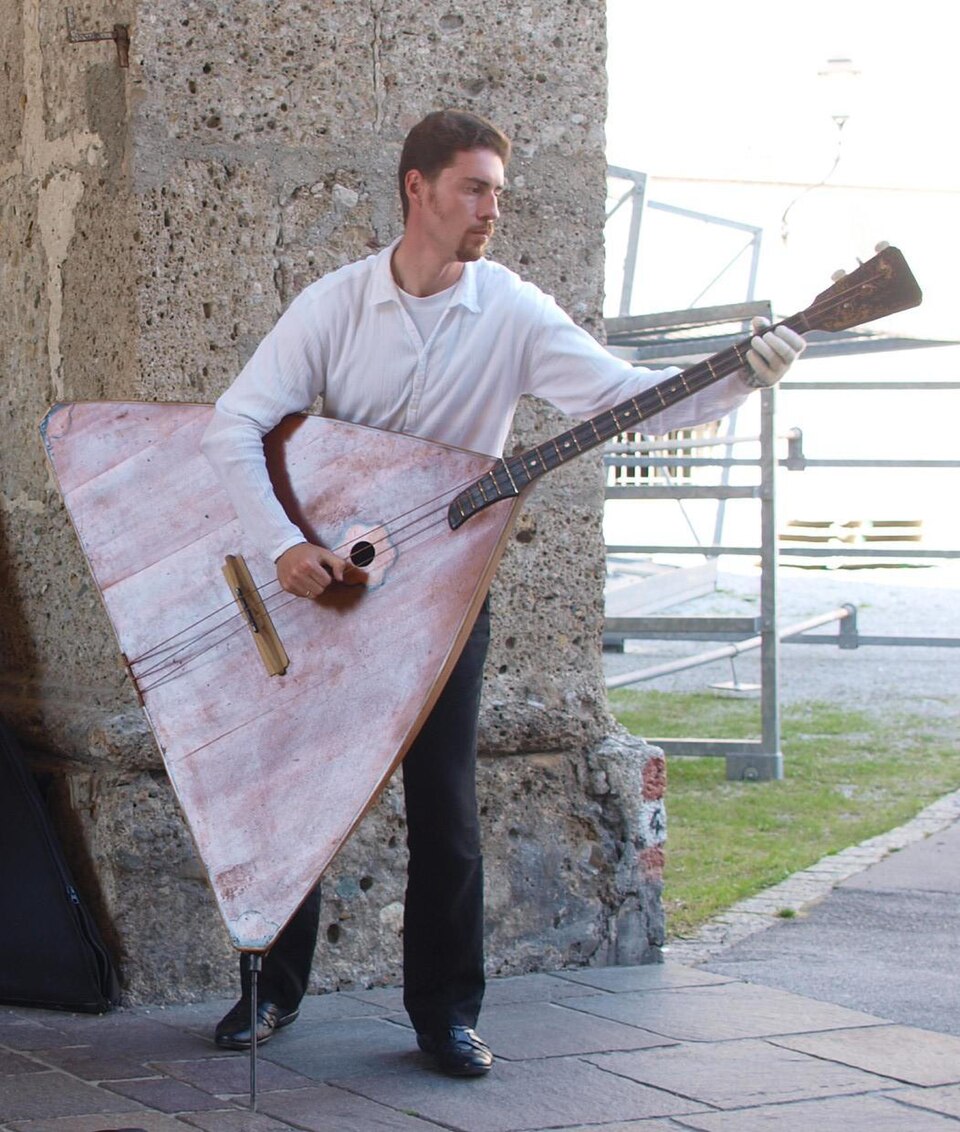
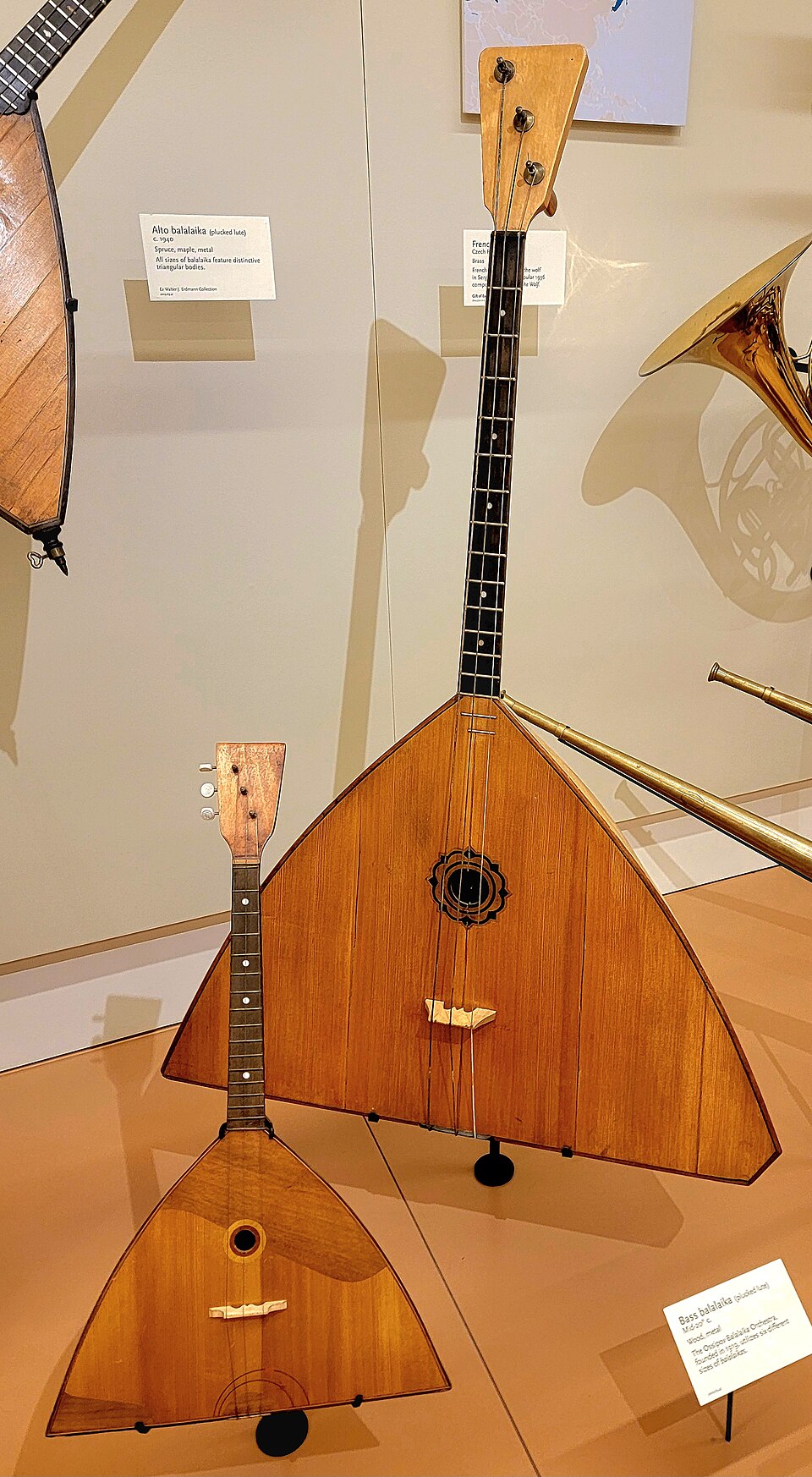
The balalaika family of instruments includes instruments of various sizes, from the highest-pitched to the lowest: the piccolo balalaika, prima balalaika, secunda balalaika, alto balalaika, bass balalaika, and contrabass balalaika. There are balalaika orchestras which consist solely of different balalaikas; these ensembles typically play classical music that has been arranged for balalaikas. The prima balalaika is the most common; the piccolo is rare. There have also been descant and tenor balalaikas, but these are considered obsolete. All have three-sided bodies; spruce, evergreen, or fir tops; and backs made of three to nine wooden sections (usually maple).
Balalaika is one of the 3D puzzles in World Artifacts: turn a cloud of broken pieces until it lines up. For iPhone, iPad, Apple Vision Pro and Android.

