World Artifacts › Atlas › Russia
Bolshoi Theatre
The theatre has burned down twice and been rebuilt on the same foundations. The chariot over the portico is Apollo's, and the restoration in the 2000s cost about sixteen times its original budget, which was itself a national scandal.
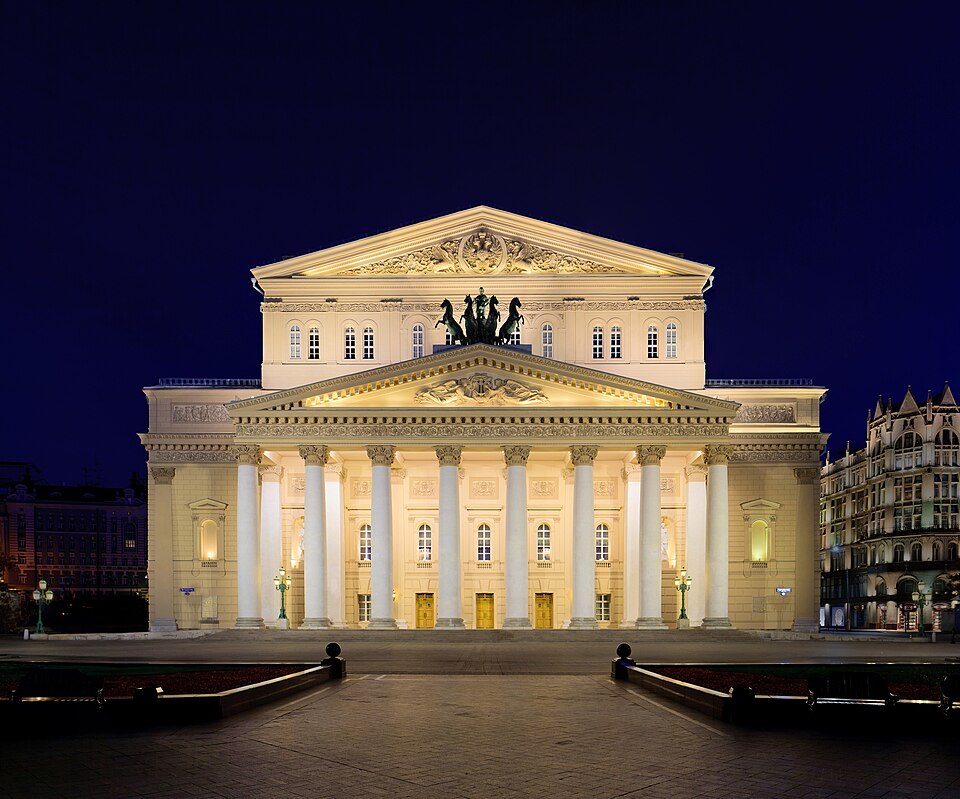
The Bolshoi Theatre (Russian: Большой театр, romanized: Bol'shoy teatr, IPA: [bɐlʲˈʂoj tʲɪˈat(ə)r], lit. 'Large Theater') is a historic opera house in Moscow, Russia, originally designed by architect Joseph Bové. Before the October Revolution it was a part of the Imperial Theatres of the Russian Empire along with Maly Theatre (Small Theatre) in Moscow and a few theatres in Saint Petersburg (Hermitage Theatre, Bolshoi (Kamenny) Theatre, later Mariinsky Theatre and others).
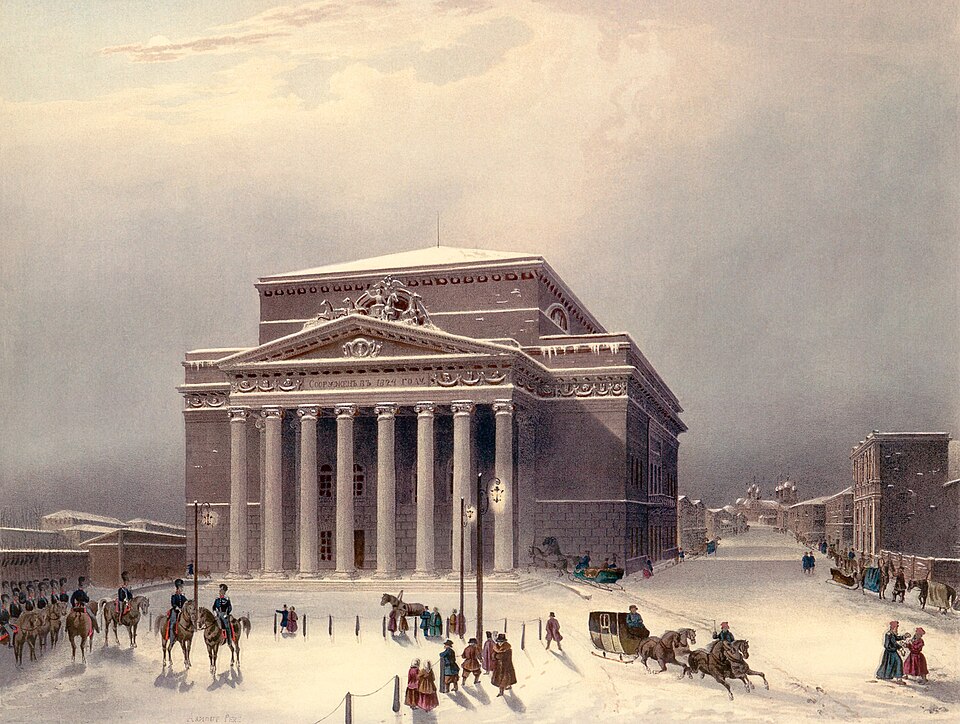
The Bolshoi Ballet and Bolshoi Opera are among the oldest and best known ballet and opera companies in the world. It is by far the world's biggest ballet company, with more than 200 dancers. The theatre is the parent company of The Bolshoi Ballet Academy, a leading school of ballet. It has a branch at the Bolshoi Theater School in Joinville, Brazil.
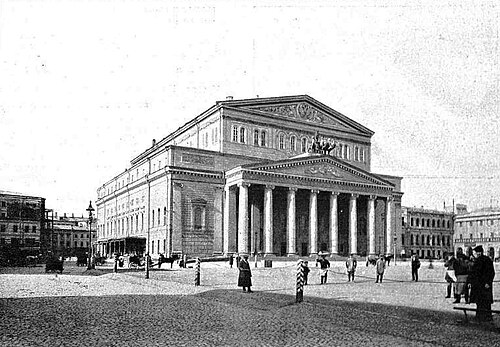
The main building of the theatre, rebuilt and renovated several times during its history, is a landmark of Moscow and Russia (its iconic neoclassical façade is depicted on the Russian 100-ruble banknote). On 28 October 2011, the Bolshoi re-opened after an extensive six-year renovation. The official cost of the renovation is 21 billion rubles ($688 million). However, other Russian authorities and other people connected to it claimed much more public money was spent. The renovation included restoring acoustics to the original quality (which had been lost during the Soviet era), as well as restoring the original imperial decor of the Bolshoi.
Further reading
Bolshoi Theatre is one of the 3D puzzles in World Artifacts: turn a cloud of broken pieces until it lines up. For iPhone, iPad, Apple Vision Pro and Android.

