World Artifacts › Atlas › Russia
Siberian Husky
In 1925 a relay of dog teams carried diphtheria serum a thousand kilometres to Nome in five and a half days through a blizzard. The dog with the statue in New York ran the last leg; the one that ran the longest and hardest stretch was called Togo.
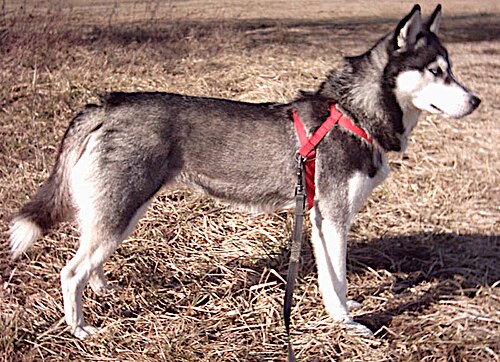
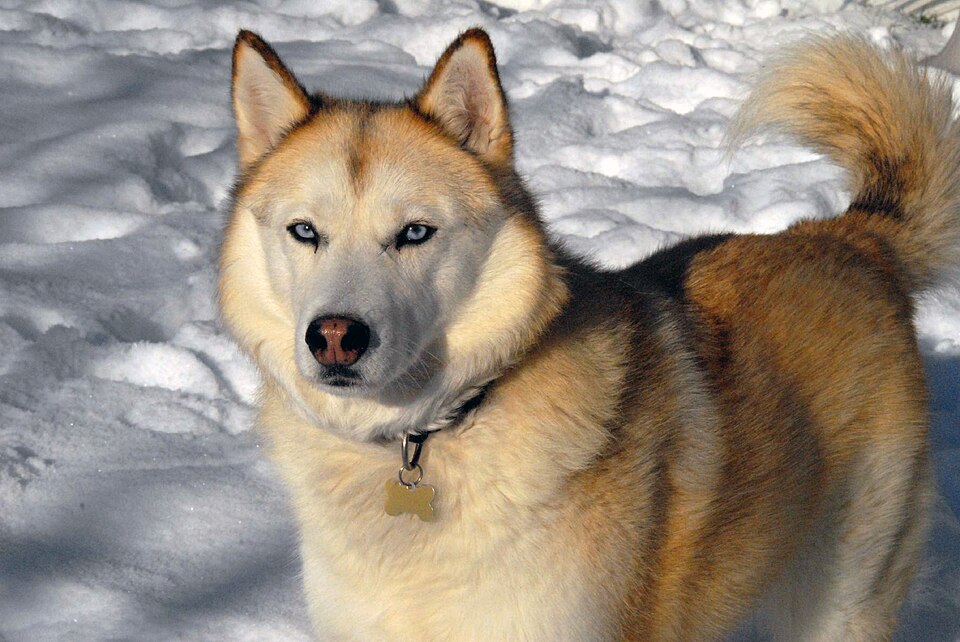
The Siberian Husky is a breed of medium-sized working sled dog. The breed belongs to the Spitz genetic family. It is recognizable by its thickly furred double coat, erect triangular ears, and distinctive markings, and is smaller than the similar-looking Alaskan Malamute.
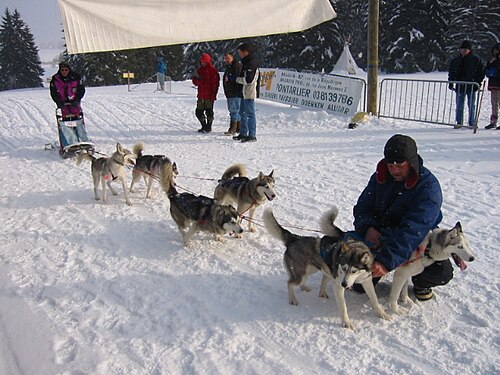
Siberian Huskies originated in the Russian Far East, where the breed was first developed by the Chukchi people for sled pulling and companionship. Other indigenous Siberian peoples in North Asia, such as the Koryak, Yukaghir, and Kamchadal, also breed them. It is an active, energetic, resilient breed, whose ancestors lived in the extremely cold and harsh environment of the Siberian Arctic. William Goosak, a Russian fur trader, introduced them to Nome, Alaska, during the Nome Gold Rush, initially as sled dogs to work the mining fields and for expeditions through otherwise impassable terrain. Today, the Siberian Husky is typically kept as a house pet, though they are still frequently used as sled dogs by competitive and recreational mushers.
Further reading
Siberian Husky is one of the 3D puzzles in World Artifacts: turn a cloud of broken pieces until it lines up. For iPhone, iPad, Apple Vision Pro and Android.

