World Artifacts › Atlas › Saudi Arabia
Oud Instrument
The pear-shaped stringed lute.
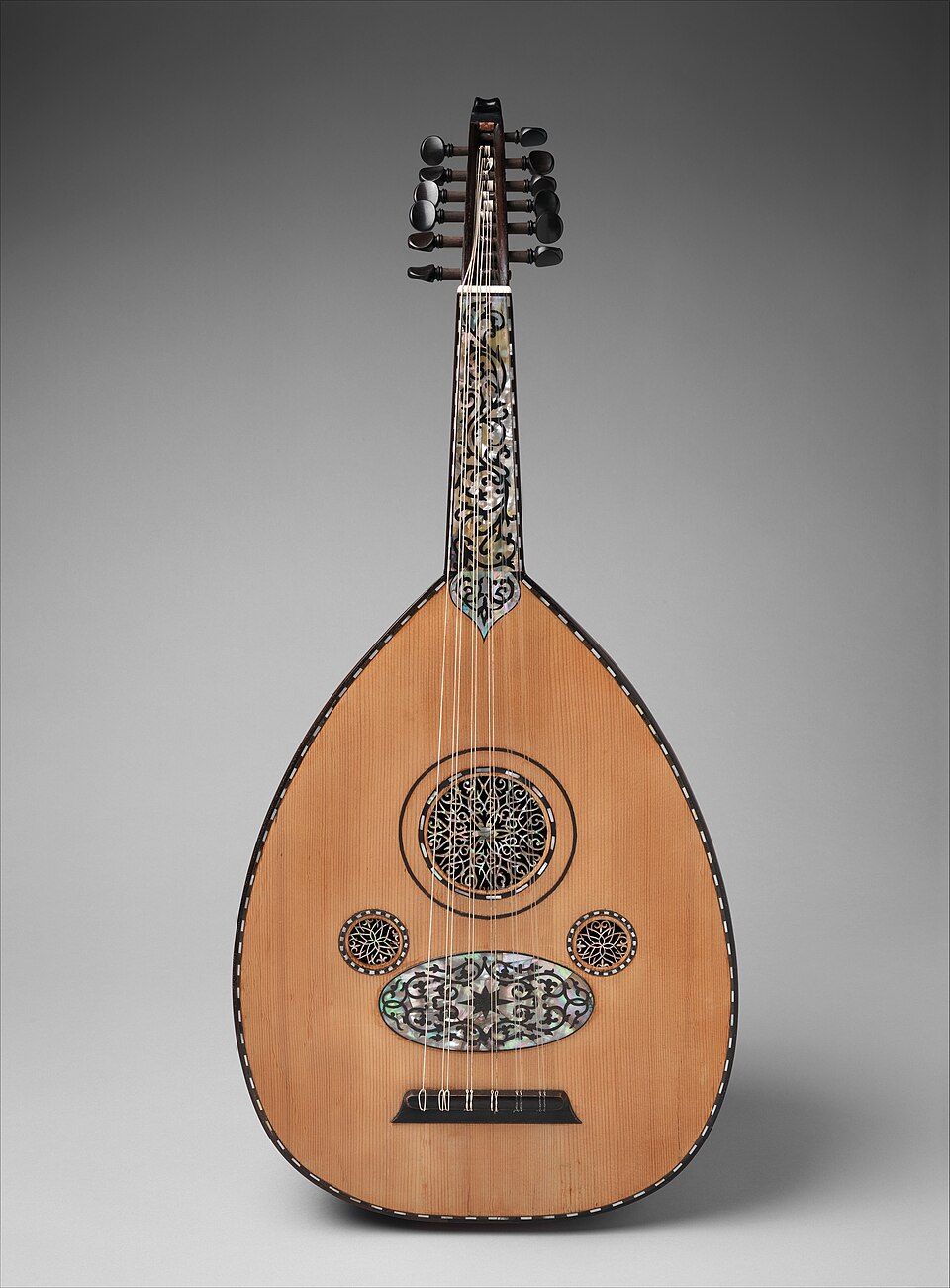
The oud ( OOD; Arabic: عُود, romanized: ʿūd, pronounced [ʕuːd]) is a Middle Eastern short-neck lute-type, pear-shaped, fretless stringed instrument (a chordophone in the Hornbostel-Sachs classification of instruments), usually with 11 strings grouped in six courses, but some models have five or seven courses, with 10 or 13 strings respectively.

The oud is similar to other types of lute, and to Western lutes which developed out of the Medieval Islamic oud. Similar instruments have been used in the Middle East, some predating Islam, such as the barbat from Persia. Different versions of the oud are used in Arabia, Turkey, and other Middle Eastern and Balkan regions. The oud, as a fundamental difference with the western lute, has no frets and a smaller neck. It is the direct successor of the Persian barbat lute. The oldest surviving oud is thought to be in Brussels, at the Museum of Musical Instruments.
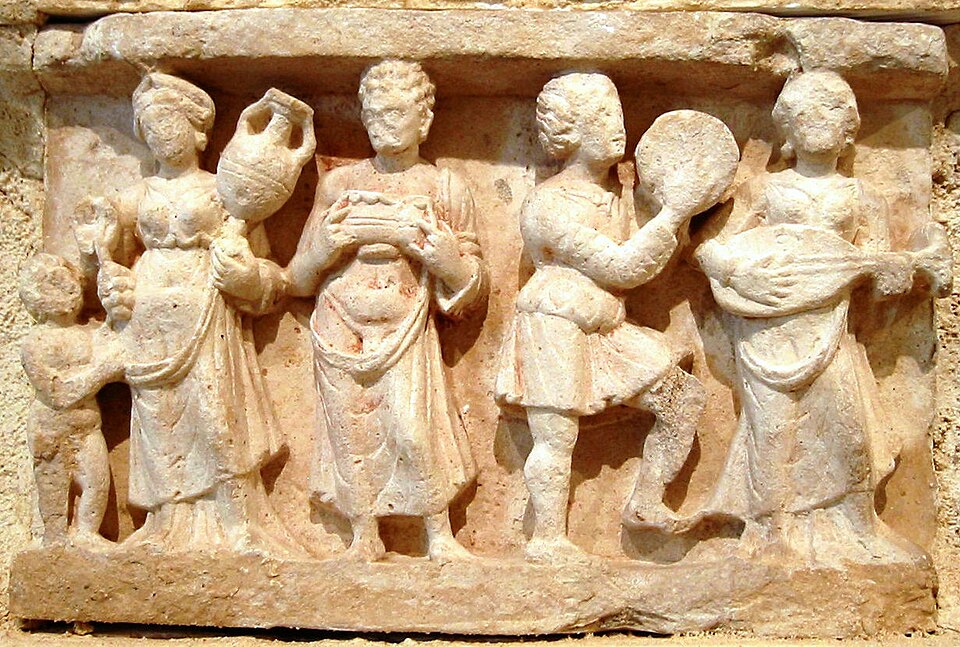
An early description of the "modern" oud was given by 11th-century musician, singer and author Al-Hasan Ibn al-Haytham (c. 965-1040) in his compendium on music Ḥāwī al-Funūn wa Salwat al-Maḥzūn. The first known complete description of the ‛ūd and its construction is found in the epistle Risāla fī-l-Luḥūn wa-n-Nagham by 9th-century philosopher of the Arabs Yaʻqūb ibn Isḥāq al-Kindī. Kindī's description stands thus:
Further reading
- The Music of the Arabs · Habib Hassan Touma (2003)A history and criticism of Arab music, covering its musical life from the sixth century onward.Find a copy: AbeBooks · Amazon · WorldCat
- A History of Arabian Music · Henry George Farmer (1973)A history of Arabian music, its musicians and its criticism.Find a copy: AbeBooks · Amazon · WorldCat
Oud Instrument is one of the 3D puzzles in World Artifacts: turn a cloud of broken pieces until it lines up. For iPhone, iPad, Apple Vision Pro and Android.

