World Artifacts › Atlas › Seychelles
Pirate Treasure Chest
The wooden chest spilling coins.
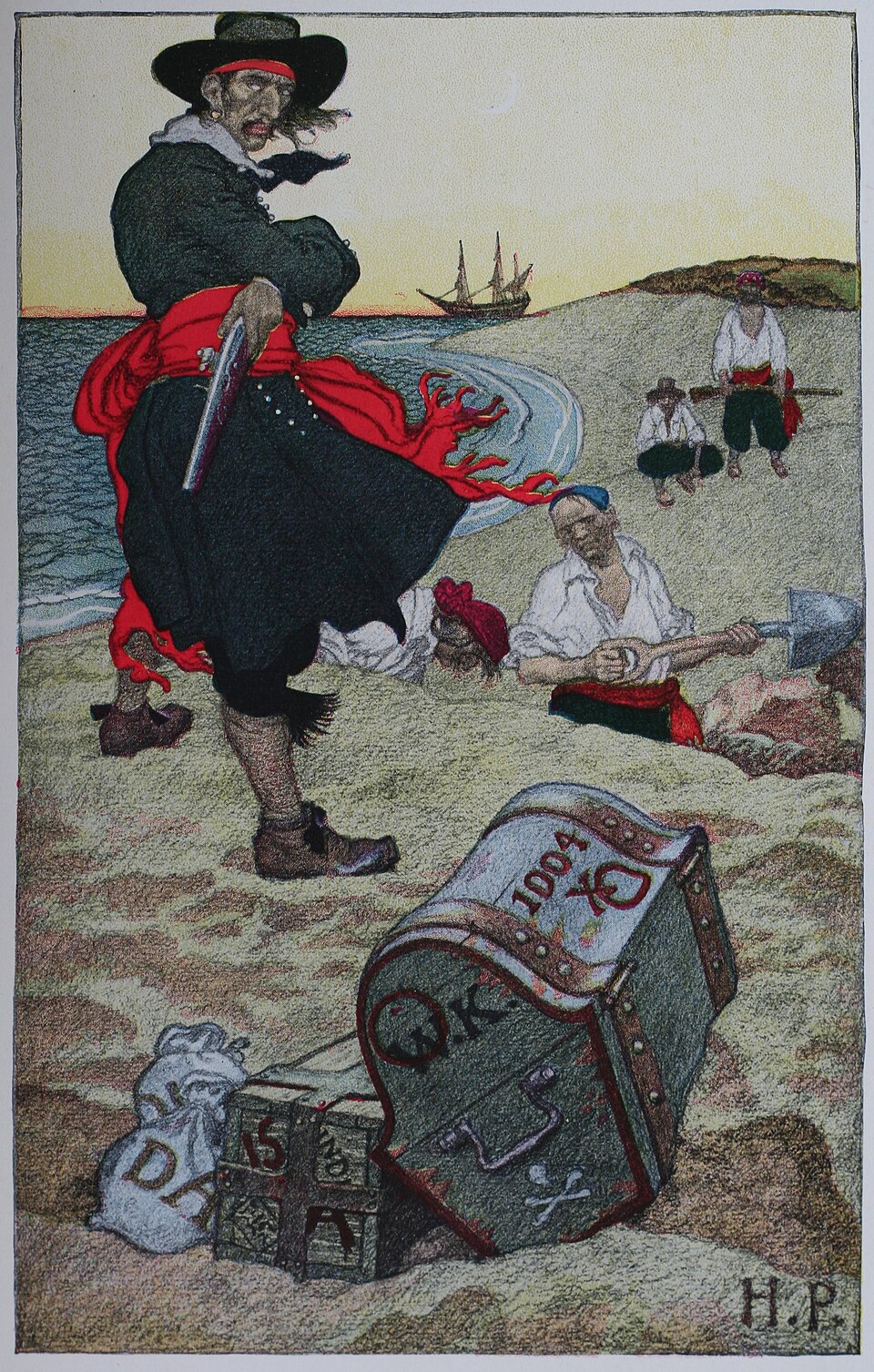
Buried treasure is a literary trope commonly associated with depictions of pirates, alongside Vikings, criminals, and outlaws in the Old West. According to popular conception, these people often buried their stolen fortunes in remote places, intending to return to them later (often with the use of a pirate's treasure map).
Pirates burying treasure was a rare occurrence, with one of the best known legends being William Kidd, who was accused of burying some of his wealth on Gardiners Island. The myth of buried pirate treasure was popularized by such 19th-century fiction as "Wolfert Webber" by Washington Irving, "The Gold-Bug" by Edgar Allan Poe, and Treasure Island by Robert Louis Stevenson. The idea of treasure maps leading to buried treasure is considered a fictional device.
There are cases of buried treasure from different historical periods, such as the Dacian king Decebalus and Visigoth king Alaric I, who both changed the course of rivers to hide their treasures. Legends of buried pirate treasure have existed for centuries, but authenticated discoveries are rare. For example, extensive excavations on Oak Island, Nova Scotia have not yielded any treasure.
Buried treasure is a cultural concept and not the same as a hoard, which is typically found by archaeologists and metal detectors. The Fenn treasure, reportedly buried by millionaire Forrest Fenn in 2010, was found in 2020 in Wyoming.
Further reading
Pirate Treasure Chest is one of the 3D puzzles in World Artifacts: turn a cloud of broken pieces until it lines up. For iPhone, iPad, Apple Vision Pro and Android.

