World Artifacts › Atlas › Sweden
Easter Witch (Påskkärring)
Swedish children dress as witches at Easter and go from door to door for sweets, because witches were said to fly to a meeting with the devil at that time of year. Sweden had a real witch panic in the 1670s in which a great many women were executed.
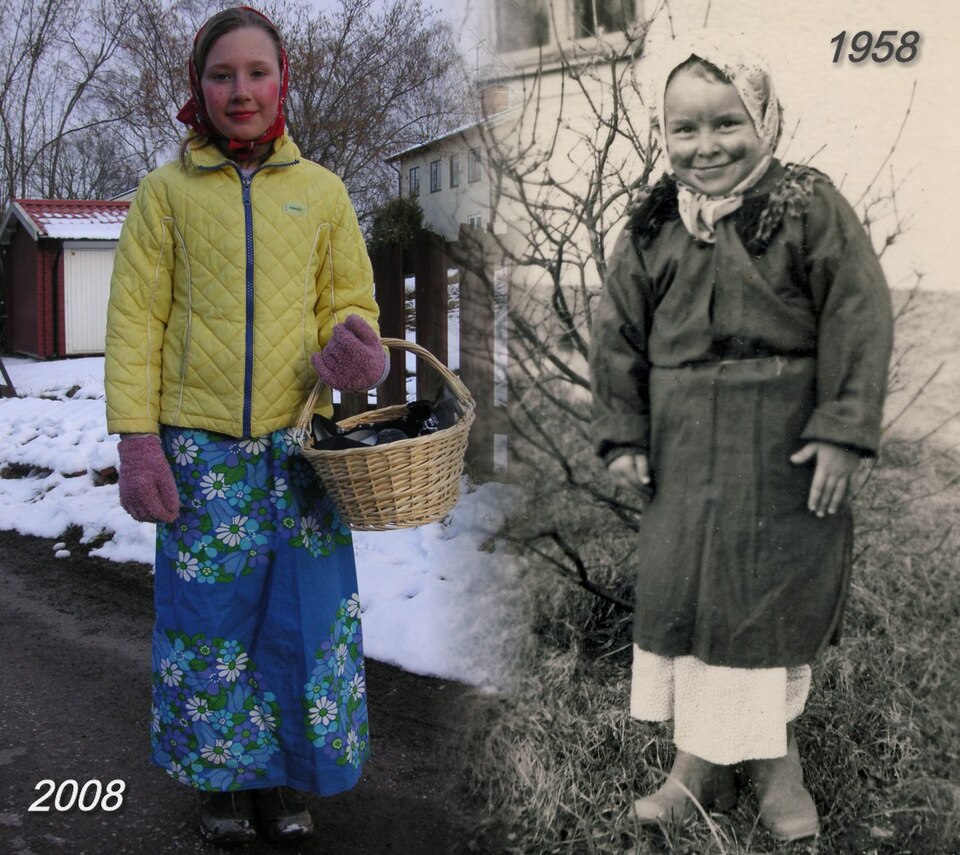
Easter witches (Swedish: påskkärring, 'easter hag', 'easter witch', Finland Swedish: påskhäxa, 'easter witch', Finnish: trulli, 'trulli') is an old Swedish legend about witches flying to Blockula (Swedish: Blåkulla, Blå Jungfrun) on brooms on the Thursday before Easter (Maundy Thursday, sv:Skärtorsdagen) or on the night between the Wednesday (Holy Wednesday, sv:Dymmelonsdag) and Thursday before, and returning on Easter.
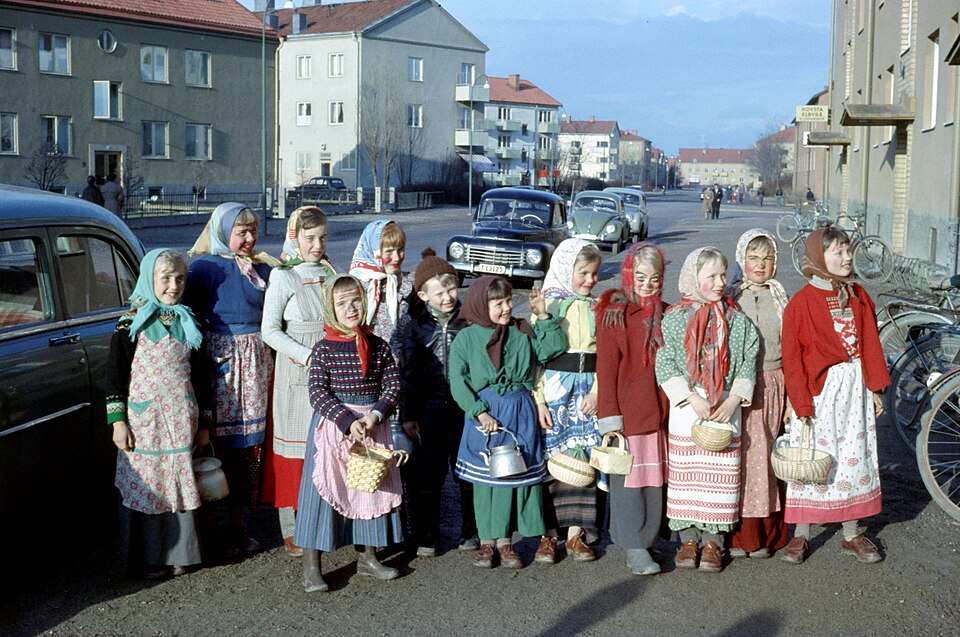
It is uncertain when the tradition of dressing up as witches began in Sweden, but the custom was widespread in western Swedish cities by the mid-19th century. Therefore, the first Easter witches probably date from the late 18th century. Easter witches were most commonly reported from Bohuslän, Dalsland, Värmland and parts of Västergötland, and it was mainly during the evening of Holy Saturday that they went door to door. Originally, it was adults and young people who dressed up as Easter witches, but over time it became more of a children's tradition.
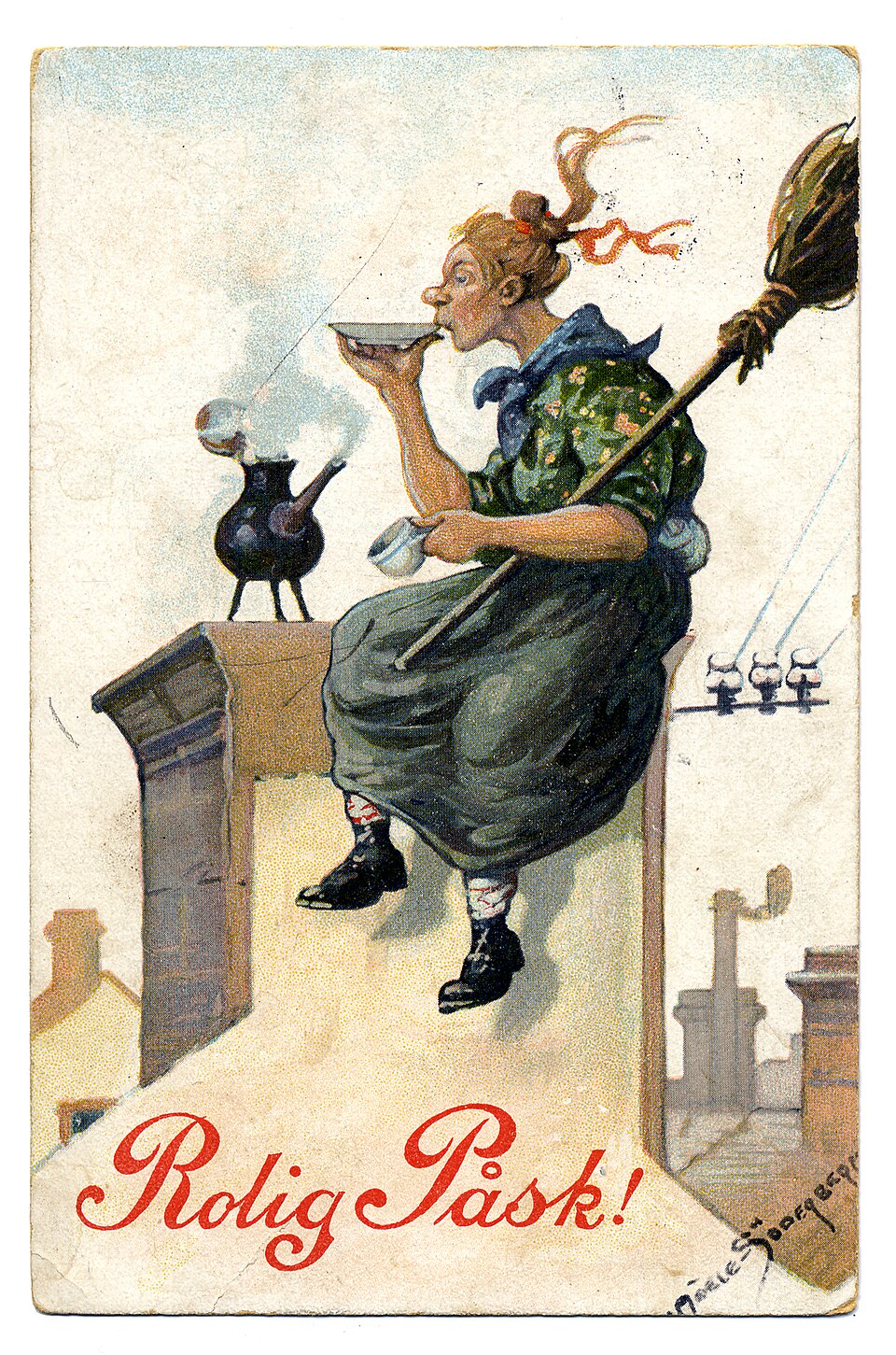
In the modern era, children dress up as witches, old ladies or in old men's clothing and go door to door distributing greetings and often receiving treats in return.
In Finland, the Easter witch custom (virvonta) comes from the old Karelian Orthodox Christian tradition, and is observed on Palm Sunday.
Further reading
Easter Witch (Påskkärring) is one of the 3D puzzles in World Artifacts: turn a cloud of broken pieces until it lines up. For iPhone, iPad, Apple Vision Pro and Android.

