World Artifacts › Atlas › Slovakia
Coronation Crown (Bratislava)
The St Stephen's crown replica.
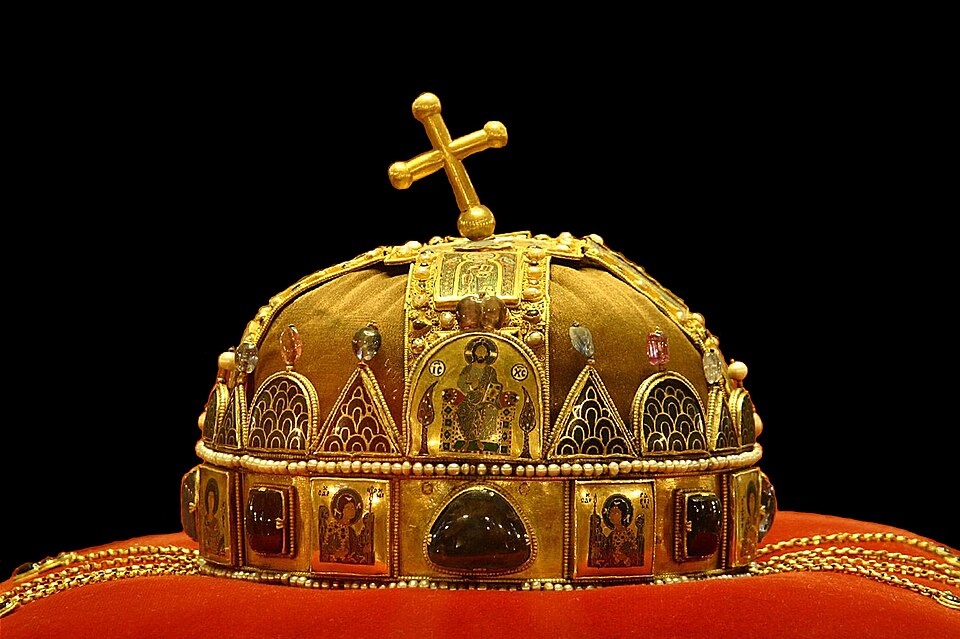
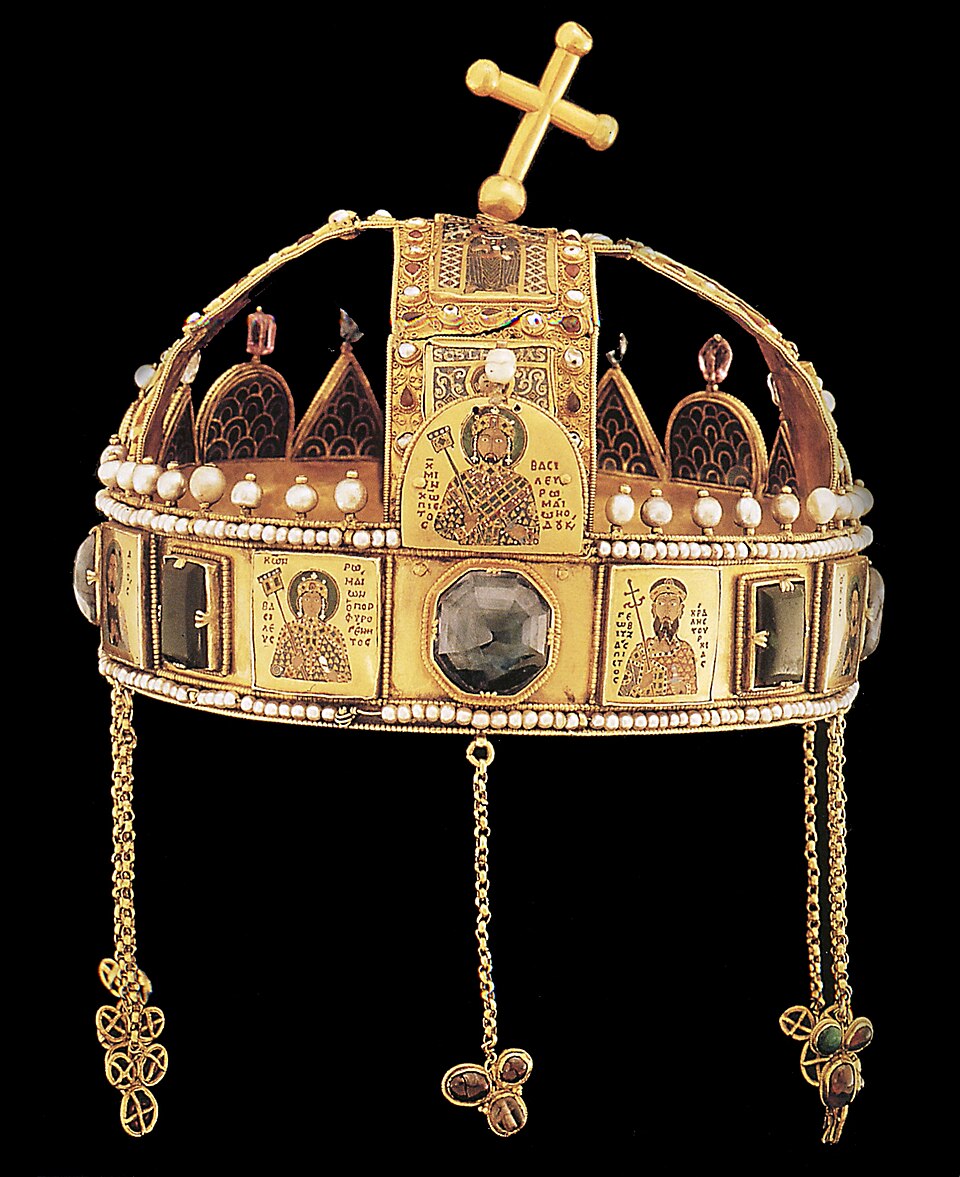
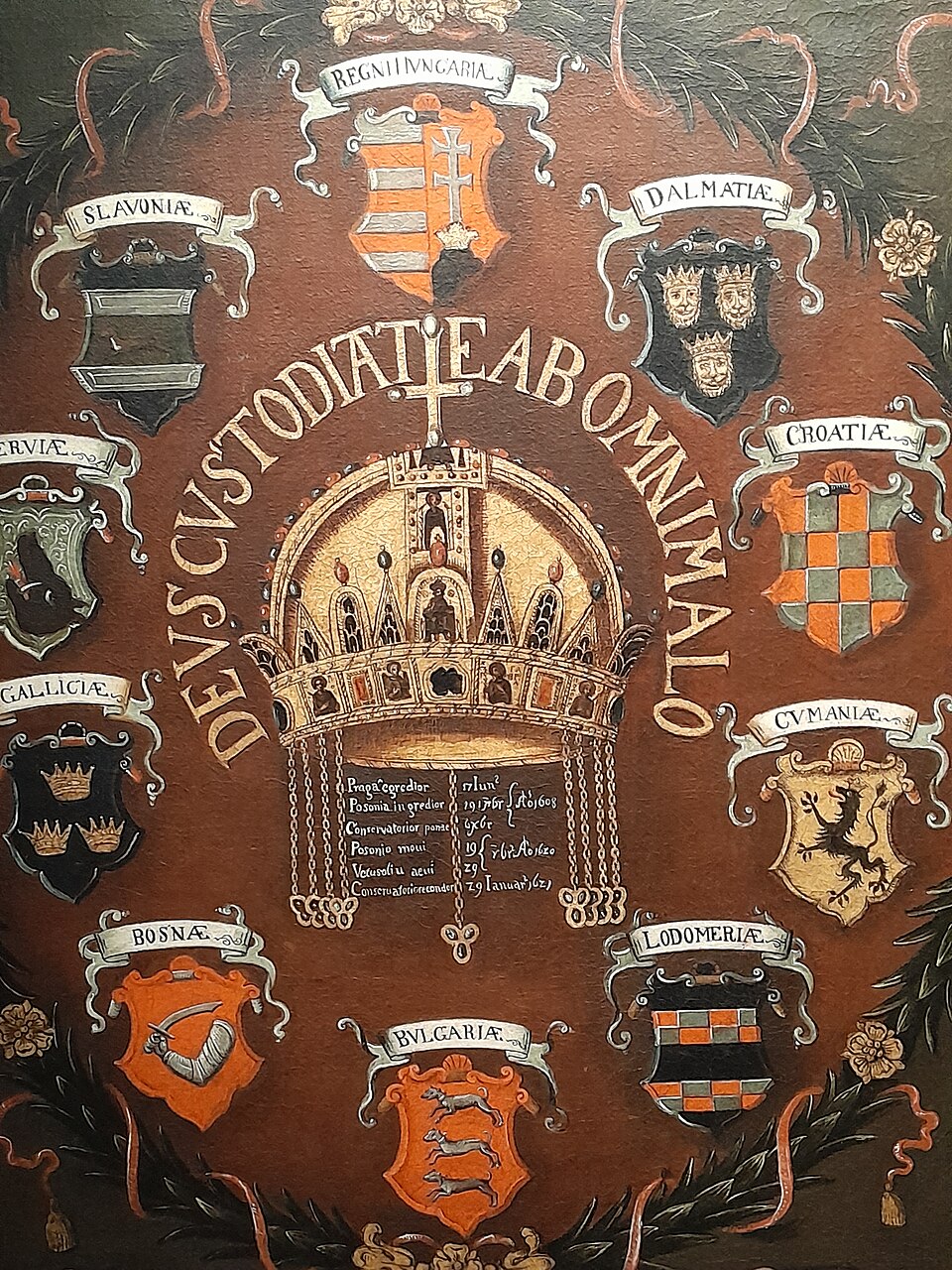
The Holy Crown of Hungary (Hungarian: Szent Korona [ˈsɛnt ˈkoronɒ], Latin: Sacra Corona), also known as the Crown of Saint Stephen (Hungarian: Szent István koronája), named in honour of Saint Stephen I of Hungary, was the coronation crown used by the Kingdom of Hungary for most of its existence; kings were crowned with it from the 12th century on. The Crown symbolized the King's authority over the Lands of the Hungarian Crown, and it was a key mark of legitimacy. Through the history of Hungary, more than 50 kings were crowned with it, with the last being Charles IV in 1916. The only kings not crowned were Wladyslaw I, John Sigismund Zápolya, and Joseph II.
The earliest contemporary written source concerning the elevation of Stephen to kingship is the chronicle of Thietmar of Merseburg, which records the event within the political and imperial context of the reign of Emperor Otto III. According to Thietmar, Stephen's elevation took place at imperial initiative, and the coronation was carried out together with an ecclesiastical blessing:
"Imperatoris autem praedicti gratia et hortatu … coronam et benedictionem accepit."
Further reading
- The Hungarian crown and other regalia · Kovács, Éva (1980)Covers the Holy Crown of Hungary (St Stephen's crown) and other Hungarian regalia, treating the goldwork and crown jewels.Find a copy: AbeBooks · Amazon · WorldCat
- Reflections on the Holy Crown of Hungary · Robert McGrath (2014)Reflections on the Holy Crown of Hungary, a study of the crown that the Bratislava replica copies.Find a copy: AbeBooks · Amazon · WorldCat
Coronation Crown (Bratislava) is one of the 3D puzzles in World Artifacts: turn a cloud of broken pieces until it lines up. For iPhone, iPad, Apple Vision Pro and Android.

