World Artifacts › Atlas › S. Sudan
Sudd Wetland
The papyrus swamp.
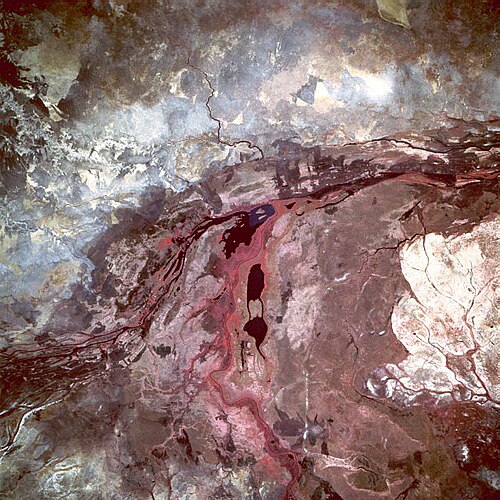
The Sudd (Arabic: السد, romanized: as-Sudd, Nuer: Baki̱ec, Dinka: Toc) is a vast swamp in South Sudan, formed by the White Nile's Baḥr al-Jabal section. The Arabic word sudd is derived from sadd (سد), meaning "barrier" or "obstruction". The term "the sudd" has come to refer to any large solid floating vegetation island or mat. The area which the swamp covers is one of the world's largest wetlands and the largest freshwater wetland in the Nile Basin.
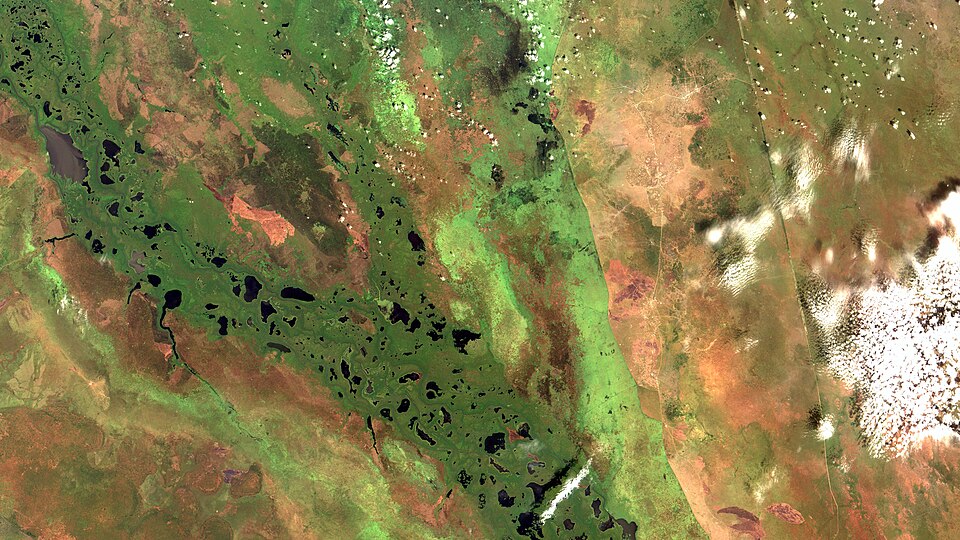
For millenia the swamp, and especially its thicket of vegetation, proved an impenetrable barrier to navigation along the Nile. The ancient Egyptians failed to penetrate the Sudd and reach the areas south of it. In AD 61, a party of Roman soldiers sent by the Emperor Nero proceeded up the White Nile but were not able to get beyond the Sudd, which marked the limit of Roman penetration into equatorial Africa. For the same reasons in later times, the search for the source of the Nile was particularly difficult; it eventually involved overland expeditions from the central African coast, so as to avoid having to travel through the Sudd.
In 2019, a study suggested that increased water flows into the Sudd may be partly causing up to a third of the whole West African rise in atmospheric methane levels over the previous decade.
Further reading
- The waters of the Nile · Robert O. Collins (1990)Covers the history of Nile water resources development and its politics across the Nile river and valley.Find a copy: AbeBooks · Amazon · WorldCat
- The White Nile · Alan Moorehead (1960)A history of the exploration of the Nile, tied to the river that feeds the Sudd.Find a copy: AbeBooks · Amazon · WorldCat
Sudd Wetland is one of the 3D puzzles in World Artifacts: turn a cloud of broken pieces until it lines up. For iPhone, iPad, Apple Vision Pro and Android.

